Wallace Ruzvidzo, [email protected]
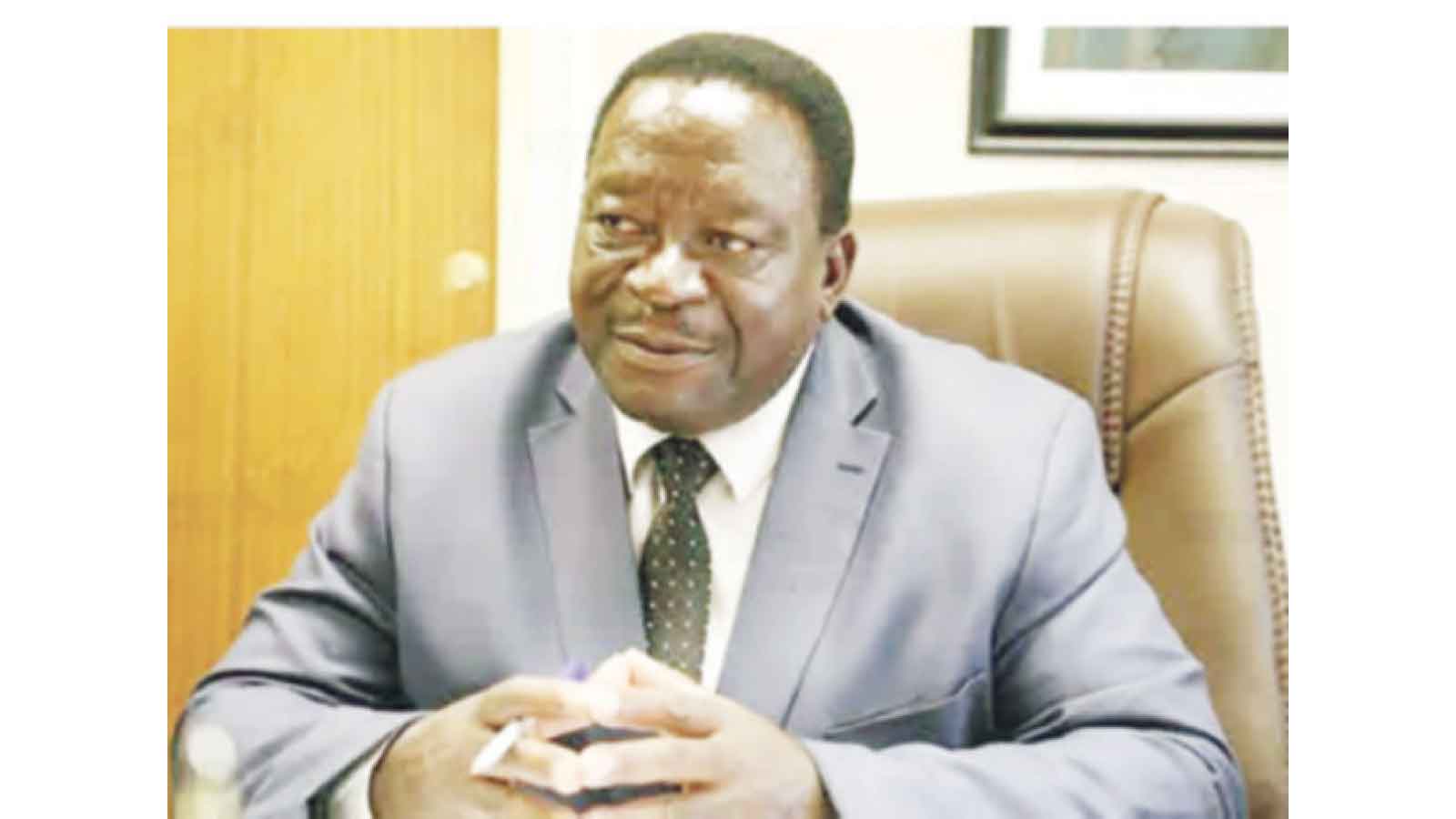
President Mnangagwa has declared Zimbabwe’s Ambassador to Mozambique and Eswatini, Cde Victor Matemadanda a National Hero and extended his heartfelt condolences to the bereaved Matemadanda family, saying he had learned of the death with “deep grief and sadness”.
Cde Matemadanda died on Saturday evening, aged 66.
In his condolence message, the President said he learnt of the news with deep sorrow, describing the late diplomat as a committed war veteran whose nationalist convictions traced back to his youthful years as part of the
Zimbabwean migrant community that settled in Zambia to escape persecution under the Rhodesian settler colonial regime.
“I learnt with deep grief and sadness of the untimely demise on Saturday night of Cde Victor Matemadanda, Zimbabwe’s Ambassador to the sister Republics of Mozambique and Eswatini.
“A war veteran who became part of the leadership of the association of our Liberation Veterans after Independence, the late Cde Matemadanda’s association with nationalist politics and the National Liberation Struggle for our
Independence dated back to his youthful days as part of the Zimbabwean migrant community which had settled in
Zambia to escape persecution and inhibitions in the then settler colonial Rhodesia,” he said. President Mnangagwa said Cde Matemadanda left the relative stability of migrant life in Zambia to join the struggle, initially mobilising support for fighters and refugees in camps in Zambia and Mozambique, including efforts led by figures such as the late Cde Patrick Kombayi.
He chronicled how the late Ambassador later became more directly involved in the liberation struggle by helping with the transportation of war material, using large trucks to deliver supplies to forward operational points.
“At Independence, Cde Matemadanda would join the Zimbabwe National Army, in which role he served his country with loyalty and utmost distinction.
“After leaving the Army, he continued to advance the interests of the party and war veterans through the Veterans Association, which he helped lead,” said the President.
“His principled stance in defence of the interests of our war veterans, including their welfare and substantive incorporation into party structures, led to his repeated incarceration under the First Republic.”
Cde Matemadanda later served as the ruling party’s National Political Commissar, a role in which the President said the late brought “exceptional vibrancy to the party which at the time sought to put behind it the largely fossilised ethos and inertia which had developed over time under the First Republic”.
As Zimbabwe’s Ambassador to Mozambique and Eswatini, the President said, Cde Matemadanda distinguished himself by travelling across all provinces in Mozambique that housed Zimbabwe’s wartime bases.
He said the Ambassador pushed for the rehabilitation of burial sites and shrines, describing them as a sign of respect and dignity to Zimbabwe’s fallen heroes and heroines.
“To broaden his vista as one of the promising cadres in the leadership of the party, I took the decision to introduce and redeploy him into our diplomatic service as Zimbabwe’s Ambassador to Mozambique and Eswatini. He distinguished himself in that role, traversing all the provinces in Mozambique which housed our wartime bases, and
in which remains of countless Zimbabwean freedom fighters lie buried in mass graves,” said President Mnangagwa.
He said it was unfortunate that Cde Matemadanda died before completing the programme of rehabilitation and curation of the revered sites, adding that under the Second Republic, Government will ensure that the burial grounds and shrines are properly rehabilitated and curated.
“This is the least we can do to honour our fallen heroes and to pay lasting tribute to the late Cde Matemadanda.
“On behalf of the party, Zanu-PF, Government, my family, and my behalf, I wish to express my deepest, heartfelt condolences to the bereaved Matemadanda family, especially to Amai Matemadanda and the children in this their hour of profound grief.
“May they derive solace from the exceptional contribution which Ambassador Matemadanda made towards the freedom and development of his people, whom he so deeply loved. Our nation joins them and shares in their grief.
May his dear soul rest in eternal peace,” said President Mnangagwa.
In a message delivered to the family by Zanu-PF secretary for external affairs, Cde Simbarashe Mumbengegwi, President Mnangagwa said the National Hero status is in recognition of his contribution to the liberation struggle and service to the nation.
Minister of Veterans of the Liberation Struggle Affairs Senator Monica Mavhunga and Minister of Foreign Affairs and International Trade Professor Amon Murwira were among the top Government officials who visited the
Matemadanda home in Harare to pay their condolences.
Cde Matemadanda’s oldest son and family spokesperson, Terrence, said he was at a loss for words.
“We are at a loss for words as a family because it happened suddenly, it is not something we expected or saw coming,” he said tearfully.
Born on March 3, 1960, Amb Matemadanda experienced the harsh realities of colonial displacement at an early age after his family was moved from their ancestral land to Gokwe. His family later relocated to Zambia, where he was inspired by his father’s participation in the liberation struggle to join the fight for Zimbabwe’s independence while still a teenager.
In the 1970s, he underwent military training and operated between Zambia and Mozambique as part of the liberation movement.
In 1979, he was deployed to the Mutoko front as a Zanla combatant, playing his part in the final stages of the armed
struggle that culminated in Zimbabwe attaining independence in 1980.
After independence, Ambassador Matemadanda emerged as one of the country’s most influential war veterans’ leaders.
As secretary-general of the Zimbabwe National Liberation War Veterans Association, he championed the welfare of former freedom fighters and played a pivotal role in shaping the organisation’s leadership and policy direction.
His influence later extended into mainstream politics.
In 2017, he was appointed Zanu-PF National Political Commissar, a strategic position that placed him at the centre of the party’s mobilisation and organisational structures.
A year later, he was elected Member of Parliament for Gokwe Central before being appointed Deputy Minister of Defence and War Veterans Affairs. In that role, he was involved in matters relating to national security and programmes aimed at improving the welfare of liberation war veterans.
In 2021, President Mnangagwa appointed him Zimbabwe’s Ambassador to Mozambique, with additional accreditation to the Kingdom of Eswatini.
As ambassador, he worked to strengthen diplomatic, economic and cultural ties with the two countries, while also promoting cooperation founded on the shared history of the liberation struggle.
Away from politics and public office, Amb Matemadanda remained committed to academic advancement.
He earned a degree from the University of South Africa (Unisa) before attaining a Doctorate in Business Administration from the African Leadership Institute in 2022.
He is remembered as a liberation war veteran, politician and diplomat who dedicated much of his life to public service and to preserving the ideals of the liberation struggle.
Funeral arrangements are yet to be announced.