Online Reporter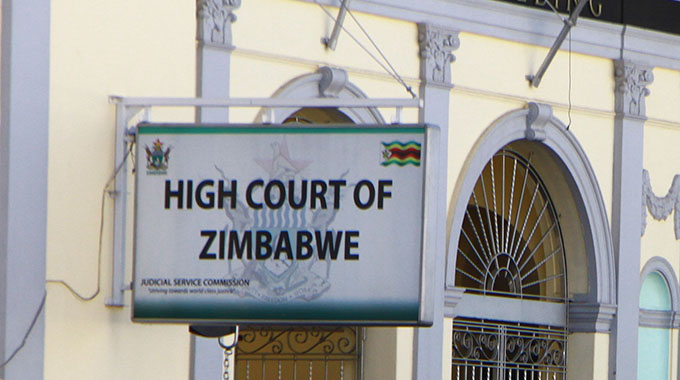
Fidelis Munyoro
Chief Court Reporter
What began as an ordinary evening has evolved into the focal point of a compelling legal battle before the High Court, where a young mother is recounting a traumatic experience that she says culminated in her giving birth alone after being abandoned.
In a significant development, the High Court has cleared the way for Letwin Siyampongo’s case to proceed, rejecting an attempt by the City of Harare to halt the matter before it could be fully heard.
The ruling ensures that her claims will now be examined in court, allowing her story to be tested through the judicial process.
It began with hope and desperation as Siyampongo trudged into the Old Highfield Clinic in the throes of labour, her waters already broken.
The promise of care quickly evaporated, she alleges, into a cold indifference that set the stage for an ordeal etched vividly in her memory.
Directed to lie down on a bed but without a proper examination, her pleas for help would dwindle in frustration over the hours that followed.
“They gave me pain medication,” she recounted to the court, naming it with a bitterness that suggested it was more of a dismissal than a remedy.
Then came advice she would not heed. A nurse, she alleges, suggested she return home, stating the delivery was “not yet imminent.”
But home, for Siyampongo, was no longer an option. The contractions, like a countdown to the inevitable, only grew fiercer.
It was then, as the hands of the clock neared 9pm, that chaos and terror converged.
Needing to relieve herself, Siyampongo grabbed a bucket nearby.
But with little warning, her body signalled the arrival of her child. Alone in that cold clinic ward, she said she cried out for help.
No one came. In that moment, hovering between anguish and courage, she delivered her own baby.
What happened next horrifies the imagination. The child, she testified, slipped from her grasp as exhaustion overtook her falling to the hard floor.
When Siyampongo picked her baby up, the sight of redness around the infant’s eyes and the back of the head tugged at what was left of her already frayed spirit.
But even then, she claimed, nothing changed. No comforting hands. No medical urgency. By the following day, both mother and child were discharged without any thorough examination.
That horrifying night became the backbone of Siyampongo’s lawsuit. Her demands are both simple and searing.
A formal acknowledgment that her constitutional right to healthcare was violated, and US$10,000 in damages for the pain and suffering she says she endured that night.
Her fight for accountability, however, was soon met with a counterstrike from the City of Harare. The municipality tried to dismiss her case outright, claiming the clinic’s records showed nothing of the drama Siyampongo painted.
Their version describes a well-attended mother, carefully monitored in labour, assisted during delivery by two nurses, and discharged with a healthy baby in her arms.
Moreover, the municipality chipped away at Siyampongo’s case, pointing to the lack of expert medical evidence supporting her claims, an absence of witnesses, and no report from a doctor proving negligence or linking injuries to the events of that night.
In their eyes, her case had no legal legs to stand on.
But Justice Maxwell Takuva found otherwise. For the mother who had fought this far, his ruling gleamed like a moment of redemption.
Siyampongo had presented enough evidence to warrant a full trial, he declared, and the grim questions surrounding that night demanded answers.
“The report is challenged by the plaintiff as being a fabrication,” the judge noted pointedly.
That fabrication, if it indeed exists, could only be exposed in one way:
“The complete explanation can only come from the people who interacted with the plaintiff at the clinic.”
Like threads woven into a disputed tapestry, the clinic records remain shrouded in contention, bearing the fingerprints of the same staff accused of negligence.
Justice Takuva held that these documents, soaked in controversy, require the authors to testify under oath.
“There is need not only for the entries to be explained, but also for the authors of those entries to testify, and their testimony tested.”
In triumph laced with solemn determination, Siyampongo cleared her first major legal hurdle.
The High Court dismissed the City of Harare’s bid to avoid trial, ordering that the matter proceed.