Online Reporter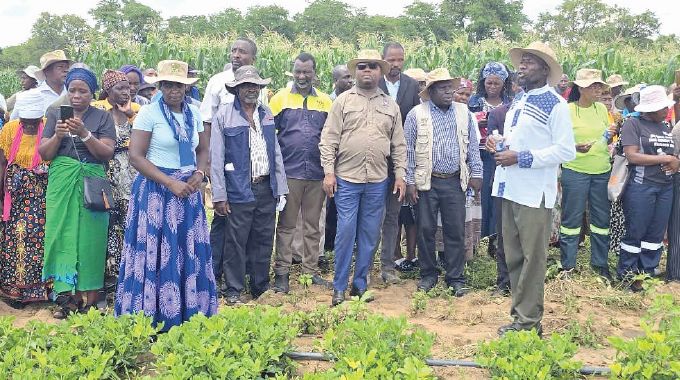
Mthabisi Tshuma, [email protected]
TUCKED deep in Ngwala Village in Bulilima District is the Ndlovu family who, at first glance, might be mistaken for just another household behind pretty walls and neat courtyards. It is easy to misjudge what you cannot see from the road. Travelling to the Huwana area when it’s not the farming season, one can only imagine the trademark Bulilima beautiful homes and expect little else moving.
Yet beneath that quiet, the land breathes and the people who till it are busy writing a different kind of story. Deep in Ngwala, the Ndlovu family are making the most of the land fought hard for in attaining Independence. For the past decade, they’ve been fully engaged with their communal land. The soil, once merely a backdrop to daily life, has become their stage and their strength.
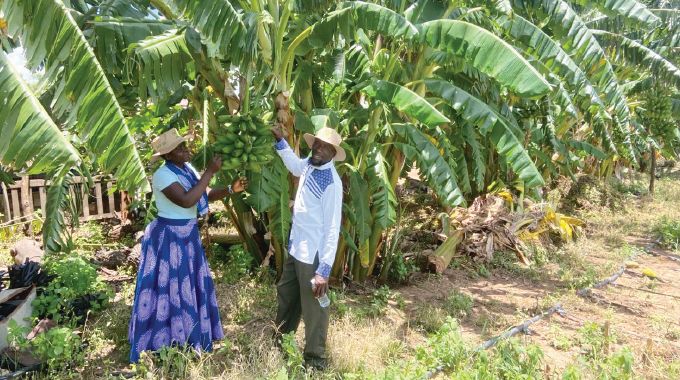
Knowledge and Sanelisiwe have transformed the land into a thriving farm, growing everything from groundnuts and vegetables to bananas and rearing chickens.
What began as modest rows has unfurled into an oasis of intent: neat beds, fruit-heavy branches and the reassuring cluck of birds that turn grain and grit into sustenance.
This is a far cry from Mr Ndlovu’s previous life as a cross-border transporter, a job he often looks back on with regret. The long roads and harsher borders have given way to a steadier rhythm: dawn light over furrows, sweat earned honestly, evenings cooling to the sound of crickets and contentment.
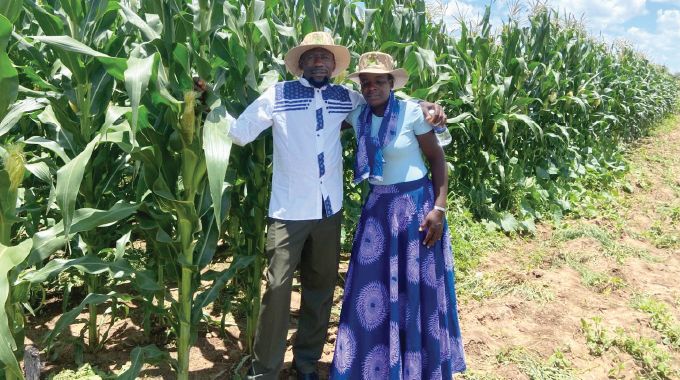
Mrs Ndlovu, who used to be a stay-at-home mum, is now an integral part of the farm’s success. Her hands, once tied to routine, now direct a small enterprise — scheduling planting, planning harvests, translating experience into yield and income.
The homestead-turned-farm has become a model for other villagers, who often come to seek advice on sustainable farming practices, with the hosting of field day tours by Agritex and Seed Co being a day-to-day thing. What was private pride has become a public example; footpaths now lead to the Ndlovus with questions and notebooks in hand.
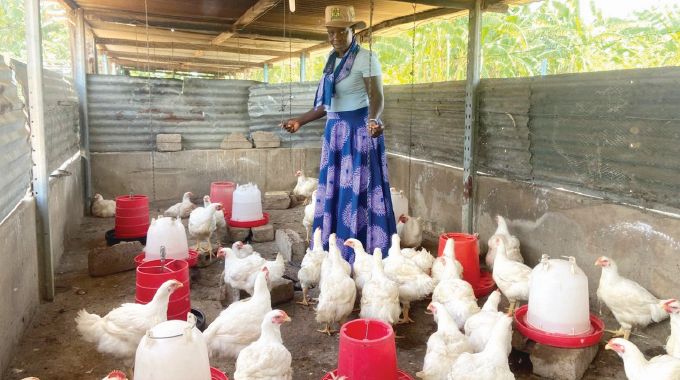
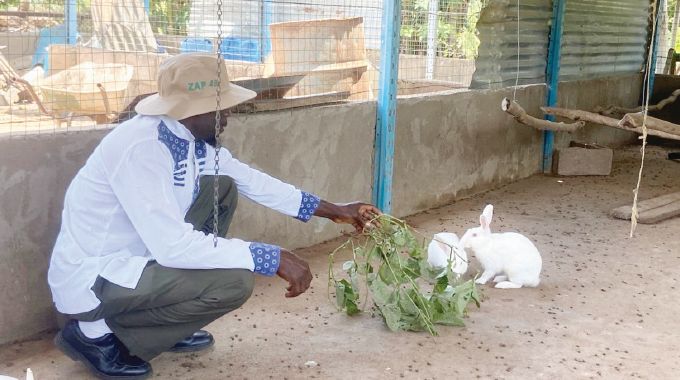
As they look to the future, the Ndlovus are optimistic. They’ve achieved so much in the past decade by being an individual business unit that farms produce that include maize, groundnuts, beans and cabbages. They rear chickens and rabbits.
Their yard hums with purpose, the pantry with possibility; the calendar is a promise of what each season can bring. They also grow trees among them guava, lemon, banana, peaches, avocado, pawpaw, masawi and xhakuxhaku. Shade, fruit and fragrance mingle in a living ledger of patience — each sapling a decision, each harvest a dividend.
Mr Ndlovu said the farming project came after coming to terms with the need for citizens to fully grasp the gains attained from Independence.
“We started this project in 2017 after having water my precious time since 1990 when I moved to South Africa thinking I was going for a better life. I had to operate as umalayitsha for decades but nothing came out of it. After careful consideration of the advice I got from a number of people that we have to utilise the land that was fought hard for by our brothers, sisters and parents, I saw it fit to come back home,” said Mr Ndlovu.
In his words are miles travelled and lessons learned the long way round; in his return, the quiet relief of finding home still fertile.
He said the project has been a life-changing component in their lives as they have managed to have a consistent source of income.
“I pegged three hectares within our communal area and this houses our farming project and homestead.
This is one of the biggest benefits we have got as citizens of Zimbabwe under the Second Republic leadership of President Mnangagwa nationally and Cde Dingumuzi Phuti in Bulilima.
“Through this project, I have managed to send my children to school, with three of them having graduated from universities. I would advise other villagers to follow suit and invest in farming practices so that we can help ease the Government’s food supply that is given yearly to villagers. We can do better and help Government regain its food security status. Gone are the days of food-to-mouth practices,” said Mr Ndlovu.
Pride sits easily on him now, tempered by responsibility; the success is personal, but the vision is communal.
Mrs Ndlovu said the time is for women to empower themselves and desist from old practices of living.
“I realised that as women we have to stand up for ourselves and take up agriculture as a source of living.
Gone are the days when a woman has to wait for a man to fend for them. Here, as the Ndlovu family, we practice farming as a family. I urge women, especially those in rural areas, to utilise their communal land and farm produce which will ensure that they live healthy and comfortable lives,” said Mrs Ndlovu.
Her voice carries a steady conviction; she has found in the field what many look for in offices — agency, dignity, and the means to shape tomorrow.
She said the farming project has put her at par with other employed women. As a farmer she said it is vital to utilise the farming teachings from qualified personnel.
“Through farming groundnuts among other products, I am able to participate in stokvel groups where we invest our savings to meaningful projects and I am also able to pay school fees for my children. I urge farmers to take heed of the lessons given by Agritex officers as they help a lot for one to have a productive farming operation,” said Mrs Ndlovu.
In the arithmetic of their days, each sack of groundnuts is multiplied into school fees, each workshop into better yields, and each season into another chapter of self-reliance.