Online Reporter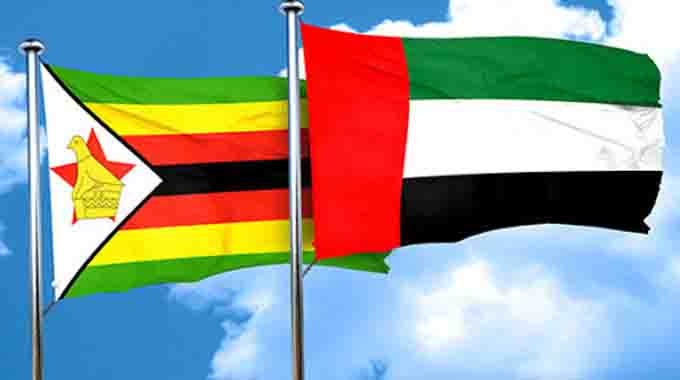
Zimpapers Business Hub
ZIMBABWE is set to further unlock economic value from its exports through deepening trade ties with the United Arab Emirates (UAE), especially by tapping into Dubai’s globally recognised commodity trading and logistics ecosystem.
Strengthening bilateral relations are expected to significantly boost export earnings from key sectors, including coffee, tea, gold, diamonds and energy transition minerals.
Trade between Zimbabwe and the UAE has grown exponentially in recent years.
The UAE is now ranked among Zimbabwe’s top trading partners outside Africa, with bilateral trade volumes exceeding US$2 billion in recent years, largely driven by gold and diamond exports.
According to latest data from the Zimbabwe National Statistics Agency, the UAE accounted for 49,8 percent of Zimbabwe’s export receipts in April 2025, ahead of South Africa (24 percent) and China (15,9 percent).
Together, the three nations accounted for nearly 90 percent of the total export value of US$662,6 million.
The UAE has become Zimbabwe’s second-largest export market.
Dubai’s strategic role in this economic relationship stems from its world-class trade infrastructure, including free zones, re-export mechanisms and financial innovation platforms.
“Through strategic use of Dubai’s DMCC (Dubai Multi-Commodities Centre)free zone and its world-renowned gold and commodities markets, Zimbabwean producers can access efficient logistics, re-export channels and high-value consumer markets,” DMCC’s operations executive Mr Makomborero Nyakotyo told Zimpapers Business Hub following his engagement with the Crown Prince of Dubai, His Highness Sheikh Hamdan bin Mohammed bin Rashid Al Maktoum, last week.
He underscored the importance of leveraging UAE-based value-addition facilities for Zimbabwean products, particularly in mining and agriculture.
“By processing and branding products such as roasted coffee, blended teas, enhanced rough and polished diamond trade and refined gold in the UAE, Zimbabwe can capture more value across the supply chain,” he said.
Zimbabwe’s alignment with the UAE’s global trade reach also opens up new markets through preferential trade agreements.
“This positioning also allows Zimbabwe to benefit from the UAE’s Comprehensive Economic Partnership Agreements (CEPA) with other major global economies, giving Zimbabwean-origin goods tariff-free access to new markets,” added Mr Nyakotyo.
Beyond market access, the UAE’s financial architecture is creating innovative funding channels for Zimbabwean businesses.
“Moreover, financial innovation in the UAE through trade finance platforms, Islamic finance structures and investment vehicles offers Zimbabwean exporters new funding opportunities for scaling operations and adding value,” he said.
In line with Zimbabwe’s national thrust to promote ethical trade and sustainable supply chains, the partnership is also anchored in global best practices and institutional collaboration.
“Additionally, by forming joint ventures with UAE-based firms and aligning with global standards on traceability and ethical sourcing, Zimbabwe can appeal to responsible investors and premium buyers.”
Mr Nyakotyo proposed formalising bilateral cooperation mechanisms.
“It’s not a long shot to start considering establishing a Zimbabwe-UAE commodity trade council and promoting closer government-to-government cooperation, which could further solidify these gains, turning the UAE into Zimbabwe’s global trade gateway for both agricultural and mineral exports,” he noted.
The growing relationship between Harare and Dubai builds on the momentum of President Mnangagwa’s official visit to DMCC in 2024, where he met senior executives to discuss avenues for deepening trade and investment.
Mr Nyakotyo described his meeting with His Highness Sheikh Hamdan bin Mohammed bin Rashid Al Maktoum as a defining moment.
“Our conversation underscored the UAE’s remarkable vision for innovation, sustainability and global trade — values that resonate strongly with my own work across strategic commodities and regional integration. His Highness’ warmth, insight and commitment to empowering global talent reaffirmed the UAE’s role as a unique hub for cross-cultural collaboration and opportunity,” he reflected.
With Zimbabwe holding vast reserves of strategic resources such as lithium, gold and diamonds, its partnership with the UAE is seen as central to the future of Africa-Middle East commodity flows.
The engagement is also a testament to the rising influence of Zimbabwean professionals in global trade diplomacy.
As DMCC continues to expand its global footprint, synergies with resource-rich African markets like Zimbabwe are set to reshape commodity logistics and redefine trade partnerships across the Middle East and the African continent.
With the global demand for clean energy minerals and ethically sourced commodities on the rise, Zimbabwe’s enhanced trade ties with the UAE are not only expected to boost national earnings but also to anchor a more sustainable, inclusive and high-value export-driven growth strategy.
Business strategist Mr Honest Ngwenya said the relationship with the UAE is emblematic of Zimbabwe’s pivot towards strategic, non-traditional partnerships aimed at maximising global trade returns.
“The UAE represents a modern trade nexus with unmatched logistics, capital depth and regulatory flexibility. Zimbabwe’s exporters stand to benefit immensely from value addition, preferential market access and exposure to sophisticated consumer markets,” said Mr Ngwenya.
The strategic complementarity between Zimbabwe’s mineral wealth and the UAE’s trade infrastructure, he said, could be a game-changer.
“Zimbabwe needs more than buyers — it needs strategic partners that can amplify its competitive advantages through capital, technology and access to global markets. The UAE fits this role perfectly.”