

 Online Reporter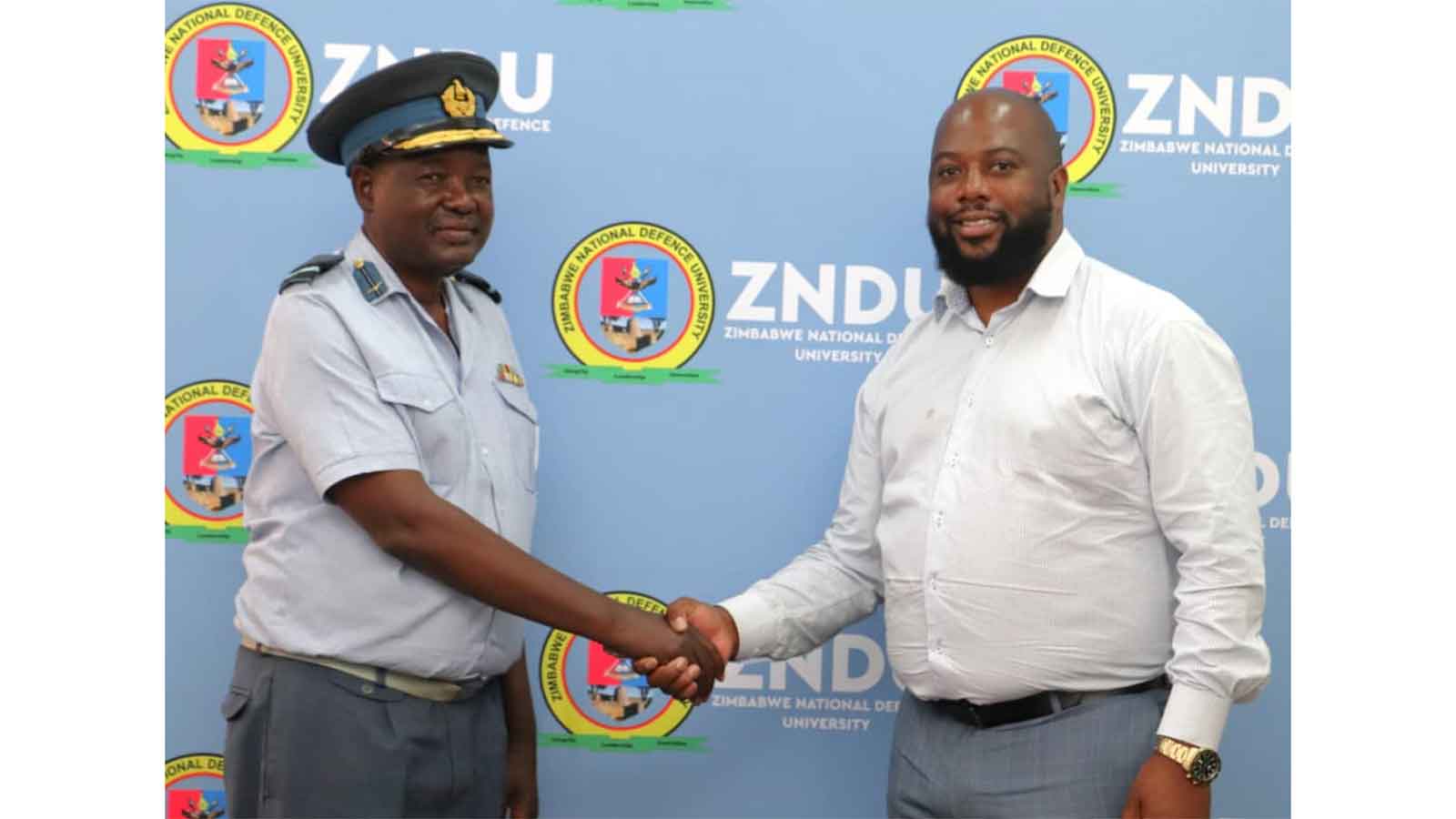
Remember Deketeke-Herald Correspondent
THE Zimbabwe National Defence University will tomorrow hold an Artificial Intelligence conference aimed at examining the far-reaching implications of AI on national, regional and global peace, security and development.
Speaking ahead of the event, Air Commodore Michael Mushati, who is also the ZNDU Director-General in charge of Seminars and Workshops, said the summit sought to spark academic and scientific debate on how AI should be harnessed and regulated in Zimbabwe and beyond.
“The title of the conference is Implications of Artificial Intelligence on National, Regional and International Peace, Security and Development,” he said.
“This university has a particular function amongst State universities. It is a national defence university, so it will look at national security issues of the state.”
- Related story: https://www.heraldonline.co.zw/zimbabwe-national-defence-university-to-hold-ais-conference/
The conference that will run under the theme “Securing the Future: Artificial Intelligence as a Catalyst for Peace, Security and Development,” reflects Zimbabwe’s need to understand both the opportunities and dangers of rapidly advancing AI technologies.
“We want to stimulate academic debate on the practical use of artificial intelligence in this country,” he said.
“What are the threats which may emanate from the use of artificial intelligence? How does it impact our national security, our regional peace and security, and international peace and security? Does it have any negative issues? What are the advantages, the disadvantages, the threats and the positives? All these issues must be interrogated.”
He stressed that ZNDU was not approaching the conference with pre-determined answers.
“As a university, we do not have the answers. That is why we have called experts from the private sector, Government, academia and various state agencies,” he said.
“What are the regulations guiding the use of artificial intelligence in Zimbabwe? How do other countries regulate it? We are also going to have reputable, renowned international speakers from across the spectrum to deliver their perspectives.”
Astro Mobile founder and CEO, Mr Munyaradzi Gwatidzo, emphasised the urgent need for Zimbabwe to build the foundational infrastructure required to meaningfully participate in the AI revolution.
“It’s critical that the country can have practical conversations about how we can leverage artificial intelligence,” he said.
“There has been a lot of talk around this, but it is important to have practical solutions. Do we have the necessary foundational requirements for us to actually be able to leverage it?”
He warned that without adequate and locally generated data, Africa’s narratives risk being distorted by AI systems trained predominantly on Western information.
“Artificial intelligence is a big piece of data,” he said.
“If we do not have adequate data as a country or as a region, our narrative can be miscommunicated because AI takes whatever information is available. Once information is not available, AI tools make their own assumptions based on Europe or America, yet things are very different on our side.”
Mr Gwatidzo said African countries must prioritise investment into infrastructure such as AI-ready data centres, although these facilities require massive capital outlays and significant power supplies.
“In Africa, there has been a lot of talk about setting up data centres specific to AI. The budgets go in excess of a billion dollars to build effective data centres,” he said.


