Online Reporter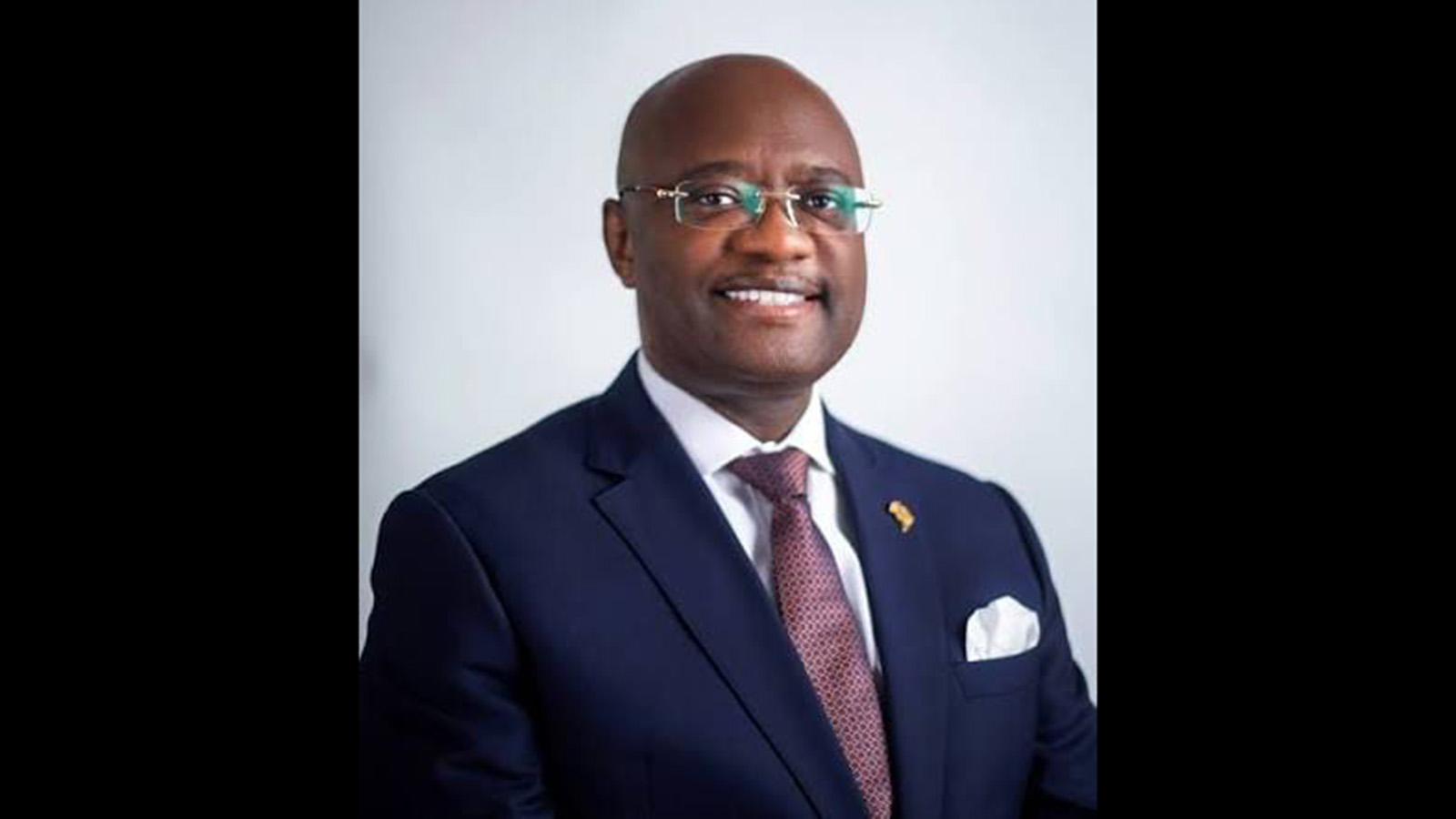
Business Reporter
Afreximbank President and Chairman of the Board of Directors George Elombi has called on African heads of state to defend the continent’s multilateral financial institutions, accusing global rating agencies of penalising African ownership and turning credit ratings into a political weapon.
Speaking at the opening ceremony of the Alamein Africa Forum 2026 in New Alamein on Saturday, hosted by Egyptian President Abdel Fattah El-Sisi, Mr Elombi said the pressure on Afreximbank was evidence of its relevance rather than weakness.
“The pressure on this institution is not a sign of weakness. It is proof of relevance,” he said. “Nobody spends this much effort questioning an institution that does not matter.”
Mr Elombi said the rules used to judge development banks were designed for another era, and that a methodology finalised in June by a major agency gave additional value to banks whose capital included a significant share of highly rated shareholders.
He said the methodology implied that Afreximbank could receive credit uplift only if it had sovereign shareholders who were “large, non-borrowing and highly rated” — criteria he said no African government met.
“The message was quite clear: hand over this institution to others outside the continent, what they call ‘non-regionals’,” he said.
He noted that only two African development finance institutions, which he said incidentally have non-regional shareholders, are highly rated and treated as multilateral institutions. Another previously African-owned institution, he added, had been coerced into replacing its private-sector shareholders, especially African ones, with sovereigns from outside the continent.
Defending the bank’s record, Mr Elombi said shareholders’ funds stood at almost US$9 billion, net income rose by 30 percent in the first half of this year, and the balance sheet was roughly six times its size a decade ago.
He said nearly US$300 million of fresh equity came into the bank in cash in 2025, with US$226 million paid so far this year and a further US$300 million expected. “That is ownership made tangible,” he said.
By contrast, he said callable capital at major development banks had never been called in more than eighty years. At one such bank, the largest shareholder had not appropriated a dollar of new callable capital since the early 1980s, and much of its promise would require a fresh legislative decision.
“If the call were made tomorrow, who would answer it?” he asked. “We, however, do not have to guess about you. You have answered, again and again, in cash.”
Mr Elombi cited Afreximbank’s support for Ghana when other institutions, including major multilaterals, cut lines to the country. He said the bank’s rating was downgraded after that intervention.
“Rating is now a political weapon. It is sadly no longer about credit,” he said. He added that S&P had returned to rate the bank for the first time in over a decade and had rated it investment grade. “We are not asking to be judged kindly. We are asking to be judged accurately.”
Turning to what ownership demands, Mr Elombi urged African leaders to take three steps: keep capitalising their institutions; defend the preferred creditor status granted by the treaty they ratified; and stand together through the Alliance of African Multilateral Financial Institutions.
He said preferred creditor status was a legal commitment, yet the market increasingly judged the bank by conventions that were not law and had never been ratified. He noted that in 2024, fifteen shareholder governments of the world’s major development banks, including the United States, Japan, Germany, France and the United Kingdom, declared that preferred creditor status was one reason callable capital had never been called.
“A status that its owners do not defend becomes a status that others define and defile,” he said.
On collective action, he said: “A challenge to one is a test of all.”
Mr Elombi said Africa’s ambition must go beyond defending existing institutions, calling for an African financial architecture that mobilises African savings, finances African trade, supports African businesses and invests in African infrastructure.
“We are not seeking to replace the global system. Rather we are insisting on a place within it that reflects our weight, our capital, our markets and our ambitions,” he said.
He closed with a direct appeal to the heads of state present: “This Bank is yours. Defend it as you built it — without asking for anyone’s permission!”