

 Online Reporter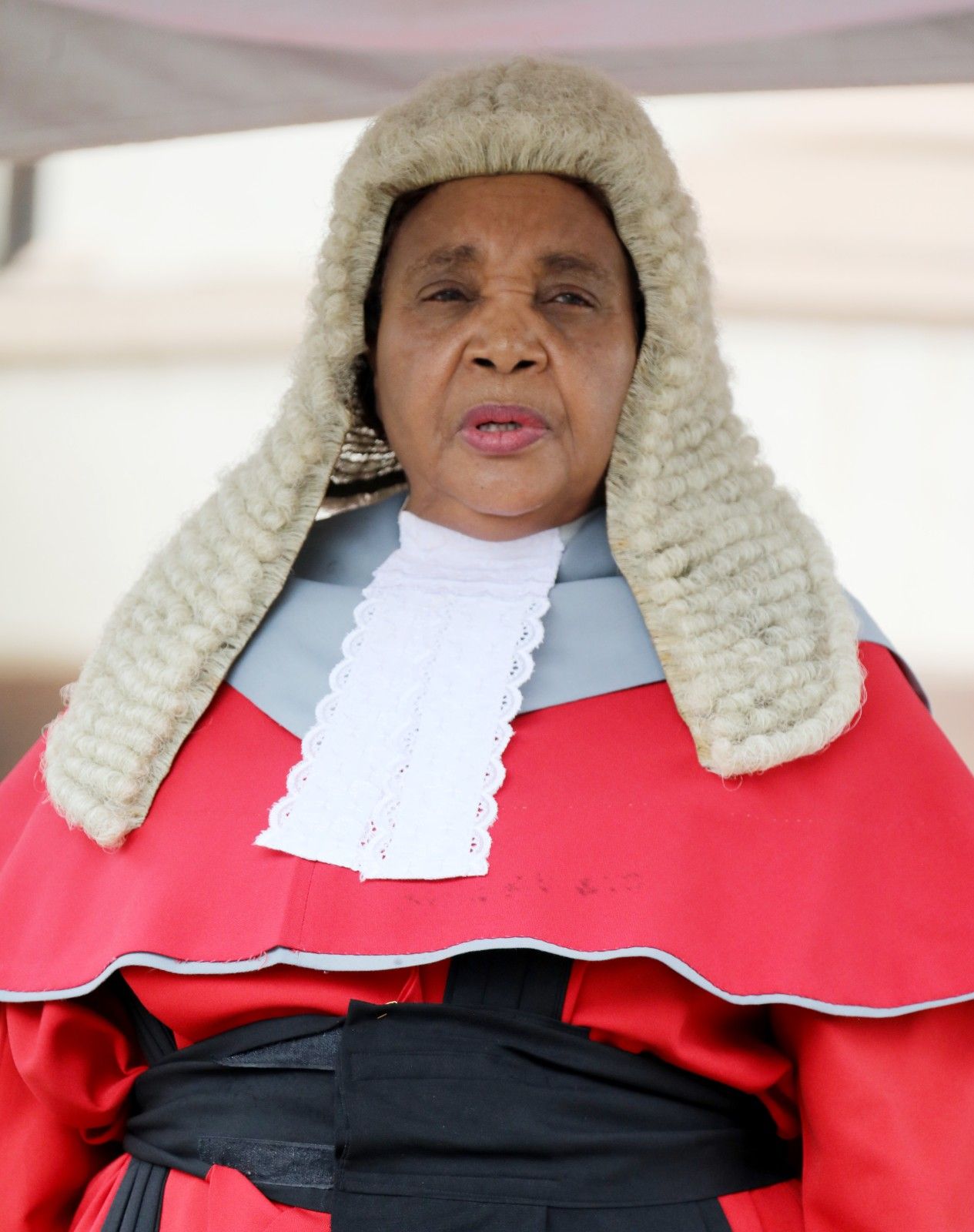
Wallace Ruzvidzo [email protected]
THE country etched another significant milestone into its history books this week after President Mnangagwa appointed Justice Elizabeth Gwaunza as the country’s first-ever female Chief Justice — a landmark development that has been widely celebrated as a major victory for women’s empowerment and gender inclusion in leadership.
The historic nature of the appointment has resonated strongly across political, legal and social spheres, marking what many have described as a transformative moment in Zimbabwe’s governance trajectory.
The appointment has sparked widespread applause from across society — from legal experts and politicians to international figures and ordinary citizens — with many describing it as a defining moment for the country’s judiciary and a powerful statement on the evolving role of women in nation-building. Observers have noted that beyond its symbolism, the move represents practical progress in dismantling long-standing barriers that have historically limited women’s advancement into top leadership positions.
For many analysts, the rise of Chief Justice Gwaunza to the apex of the judiciary is not merely symbolic but deeply substantive. It reflects a broader transformation that has gathered pace under the Second Republic, where women are increasingly being entrusted with influential positions in Government, the courts and other key public institutions. This shift is seen as part of a wider national effort to promote inclusivity and ensure that leadership structures mirror the diversity of Zimbabwean society.
Chief Justice Gwaunza now joins an expanding list of women occupying top offices within the country’s justice delivery system — a development that underscores the growing prominence of female leadership within a sector once dominated by men.
These include Prosecutor-General Mrs Virginia Mabiza, Attorney-General Justice Loice Matanda-Moyo, High Court Judge President Justice Mary Zimba-Dube and Chief Magistrate Mrs Vongai Guwuriro. Their presence in such key roles is increasingly being viewed as evidence of a deliberate policy shift aimed at strengthening gender representation at the highest levels of governance.
The Ministry of Justice, Legal and Parliamentary Affairs is also headed administratively by Permanent Secretary Mrs Vimbai Nyemba, further reinforcing the significant role women are playing in shaping the country’s legal and judicial framework.
Analysts say these appointments reflect a deliberate and sustained push to mainstream women into spaces that were historically dominated by men, signalling a clear policy direction anchored on gender equality and merit-based advancement.
Information, Publicity and Broadcasting Services Permanent Secretary, Mr Nick Mangwana, was among the first public officials to openly commend President Mnangagwa for the appointment, highlighting what he described as consistent progress under the current administration.
“Let’s give him his flowers. Under ED (President Mnangagwa) we got; The First Female PG; The First Female AG; The First Female CJ,” he wrote on social media platform X.
Chief Justice Gwaunza’s elevation is also being widely viewed as a triumph of merit, experience and seniority within the judiciary — factors that legal experts say are essential in maintaining institutional integrity and public confidence in the justice system.
Constitutional law expert Professor Lovemore Madhuku said the appointment was both appropriate and reassuring for the country’s judicial system, particularly in demonstrating adherence to established principles within the legal profession.
“Firstly, it is a very appropriate appointment and it is exemplary for the country; in this case, gender has not stood in the way. Secondly, she was the most senior judge of the Constitutional Court and it would appear that seniority has prevailed and in this case, it provides a predictable way of determining who would become Chief Justice without putting in a lot of politics. It’s a comforting feature if the appointing feature is going to follow that direction,” he said.
Chief Justice Gwaunza has had a distinguished legal career spanning decades, earning respect within both local and international legal circles. Her steady rise through the ranks reflects not only professional excellence but also resilience and dedication in a demanding field.
Before joining the bench, she built a reputation as one of the country’s accomplished legal practitioners and advocates for women in law. Her professional journey mirrors the changing face of Zimbabwean society, where women are steadily breaking barriers in professions that were once considered inaccessible or exclusive.
Her appointment has also resonated beyond Zimbabwe’s borders, attracting commendation from international figures who view it as a milestone not only for the country but for the African continent as a whole.
United Nations Assistant Secretary-General and UN Women Deputy Executive Director Dr Nyaradzayi Gumbonzvanda described the development as historic for both Zimbabwe and Africa, emphasising its broader significance.
“She is the very first female Chief Justice of Zimbabwe. Chief Justice Elizabeth Gwaunza! Ndiri kufara.
“Makorokoto veduwe! Congratulations Zimbabwe. Congratulations Africa. For our daughters and sons, and for humanity,” she said on her official X account.
Dr Gumbonzvanda also shared a personal reflection on Chief Justice Gwaunza’s mentorship and influence on emerging female legal professionals, highlighting her role in shaping future generations.
“She is my mentor at many levels, since my early professional days as a young lawyer. I sat on that table as the youngest, when CJ Gwaunza co-founded the Zimbabwe Women Lawyers Association, @ZimWomenLawyers. Fresh from Uni (university), I was trusted to serve as the founding coordinator. She believed in us, the young lawyers,” she said.
Women leaders and parliamentarians have also noted that the appointment carries immense symbolic and practical significance for young girls aspiring to leadership roles, particularly in traditionally male-dominated sectors.
Zanu-PF legislator and Chairperson of the Parliamentary Portfolio Committee on Women’s Affairs, Community and SME Development, Cde Gertrude Mutandi, described the development as deeply inspirational.
“Heartfelt congratulations to Hon. Elizabeth Gwaunza on her appointment as Chief Justice of Zimbabwe. Today, Zimbabwe celebrates a truly historic and inspiring moment as Hon. Elizabeth Gwaunza becomes the first woman to be appointed Chief Justice of Zimbabwe.
“As women, we celebrate you not only for reaching the highest judicial office in the land, but for carrying the hopes, dreams, and aspirations of countless young girls and women who now see that nothing is impossible,” said Cde Mutandi.
Opposition politician and Labour Economists and Afrikan Democrats leader, Ms Linda Masarira, also weighed in, emphasising that the appointment transcends political divides and represents a collective victory for women across Zimbabwe.
“Congratulations to Her Ladyship Justice Elizabeth Gwaunza on her historic appointment as the first female Chief Justice of Zimbabwe. The Labour Economists and Afrikan Democrats (LEAD) extend its heartfelt congratulations to Her Ladyship Justice Elizabeth Gwaunza upon her historic appointment as the first female Chief Justice of the Republic of Zimbabwe. Your appointment represents resilience, excellence, discipline, and the breaking of barriers in one of the most critical institutions of our nation,” she said.
Political commentator Mr Kudzai Mutisi said the appointment reinforces President Mnangagwa’s consistent emphasis on women’s empowerment, pointing to a broader pattern of gender-inclusive leadership appointments.
“It is President Mnangagwa who appointed the first female Minister of Defence in Zimbabwe, who also happens to be the first female Zanu-PF National Chairperson. The newly appointed Chief Justice is the latest example of the President’s unwavering commitment to women empowerment.
“She joins five other women occupying leadership positions in Zimbabwe’s justice system. In many ways, President Mnangagwa is sending a message to the girl child in Zimbabwe: anything is possible in modern Zimbabwe,” said Mr Mutisi.
For many young Zimbabwean women pursuing careers in law, public administration and governance, Chief Justice Gwaunza’s appointment is expected to stand as a powerful symbol of possibility — a tangible reminder that barriers can be broken and ceilings shattered.




As a country, can we make a deliberate effort to drop these hideous looking regalia that judges and other members continue to wear 46 years after we unshackled ourselves from the clutches of colonialism. Why must our judges, magistrates, lawyers and traditional chiefs still wear colonial regalia half a century into freedom? This is the same regalia that was worn by white judges when they were sentencing our liberation heroes to death during the struggle for freedom. Why a whole government still wants to remind us of such a painful past boggles the mind.