Online Reporter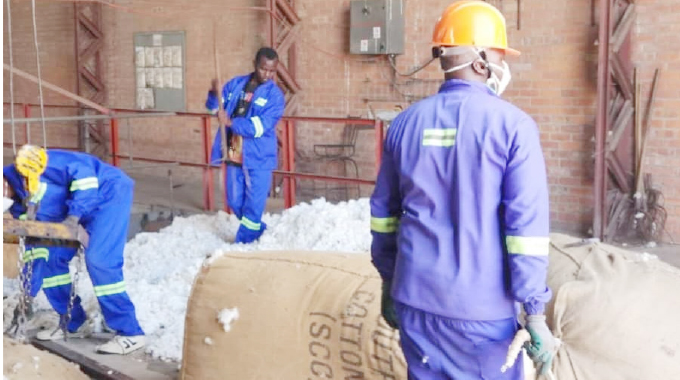
Patrick Chitumba, [email protected]
A COTTON ginnery that had been lying idle in Gweru since 2016 has been revived under new ownership, marking a major milestone in the country’s ongoing industrialisation drive and offering hope for farmers in the southern region.
The Southern Cotton Company, Zimbabwe’s second-largest cotton producer, acquired the dormant facility last year and has since breathed new life into it.
Operations officially resumed last week, positioning the plant as a key player in the country’s cotton value chain.
This revival comes at a time when cotton farming is experiencing a resurgence under the Second Republic, particularly through contract farming models that have helped mitigate challenges such as low producer prices and recurrent droughts.
Southern Cotton managing director Mr Caos Nzenze said the company is optimistic about the ginnery’s potential to transform livelihoods and spur economic growth in the region.
“We have revived operations at the formerly defunct ginnery in Gweru, which closed down in 2016. We acquired it last year, and ginning resumed last week.
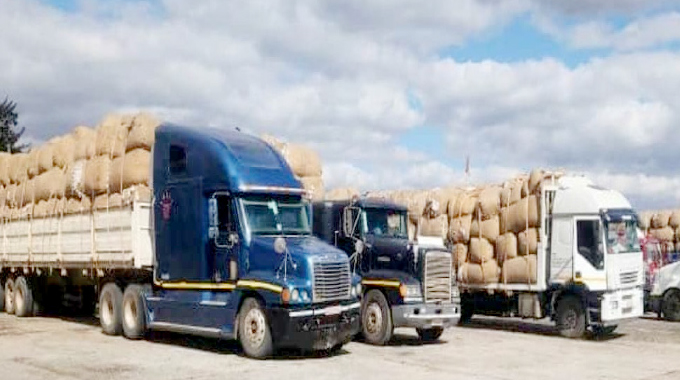
Trucks laden with cotton bales await off-loading
So far, we have received 3 000 tonnes of cotton at the site and we expect to process around 5 000 tonnes this season. We already have export markets lined up for our lint,” he said.
The company operates three cotton processing plants across the country, each capable of handling up to 100 tonnes of cotton per season, reinforcing its footprint in the agricultural and manufacturing sectors.
Southern Cotton’s operations and production director, Mr Saimanos Zhou, said the company is scaling up production through contract farming and the adoption of high-yield hybrid seed varieties.
“This season, we planted 1 000 hectares in the southern region. Going forward, we aim to boost production by contracting households through our outgrower scheme.
Each household will be supported with inputs sufficient for a hectare, which will significantly increase production and feed our processing plants,” he said.
The reopening of the ginnery has already had a ripple effect on the local community. New job opportunities have emerged and service providers in the area are witnessing increased business activity.
One of the workers expressed gratitude for the job opportunity.
“As a single mother, I can now send my children to school and pay my rent without difficulty,” she said.
The revival of the Gweru cotton ginnery not only restores lost industrial capacity but also signals the recovery of the country’s cotton sector, aligned with Vision 2030’s call for inclusive economic development and rural industrialisation.