admin
admin
Some of them have never seen a newspaper, let alone read one. They do not have access to local stations — both radio and television — and have no access to telecommunication networks.
Although they make a trip to Hwange every Thursday, they do not have time for other things except to do their shopping and at a designated time board the bus back to their compound.
Those who can afford thrive on information from neighbouring South Africa, which they access via satellite television.
Radios are used primarily to listen to music on compact discs (CDs) and the ancient cassettes.
The only life they know is the life they live at the compound. The latest news they know is about what happened the previous night to the woman next door.
“Isolated” is the word to describe the life they live.
This close-knit community speaks Nyanja, Nambya, Tonga and a little Ndebele. They all know each other as their houses are built so close to one another.
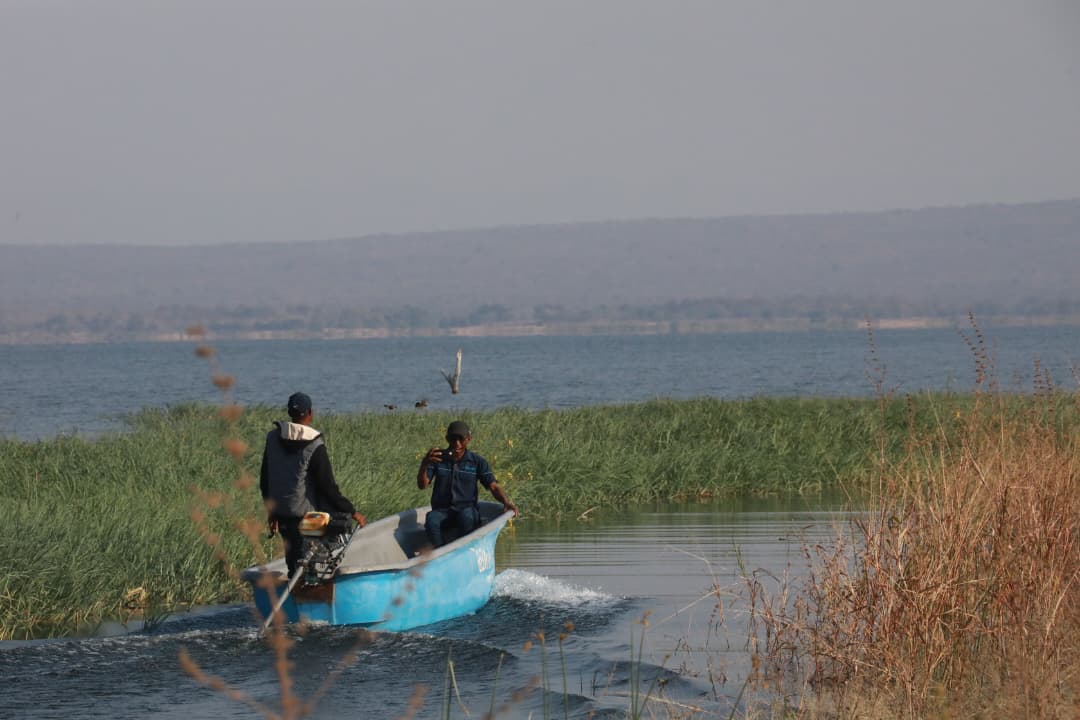
The men who have jobs work at the Zambezi Pump Station and those that don’t fish for a living.
The women do what the patriarchal society demands them to do — bear children, do the household chores and take care of the family.
Mr Bravo Mswazie (37), who works at the pump station, said the fact that they do not have access to information has been a great disadvantage to them.
“We do not have access to information. Uyab’ulokhu umangala izinto ngemva kwesikhathi eside zenzakele.
We seem to know more about South Africa than we do about our own country. We only hear about things months after they have happened,” he said.
Mr Mswazie said because of this, they were missing out on important things.
“Some of these things that we miss out on are things that could improve our lives. Even if we do not benefit much, we just need to keep in touch with what is happening in the country.
“The information we hear is usually useless by the time we get wind of it and this should not be happening. We are Zimbabweans that need to know what is happening in Zimbabwe,” he said.
Keyed up to be talking to this reporter, a Nyanja woman who could only be identified as NaPati and needed a translator from time to time caused a stir for a moment.
She was so excited because she had never seen or heard about the Chronicle although probably in her gut figured it was something important.
Her neighbour who was better informed explained to her in part what the newscrew was doing at their place of residence.
“Awa ndi atola nkhani aku Chronicle kuBulawayo. Atiyendera kuti adzaone kuti timakhala bwanji kuno. Mabvetsetsa? (These are journalists from Chronicle in Bulawayo. They are here to visit us and see how we are living. Do you understand?),” said Mrs Bright Nhau (32) her neighbour.
NaPati was visibly much younger than her neighbour. She had one daughter, nine-month-old Pati.
“We do not have access to information because we live so far away. All we know is what happens here. Efforts should be made to ensure that we have access to information about the country.
“It would be much better if we at least had access to Zimbabwean radio and television stations.
“We also need to be able to communicate with people beyond our compound. Our lives should not wait for Thursdays all the time,” she said after she had settled down.
NaPati sells fish for a living. It costs $3 per kg. Although there is less fish this season, she is one of the few people that are doing well in the business.
“I complement my husband’s salary by selling fish and the business is booming. We fish from the Zambezi River,” she said.
Shouting from where she was sitting, a stone’s throw away from NaPati, Ms Thabisile Ngwenya (47) joined in the fish conversation saying: “Fish are a bit difficult to find because it is now cold. They are seasonal and are usually available in summer. When they are available, it helps us a lot because we are able to get extra money.
“Although my husband works, the money he earns is not enough therefore the need to sell fish. It becomes a big disadvantage when they are not abundant.
“It is difficult to survive on one person’s salary. By the end of the month, we will be struggling.”
Ms Ngwenya has three children of secondary school going age. They learn at Neshaya Secondary School, about 5km away.
“I watch satellite television because we can not access local stations. It is too expensive for us to subscribe so we watch the free channels. Okunye kuyasiyeqa sikhona,” she said.
The people at Deka Drum do not practise subsistence farming due to the erratic rains in the region.
Mr Patience Sibanda (56) said he does not work and spends most of his time sitting at home. When asked how he managed to take care of his family without a steady income, he said he often borrowed from his neighbours because they were like a family to him.
“I try to fish here and there but when that is not successful, my neighbours help me out. We are a family here.
“It is not good to rely on other people too much but they have never complained so I do not really feel bad,” he said.
Mr Sibanda said he did not own a television set or radio. He watched his neighbours’ and listened to music whenever one of his neighbours played theirs loudly.
“We usually get news from other people, long after it has passed. We used to go to town every Thursday but now we go once a month and that is when we get our groceries.
“It is very quiet here but I have grown to like it,” he said.
When most people in other parts of the country cannot do without browsing the Internet to check for the latest news and check on their Twitter or Facebook accounts, when they cannot do without reading the newspapers or communicating with others using their mobile phones, the people at Deka Drum live blindly, without access to information.



 Online Reporter