Business Reporter
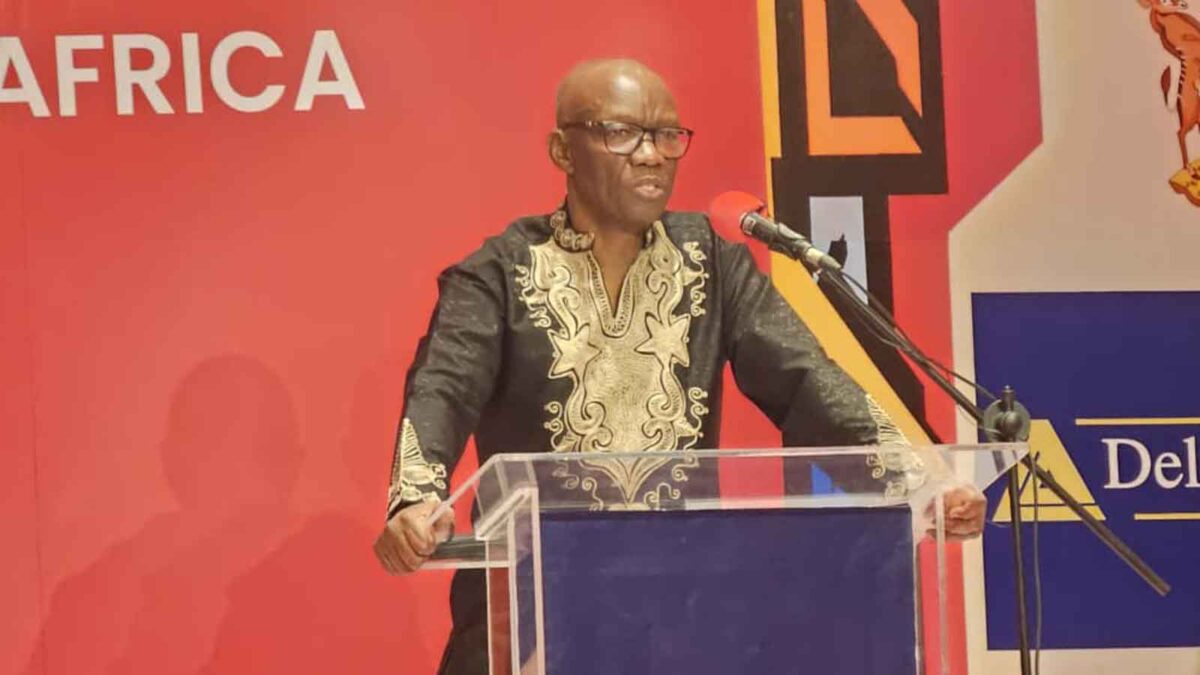
The private sector is willing to play its part in building a prosperous Africa, but achieving that scale depends on appropriate government policies, Delta Corporation CEO Mathologonolo Valela said on Tuesday evening.
Speaking as host of an exclusive cocktail reception on the sidelines of the 19th COMESA Business Forum in Harare, Mr Valela positioned the private sector as the crucial engine for regional growth, emphasizing that business must partner with “natural capital” for the benefit of future generations.
“The private sector is willing to play that role. We must play our role,” Mr Valela told the gathering of government, business, and industry leaders, adding that the business community provides “the finest capital advice.”
Valela used the platform to unveil the findings of a comprehensive new economic impact study conducted by global consultancy Steward Redqueen, which provided concrete data to back his appeal for sound policymaking. According to the study, Delta’s non-alcoholic beverage portfolio contributed US$473 million in economic activity across its value chain in Zimbabwe and supported over 27 390 jobs in 2025.
“This type of scale is possible with appropriate policies,” Mr Valela said, noting the company has consistently doubled its business metrics over the last five years. “This independent study reaffirms Delta Corporation’s essential role in Zimbabwe’s economic growth, job creation, and community development.”
The data revealed a massive employment multiplier effect: for every direct job at Delta Corporation, an additional 21 jobs were supported across the economy, spanning retail, agriculture, manufacturing, and services. The company also spent US$94 million procuring goods and services from local suppliers in 2025.
“Our business is deeply connected to Zimbabwe’s economy, and we are committed to hiring locally, sourcing locally, and producing locally,” Mr Valela added. “This allows us to be an integral part of the nation’s growth and ensures we continue delivering shared value for our partners and communities.”
His message of private-sector led growth was echoed by COMESA Business Council President Mucai Kunyiha, who challenged regional leaders to break down trade barriers. Mr Kunyiha described African borders as “artificial lines” that people and goods already cross daily.
“Everybody talks about it, everybody knows that opening those borders is going to help us. So it’s not a challenge in that sense — we’ve crossed that border,” Mr Kunyiha said. “Now we need to do the difficult work of making that happen.”
Mr Kunyiha acknowledged that harmonizing regulation across 21 governments is “difficult,” but urged the private sector to lead the charge. “This is a task of building that common market for eastern and southern Africa — it is a task for governments, for the secretariat, but most of all for us in the private sector,” he said. “Let’s lay these foundations… so that when our children and grandchildren come, they will remember that we started building these markets for them.”
COMESA Secretary General Chileshe Mpundu Kapwepwe also addressed the gathering, stating that industrialization and production capacity have become “big ticket” priorities for the bloc. She emphasized the need for private sector feedback and the aggregation of regional produce to meet massive export demands, such as those from China.