Online Reporter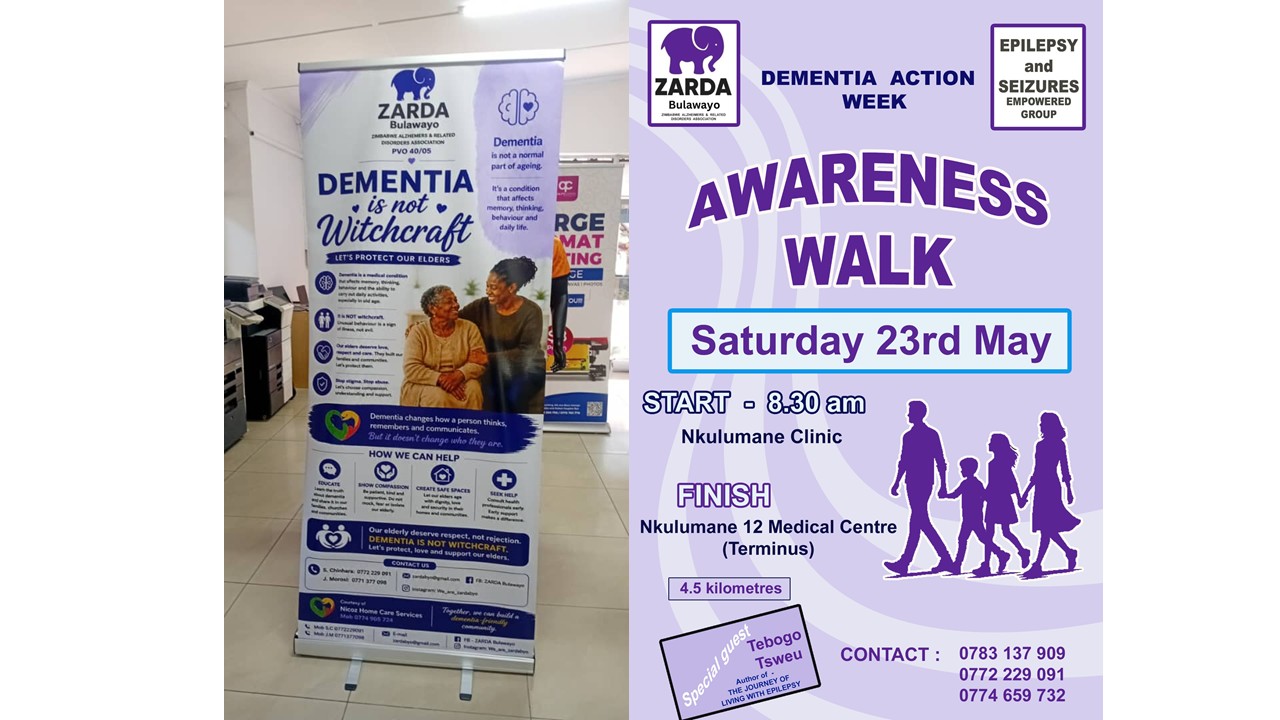
Sikhumbuzo Moyo, [email protected]
THE Zimbabwe Alzheimer’s and Related Diseases Association (ZARDA) will this Saturday lead a major awareness campaign in Nkulumane aimed at dismantling dangerous myths linking dementia and epilepsy to witchcraft and spiritual afflictions.
The campaign, which will feature a march from Nkulumane 12 to Nkulumane Medical Centre, comes as calls intensify for Zimbabwe to urgently develop a comprehensive national strategy to deal with dementia and related conditions.
ZARDA Bulawayo administrator Ms Cherilyn Young said many people suffering from dementia and epilepsy continue to endure stigma, abuse and neglect because communities wrongly associate the conditions with supernatural causes.
“Our objective is to dispel the stigma around dementia and epilepsy that it is witchcraft or spirits. This is a medical condition,” said Ms Young.
“Some of the treatment these people suffer through ignorance of the condition is extremely concerning. We want the community to know that there are people available to help through training primary carers, domestic workers and families as a whole.”
The awareness campaign marks the culmination of International Dementia Week, which runs from May 18 to May 24 under a World Health Organisation initiative designed to educate communities and families on managing dementia symptoms and stages.
Ms Young said families and caregivers often struggle to cope with patients because of limited knowledge and inadequate specialist support structures.
“We welcome Senator Angeline Tongogara’s call for a national policy to deal with these conditions. They can be complicated and very stressful on families and caregivers.
We desperately need homes in every centre in Zimbabwe with properly trained staff to care for people with this disease. It is a specialised field and is not covered fully in the medical training of doctors, nurses and nurse aides,” said Ms Young.
Recently, SenTongogara urged Government to urgently craft a comprehensive national dementia strategy, warning that the condition is becoming a major public health and social challenge in Zimbabwe.
Presenting a motion in the Senate, Sen Tongogara said dementia, including Alzheimer’s disease and related conditions, was no longer a peripheral issue but a growing developmental concern demanding coordinated national action.
She described dementia as a progressive and debilitating syndrome that gradually destroys memory, behaviour and the ability to live independently, stripping affected individuals of dignity and social participation.
The senator noted that the condition disproportionately affects older persons, particularly those aged 60 years and above, with prevalence increasing sharply with age.
“Far from being a distant or abstract issue, it is an immediate and escalating reality, both globally and within Zimbabwe,” she said.
Globally, more than 55 million people are living with dementia, with nearly 10 million new cases recorded annually. In sub-Saharan Africa, an estimated 2,1 million people were living with dementia as of 2015, with projections indicating the figure could rise to 7,6 million by 2050 due largely to increasing life expectancy and demographic shifts.