Chronicle Editor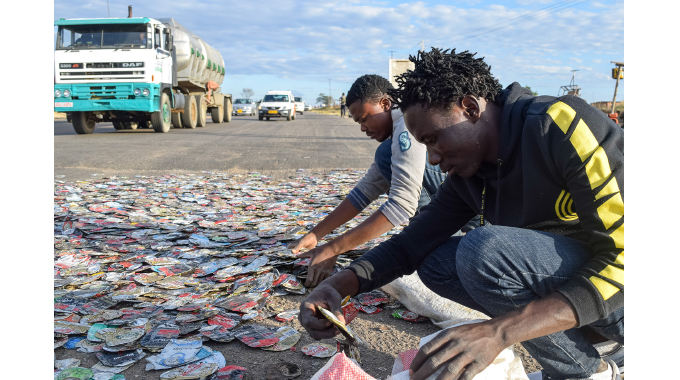
Qinisani Ndlovu, Correspondent
Pub discussions and arm chair analyses have shown that recycling is a fairly new industry in Zimbabwe.
On paper, however, this is an activity that began a long time ago; it just was not documented properly. I am a big believer in the notion that history carries nuggets of insights, that when closely analysed, history may explain the present and even guide practical choices, such as the need to get eco-friendly trays.
Further analysis of a combination between historical events and the present day, are likely to give birth to insights about the future. Therefore, in an attempt to unpack recycling, we need to make brief stops in history to try and understand why and how we are here, in the present.
Waste management dates back to the era when man used Before Christ (BC) and Anno Domini (AD) as the calendar, lets travel to 1031 A.D., where we encounter the earliest evidence of recycling recorded.
The Japanese shredded their old documents and records, and remade them into new sheets of paper; selling them through mom-and-pop stores around the country. Once people discovered the money to be made in selling raw materials, the modern-day recycling industry began. It is critical to understand that waste in the olden days versus the waste we have today is starkly different. Waste before the industrial revolution included organics; wood, ash, textiles, and food waste; which brings us to the gist of this writeup, what is recycling? And what can be recycled?
Recycling is defined as the act of reprocessing waste and creating new materials or objects. The key words in this very straightforward definition are (reprocessing) (creating), (new materials) and (waste). It has to be emphasised that operational definitions are paramount whenever obscure concepts are introduced.
I am compelled to use this very simple definition as it is one that is widely adopted globally. Now that we have a working definition in place, we begin unearthing common materials that are recycled in Zimbabwe. Materials such as aluminium, paper, plastic, food waste, wood, water, metal, textile, glass, E-waste, rubber, batteries, wire, construction and demolition debris.
With respect to the innovativeness of Zimbabweans, I will add the phrase “among other recyclable materials”. We are creative by nature as a people and therefore I would not want to limit the list.
The above list contains the mainstream materials that are often hunted by waste pickers, their value, the technology required to recycle and their end price which vary according to the composition, level of contamination, the supply and demand side as well.
In Zimbabwe, the term “recycling” is used interchangeably and this has created a bubble of confusion. An individual or organisation that collects waste materials, and sells or supplies another individual or organisation, cannot be classified as a recycler. That activity is termed recovery, where recyclable materials are identified and recovered for the purposes of recycling, and is normally conducted by a materials recovery facility. In the absence of such a facility, the waste pickers step up and act in place of a Material Recovery Facility.
I propose a different term to replace “waste pickers”, to create a better understanding of the waste management supply chain. I would call them Recovery Agents.
Another scenario where recycling is misused involves the reuse of waste material to create a new product, yes, its waste material, yes, it has created a new product, but is the material any different from what it was as waste?
Reuse lacks the processing aspect, and it is therefore different from recycling.
Qinisani Ndlovu is a recycling entrepreneur and a solid waste management practitioner based in France. He writes in his own capacity.



 derick.khumalo