Online Reporter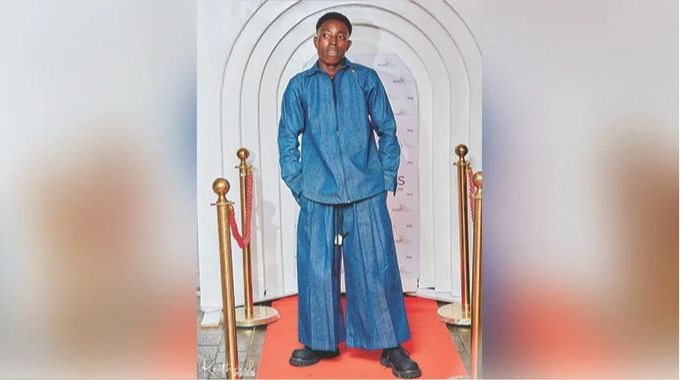
Mthokozisi Ncube
WHAT started as a schoolboy’s desperate hunt for lunch money has blossomed into a fashion empire for Panashe Muchuchuti — and now the young designer is dressing queens on the national stage.
Muchuchuti, popularly known as Designer Kirisi or For3ver, started selling printed clothes while doing his A-Levels in Harare between 2022 and 2023.
Back then, he was not dreaming of fashion shows, beauty queens or national titles.
He simply needed to survive.
“I needed lunch money, so I started a small apparel brand. It wasn’t creative at first, I was just printing and selling what I could to survive,” he said.
“But I’ve always been a fan of fashion, so I started paying more attention to detail, to cuts, to how clothes make a person feel.”
What began in school corridors soon became much bigger than a few printed T-shirts.
Muchuchuti started sourcing materials with whatever little money he had and taught himself the tricks of design, branding and fashion through trial and error.
Then came the realisation.
“I rebranded to For3ver Alone because I realised I wasn’t just selling clothes, I was building an identity,” he said.
Today, the Harare-born designer, who has roots in Buhera, specialises in streetwear — with denim being his playground.
And he has no intention of allowing denim’s casual reputation to box him in.
“I call it streetwear without limits. I can take denim, a fabric people think is casual, and craft it into anything — a denim bridal dress, a denim formal suit, a statement piece. That’s my edge,” he said.
His big break came through Miss Rural Zimbabwe, where he initially joined as a designer creating outfits that celebrated rural beauty through contemporary fashion.
His work for Mashonaland East caught attention and opened another door.
Muchuchuti is now the official designer for Mashonaland East and has been promoted to National Assistant Wardrobe Manager for the Miss Rural Zimbabwe Pageant.
From designing outfits, he is now helping bring together the fashion teams behind contestants from across the country.
And that comes with its own challenges.
“Every province has its own story. The way someone from Matabeleland sees fabric and patterns is different from someone from Manicaland, and that diversity is our strength. It’s not competition, its culture,” he said.
“Creativity is personal, so coordinating different visions requires you to listen more than you speak.”
His promotion, he said, was partly a result of the experience he gained working with the Mashonaland East team.
His responsibilities now include planning, sourcing, fittings, timelines and ensuring contestants step onto the stage looking the part.
But behind the glamour lies an industry where young designers often have to make do with very little.
Muchuchuti cited inconsistent fabric quality, limited funding, expensive equipment and demanding clients among the biggest headaches facing emerging designers.
“Fashion needs capital. From sourcing quality denim and other materials to paying for proper machines and marketing, we often have to be creative with very little. As young designers, we are funding our own dreams,” he said.
He also believes talented designers outside Harare still struggle to get noticed.
That is where platforms such as Miss Rural Zimbabwe come in, he said.
“Before this, if you were not in Harare, it was hard to be seen. Miss Rural Zimbabwe brought the spotlight to the villages. It says talent can come from Buhera, from Murewa, from anywhere,” he said.
Muchuchuti wants to see more investment in Zimbabwe’s fashion industry, including funding, access to quality materials, mentorship, fashion shows and digital marketing opportunities.
“We need more platforms like Miss Rural Zimbabwe that are not only based in Harare. We need fashion weeks, exhibitions and online markets that actively promote rural and young designers,” he said.
But the young designer is already looking beyond beauty pageants.
His big 2027 dream is to break into costume design for international film productions, with Netflix among the platforms he hopes to reach.
His ambition is to put Zimbabwean fashion and heritage on the global screen.
“I want to take our Zimbabwean fabrics, our rural heritage, and put it on the world screen. I want people to see a film and say, ‘That costume is Zimbabwean,’” he said.
He also dreams of establishing a fashion house where young designers, particularly those from Mashonaland East and other rural areas, can learn, create and earn from their skills.
And his ultimate dream?
To see Zimbabwean fashion take its place on the international stage without losing the culture that gave it life.
“My goal is to go from dressing queens on a national stage to dressing stars on an international stage, while never forgetting where I came from,” he said.