admin
admin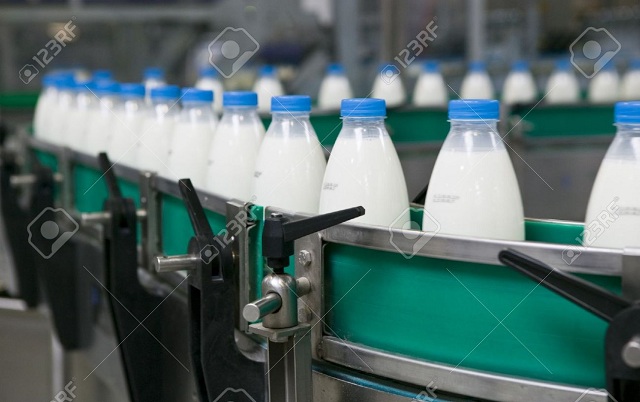
Dumisani Nsingo, Senior Farming Reporter
THE country’s milk processors are reportedly struggling to dispose huge stocks of milk products into the market owing to a depressed demand by retail outlets.
Zimbabwe Dairy Services chief dairy officer Mrs Tendai Marecha said low demand for milk products has led to accumulation of the produce at most processing plants as its uptake has severely dwindled.
“There are reports of milk gluts that are being received from most of the milk processors with some having to turn away producers. Our inspectors are having a torrid time in inspecting dairy products at retail outlets most of which have gone beyond their expiry due to low consumer demand.
“We are encouraging milk processors to scale down on raw milk uptake and focus on long shelf life products because failure to do so will see them cushioning all the irregularities of the economy,” said Mrs Marecha.
The low uptake of raw milk products is being attributed to an influx of imported Ultra-High-Temperature (UHT) and powdered milk products.
UHT milk, if not opened, has a typical unrefrigerated shelf life of six to nine months. HTST (High Temperature/Short Time ) pasteurised milk has a shelf life of about two weeks from processing, or about one week from being put on sale.
“The world price of powdered milk is now very cheap as compared to that of raw milk, locally raw milk costs between $0,55 and $0,62 (per litre) while powdered milk costs $0,25 to $0,30. Thus a number of players are using powdered milk to produce various milk products,” Mrs Marecha said.
The country is producing 60 million litres of raw milk annually against a demand of 120 million litres with the deficit being covered by imported UHT and powdered milk products.
“We have already submitted our position paper to the Ministry (Agriculture, Mechanisation and Irrigation Development) to address various challenges that are being faced by the sector including the glut which we are currently facing as we move towards regulating the entire sector,” Mrs Marecha said.
Last year, the country’s big milk processors made huge investments in a bid to be competitive with Dairibord Holdings opening its refurbished steri-milk plant in Chipinge while Alpha Omega also opened its UHT plant.
“There is however, positive growth in the sector with Dairibord and Probrands expected to set up their UHT plants soon. Dairibord didn’t have box milk and were importing the packaging but it will be now doing it on its own,” Mrs Marecha said.
Industry statistics show that Zimbabwe’s dairy cow herd stands at 26 000, down from a peak of 119 200 in the 1990s.
This has resulted in low milk production in the country — local raw milk production is 4,5 million litres per month against estimated national demand of slightly over 8,1 million litres per month.
Last year stakeholders in the dairy industry came up with a Dairy Revitalisation Programme, which is being spearheaded by the Zimbabwe Dairy Industry Trust, an organisation comprising dairy farmers, milk processors and Government agricultural departments.
The organisation realises its funds through levies paid by players in the dairy industry as well as a specific levy obtained from companies importing UHT milk.
In 2014, Zimbabwe Association of Dairy Farmers signed a three-year partnership with We Effect (formerly Swedish Co-operative Centre) to enable local dairy farmers to continue improving their capacity to provide services to their members.


 Online Reporter