admin
admin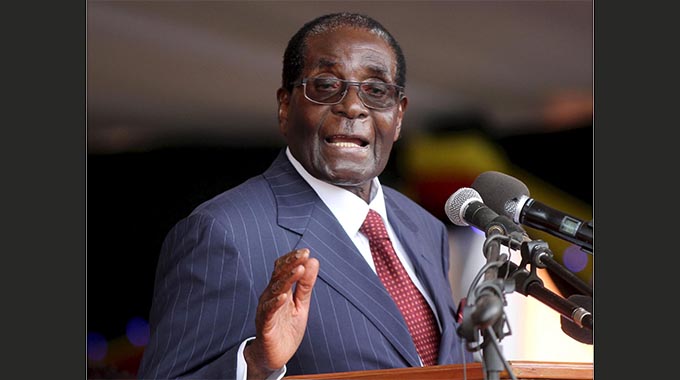
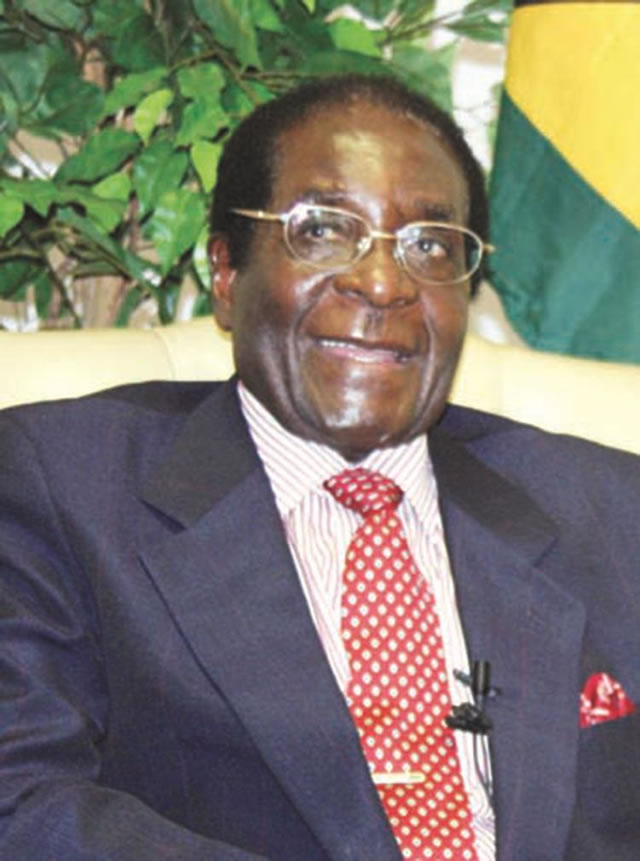
In 2013 he was chosen by his people to lead Zimbabwe for the next five years. And his colleagues in the SADC region also chose him to become the chairperson of SADC in 2014. And again, in the African Union, his colleagues in Africa chose him to become the next chairperson of the AU in 2015. Hallo and welcome to this special programme, President Robert Mugabe at 90. My name is Tarzen Mandizvidza (TZ) and my special guest on the programme is, of course, His Excellency the President Cde Robert Gabriel Mugabe (PM).
TM: Your Excellency, thank you for giving us this time.
PM: Thank you.
TM: Although we are having this interview a day before your birthday let me start by saying congratulations on turning 90.
PM: Thank you. Not yet. I am not yet there but I hope I will get there.
TM: Yes, Your Excellency. How is your health?
PM: As fit as a fiddle as you can see. A few itches in the left knee are beginning to give a bit of trouble but we are taking care of it. Then cataracts I have had removed from the right eye…That’s about all.
TM: Right, Your Excellency let me take you to 1980. A young Robert Mugabe comes into office full of ideas, dreams of a better Zimbabwe and you have been working since then but now let’s come to 2014 the same Robert Mugabe, what drives you to wake up every morning and go the office?
PM: What drives me? The work does. If you have a task you know to undertake and that task is an important one like the task of Government is. It has to address, you know, the problems of the country, the development of the country, the various interests that are covered by our policy and you have a team to supervise. You have to be getting up every morning and quite early for that matter. Not just for five days but for a good seven days and perhaps eight days in the week.
TM: Talking about supervising and leading those that you work with, only last year you were in an inclusive Government where you were with a partner that you managed to work with but did not always agree with and there were quite a lot of problems there. But today you are leading a Zanu-PF government. What is the difference? How do you look at the inclusive and the Government that you lead now?
PM: Oh well, there is a difference, a huge difference. In the case of the GNU you had a party whose policies are diametrically opposed to your own and you had to try and adjust to see what areas were there of agreement and possibly even look at the areas of disagreement so you circumvent them and use the aspects which emerge from the areas of agreement and use that. But we had the requirement, constitutional requirement to fulfill. We had not done well. The MDC had beaten us in terms of votes and Tsvangirai had scored 47 percent, I had managed to score 43 percent. We accepted that imbalance but our constitution required that if the winner did not get an outright 50 percent plus majority then there should be a rerun and we did a rerun. My other partner, my partner or counterpart, joined in the rerun as the opponent and along the way, well, he developed cold feet and wanted to withdraw but it was impossible legally for him to withdraw now.
And so at the end of it all I won the election and I was then congratulated and became President once again but on the advice of our friends in SADC who wanted to see some peaceful settlement of our situation here and feared that if that didn’t happen perhaps we would engage ourselves in crisis and there would be a disturbed situation in Zimbabwe. They recommended that we create the Government of National Unity which we did and this is why we had to now decide to work with our opponents and fortunately they too were willing to work with us and we had to find each other, discuss with each other, perhaps insulted ourselves in the first place only for us to say: “Ah, okay we have now done enough of insulting each other, let’s now work together and respect each other.” So at the end of the day it was that respect for each other that carried us right through and we would be friends again and we saw ourselves doing lot of things. Later on, the new constitution; it had to do lots of rounds and we had to be patient with those various rules expressed and those various tactics, delaying tactics along the way. But then at the end of the day we got there and we emerged with a new people-oriented, people-driven constitution, and we had an election. Zanu-PF won that election on the 31st of July and here again. So that’s why I am here in State House and that’s why you are able to talk to me again as President of Zimbabwe. And the event is a happy one for our people and a happy one for our party; an unhappy one for the MDC and the other but we are expecting that they will respect the decision of the people. But of course, defeat is very sour and painful and you take time to adjust to it. But I hope, in due course, they too will adjust. I don’t see them continuing this hardline way of reality, what there is, the opinion of the people, if it’s an honest view demonstrating that the people want change so let it be. We accepted the 43-47 ratio in 2008, that was a decision, we did not reject it. So here we are once again.
TM: So 2013 you have been given this mandate to run the country for five years, what are your plans for 2018?
PM: 2018? Ha, you want us to go beyond that and say 2020. We have given the people our Zim-Asset objectives, here we are, we have been wanting to ensure that the basics really are taken care of, poverty, hunger, and thank God, the Almighty has responded to our Zim-Asset this year and we expect a bumper harvest. We ask people, this is not just me talking out of a wish but the people everywhere are saying bumper harvest, bumper harvest. Yes, the rains have even yielded floods in some places but they are saying no, the crop has not been affected and it’s a very good crop. And those who have done it the cash way and have grown tobacco are already about to sell, you know, their leaf. They are very happy but their complaint is that the rains have the effect of getting the tobacco mature quickly when they expected it to mature gradually but maturing properly, albeit quicker than expected. But everywhere where they have grown tobacco and I noticed that in areas where they thought tobacco would not grow and where people have tried just to put a few of their hectares to tobacco and grow tobacco, they are very happy and they say, ah, so tobacco can do in this area. Matabeleland for example, they say it’s beautiful, beautiful tobacco, and our only fear is that tobacco might encroach on land that we need to grow other crops because so many people are putting now quite a hectarage. Even those in A1 resettlements are growing, now tending to grow more and more tobacco on more and more hectares and they have only six, so if they devote say half of their land to growing tobacco that means three or four are left to grow maize, grow groundnuts and other crops. Maybe in the future you may see shortages in that area and we don’t want shortages to occur in those areas. And these are small growers: the big growers have lots of land; are not able to use all their land. There is hardly a farmer, with, say 500 hectares, let alone those with more than that, with 1 000 or more, who is using all that land and tilling it satisfactorily, no. If a person tells you that he is putting all the land to good use, yes, if he has cattle and goats taking up the rest of it, but we cannot do that kind of farming. Yes, our elders used to do that, they used to have cattle and goats but then the population was still a small population. So there it is, we are on Zim-Asset and we are talking of 2014 and 2018. Well, we will get there, and when we get there of course you must rethink, re-examine, review your policies and where they end. So you look backwards, you look at the present and then what would have become the present state of affairs, the situation as you see it and forward into the future beyond 2018 and then, fine, you plan afresh and see what good from the past you can carry into the future and what failures of the past you can now correct and make good so the improvements can now be done to your policies in the future.
To be continued


 Online Reporter