Chronicle Editor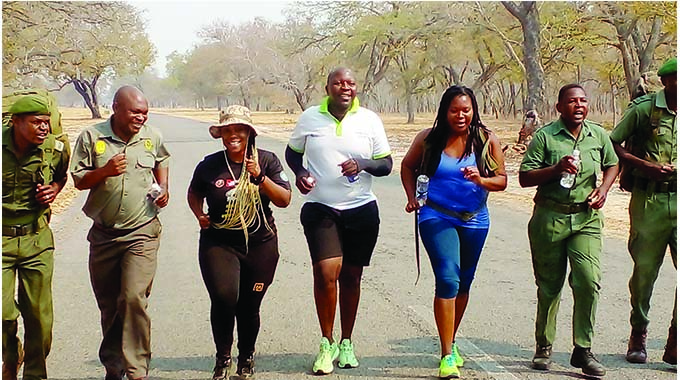
Fairness Moyana recently in Dete
THE role of wildlife rangers came under the spotlight over the weekend as corporates and tour operators organised a programme at Dete in Matabeleland North to honour rangers as guardians of nature.
Now in its fifth year, the annual Wildlife Ranger Challenge (WRC) is coordinated by Tusk and the Game Rangers Association of Africa.
The WRC is a unique physical endurance test that connects over 170 teams of wildlife rangers from 24 African countries and symbolises the growing movement of global solidarity with the wildlife ranger profession.
Teams participate in a series of mental and physical challenges leading to the commemoration day in a multi-nation half-marathon across some of Africa’s most remote and beautiful landscapes.
This year’s edition comes amid calls to do more to improve the welfare of wildlife rangers and to support front-line conservation work.
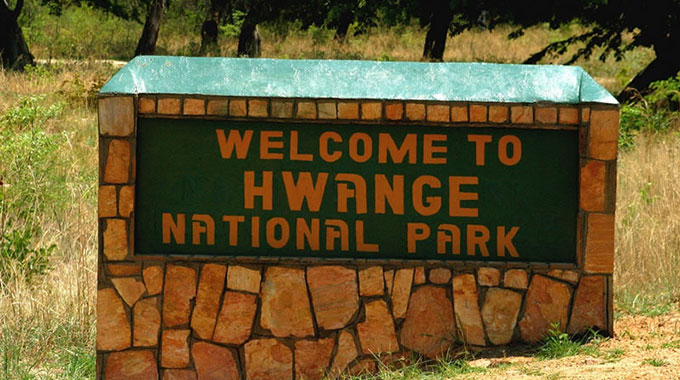
Wildlife rangers, community and tourism players’ anti-poaching teams joined various stakeholders in the 21,1km half-marathon from Cross Mabale to Hwange National Park’s Main Camp, as part of efforts to increase global recognition of the importance of the wildlife ranger profession.
Besides testing endurance where men carried 22kg kit and women carried 10kg, the challenge’s objective was to communicate the various roles and multiple daily challenges of rangers and to raise funds for front-line conservation work. It was also aimed at fostering connection and camaraderie among the participants.
Officiating at this year’s event Zimparks Southern Regional manager, Samson Chibaya called for a well-coordinated arrangement that ensured funds raised reached the intended beneficiaries. The initiative has since raised over US$18,5 million with support from founding donors, Scheinberg Relief Fund, since 2020.

“It is recognised that these conservation giants face quite a number of challenges. For instance, rangers often lack adequate equipment, necessary training and their wages are typically low,” said Mr Chibaya.
“This global campaign creates a united front for conservation, driving donations to secure vital funding and connecting virtual race participants around the world to run in tandem with Africa’s biodiversity guardians.
“One of the key objectives of the activity is to raise funds to support rangers and wildlife. Let’s grow the collaboration much wider, competing with others like the Kaza approach.
“These men and women sacrifice to remain in the field separated from their homes and families for a long time extending from weeks to months.

“They invest more effort in patrolling protected areas, monitoring wildlife, fighting poachers and protecting wildlife habitats. Despite the enormous risk of loss of life in the wild from dangerous animals and armed poachers, rangers’ dedication towards achieving our conservation goals is invaluable. In order to protect the planet’s remaining biodiversity, we must fully recognise that wildlife rangers are key workers of conservation and are integral to urgent global efforts to maintain the world’s ecological balance.”
The WRC has become a lifeline for Africa’s rangers, raising vital matched funds that help to improve working conditions and provide professional training and field equipment.
Painted Dog Conservation (PDC) chief administration officer, Miss Sanelisiwe Emma Mlilo, also called for an improvement in the welfare of wildlife rangers to match the risks they are exposed to.
“Despite the vital nature of their varied work with both wildlife and people, the wildlife ranger profession is not fully understood. To be a ranger in Africa is to carry out hazardous and sometimes life-threatening work,” she said.
“They face threats to life from armed poachers and illegal wildlife trafficking networks, as well as attacks from predatory animals. Violence, injury, disease and death are not uncommon in their line of duty.

“There is also a critical lack of insurance cover for rangers and their families, with about 50 percent of rangers not having life insurance.”
The WRC was set up as an emergency response to the Covid-19 pandemic, with the aim of keeping wildlife rangers employed throughout the global crisis.
According to WWF’s “Life on the Frontline” report, from 2019 nearly 89 percent of rangers surveyed in Africa faced a life-threatening situation with 70 percent contracting malaria within a 12-month period.
Statistics from the International Rangers Federation show that between June 2022 and May 2023, Africa had the second highest number of ranger fatalities in the world.
This year’s challenge was sponsored by Painted Dog Conservation, Zimparks, Nyaradzo Funeral Group, European Union, Hwange Safari Lodge, The Conservation Conversation, Better Brands and other local tour operators.



 Online Reporter