Online Reporter
Michael Tome
Business Reporter
Property developers have implored the Government to caution the continued lateral expansion of housing projects into prime agricultural zones, amid growing concerns that it could threaten Zimbabwe’s long-term food security.
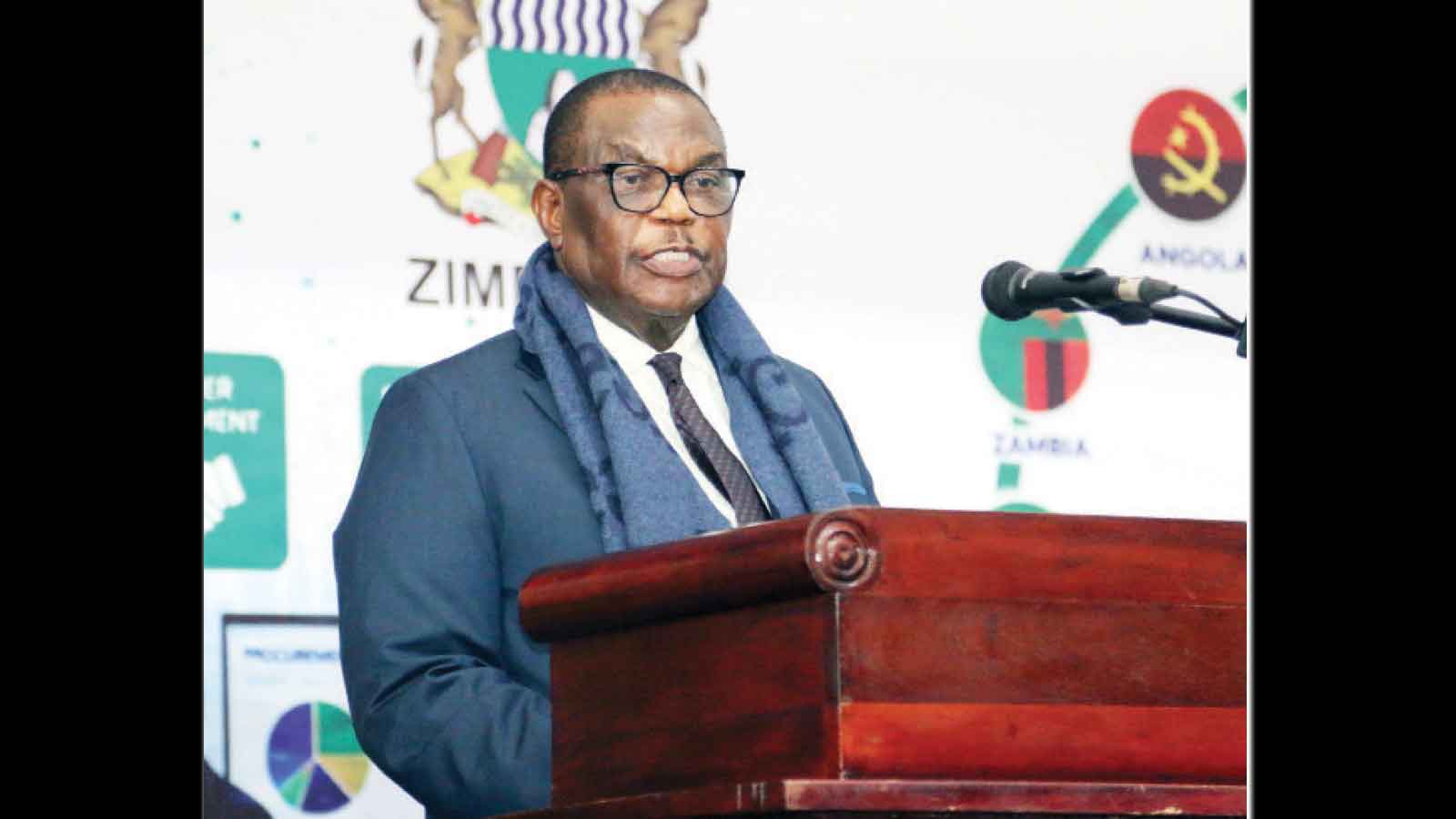
Founder and managing director of Homelux (a diverse group of companies firmly established in the real estate business), Mr Justin Machibaya, said this at the Property Developers Association of Zimbabwe (PDAZ) conference held in Harare last week.
He said the Government should enforce stricter policies promoting vertical construction and urban densification, rather than allowing unchecked horizontal expansion.
Mr Machibaya noted that growing cities and towns upwards would preserve fertile agricultural land while accommodating the nation’s growing housing demand.
His sentiments come as property development continues to expand across the country’s fertile regions, with much of the ongoing construction encroaching into prime farmland most suitable for crop production.
“It is good that the nation is developing, and it is commendable to see housing and infrastructure spreading across the country. However, if we are not careful, this expansion will eventually catch up with us. We may have people living in beautiful homes, but food security will be compromised because we are building on land meant for farming,” said Mr Machibaya.
Mr Machibaya indicated that unlike other developed nations that maintain strict land-use policies to protect agricultural zones, Zimbabwe risks losing vital farming land if the trend continues unchecked.
“If you look at the United Kingdom, about 67 percent of its land remains reserved for agriculture, and in France, the figure is around 56 percent despite the high level of urbanisation.
“We must ask ourselves what Zimbabwe will look like 50 years from now if we continue building on land meant for food production and water harvesting?”
He said this shows how strategic planning and policy frameworks can reconcile extensive agricultural preservation with dense urban growth, offering a model for balancing development and food security.
“Zimbabwe does not have the luxury of losing arable land; we have to innovate to build smart cities, redevelop brownfields, and create new land through proper planning rather than consuming the land that feeds us. Land is a finite resource which must be used wisely.”
Stakeholders in the real estate sector have long suggested the adoption of vertical housing models and the development of satellite towns in less productive regions as sustainable alternatives to lateral expansion.
Speaking at the conference, PDAZ chairman Mr Arnold Khanda said the only sustainable solution is to promote densification and vertical construction, building upwards rather than outwards, to accommodate growth without compromising our agricultural and environmental assets.
“As we speak, Harare alone faces a housing backlog of over one million units. If we continue to expand outward to meet this demand, we will quickly run out of land, which is a finite and irreplaceable resource,” said Mr Khanda.
Vertical construction offers significant advantages over lateral development in terms of maximising land use. It encourages maximised land use as it accommodates more people or businesses per unit of land, which helps to curb uncontrolled outward expansion and preserves surrounding natural habitats, agricultural land, and green spaces.