Chronicle Editor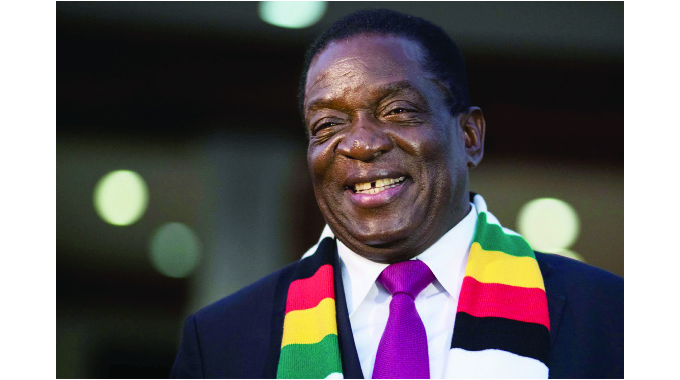
Blessings Chidakwa, Zimpapers Elections Desk
ZANU-PF will resoundingly win the August 23 harmonised elections as it is implementing an impressive battery of developmental projects that speak to the needs of the people through national programmes like Devolution, President Mnangagwa has said.
In excerpts from an interview with Brick by Brick magazine, President Mnangagwa said the Constitution has a provision for Devolution and his Government has been thoroughly implementing it such that once marginalised communities are now actively participating in the development of their areas.
Devolution has been at the heart of President Mnangagwa’s Government. When he assumed to power in November 2017, he made it his mission to ensure Devolution was implemented as it resonated with his policy of “development that leaves no one and no place behind”.
“Go and ask villagers how happy they are because of Devolution. Now, for the first time, they access funds to deal with the immediate environmental problems they face.
“We used to make decisions in Harare to affect a villager in Chipinge or Plumtree, but now we put funds to the village in Beitbridge, put funds in Mt Darwin so that at village level they decide what to do,” he said.
The President added: “This is the concept of Devolution that is in our Constitution and we are implementing it. I am happy I am obeying the Constitution.”
Speaking of his chances of winning this year’s harmonised elections the President said his victory is inevitable.
“Oohh, even if I was asleep and you woke me up and ask me the same question, I will answer the same way – resoundingly. Because people like Zanu-PF. Wherever you go, they know about Zanu-PF, the revolutionary party that bought them independence. What else would people want?” he said.
The numbers at the rallies have been revealing and exciting for the ruling with people saying they are determined to vote for Zanu-PF because of the tangibles like dams, roads, clinics, and guaranteed food supplies.
This is primarily because of Devolution, under which development is being felt countrywide with the manifestation of employment, education opportunities, and infrastructure development being witnessed in the once marginalised areas like Kanyemba and Binga.
A compendium of Government projects from 2018 to 2022 alone reveals that 6 869 projects were implemented nationwide including road rehabilitation, construction and upgrading of health facilities, schools, dams, and drilling of solar-powered boreholes among others.
In the same Brick by Brick edition, Local Government and Public Works Minister July Moyo said President Mnangagwa personally pushed for Devolution in his quest to see the upliftment of every citizen.
“So the President’s mantra is what prompted him under the Second Republic to say let’s implement Devolution. He is very clear. The Constitution was passed in 2013, but nothing happened on the Devolution front.
“However, during the first meeting of the Cabinet in 2017, soon after he came into power, President Mnangagwa boldly said we must implement Devolution,” he said.
Minister Moyo said through Devolution the President has his eyes on each of the country’s 35 000 villages.
“You know President Mnangagwa’s mantra of leaving no one and no place behind. No place, no village, and no district shall be left behind in terms of development. You can only do all this if you give the necessary powers to that village, to that ward, to that district, and to that province to articulate their own issues,” he said.
Minister Moyo said when power is devolved people would have been given power to do as they please.
“Government must follow what the people want. When the people want a borehole, they sit in their ward, they sit in their council, and say we want a borehole. They may say we want a school, a clinic, etc, etc, (but, it’s entirely up to them),” he said.
“Devolution funds are not given by saying 100 divided by 92 local authorities. You use criteria that are in favour of lifting those who are lagging behind. You use your poverty, your poverty depth, you use your infrastructure deficit and you use your population data.”
The Devolution governance model is regarded as being a more democratic, citizen-centered, participatory, transparent, accountable, and locally relevant development-focused system.


 Online Reporter