Online Reporter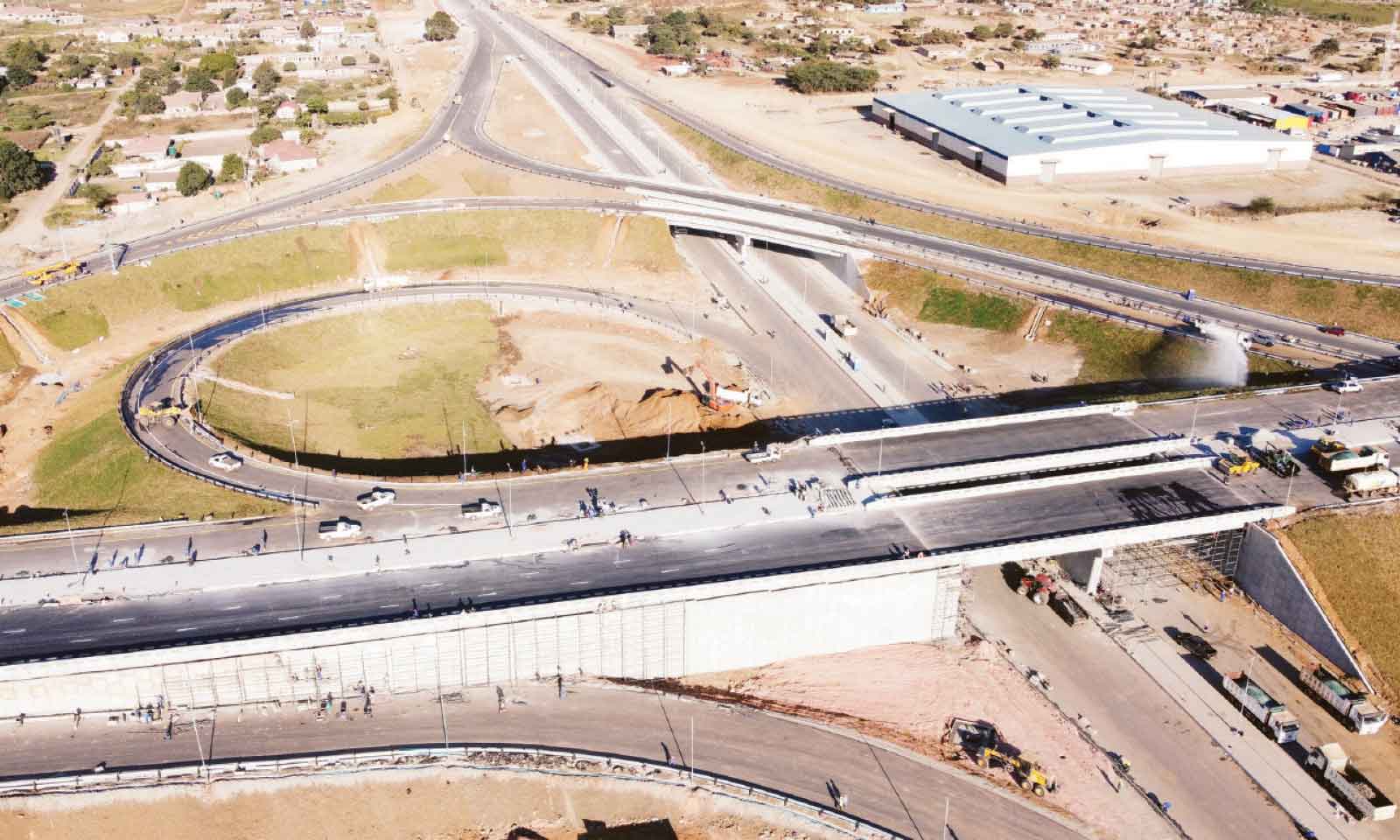
Masimba Mavaza
Correspondent
President Mnangagwa’s Government has made significant strides in various development projects this year, aligning with Zimbabwe’s Vision 2030 to become an upper-middle-income economy.
Economic Growth and Reforms
Zimbabwe’s economy is projected to rebound strongly in 2026, with an estimated 6.6 percent GDP growth, driven by robust growth in agriculture, services and investments in mining and steel.
The Government has implemented policies to improve the business environment, including the Presidential Ease of Doing Business Initiative, which has led to the reduction or elimination of several levies and fees.
Infrastructure Development
The Government has spent over US$2,5 billion on infrastructure projects, including:
Road Construction and Rehabilitation: Dualisation, upgrading and rehabilitation of roads, with a focus on all major highways.
New Parliament Building: Construction of a New Parliament building in Mount Hampden.
Border post Expansion: The refurbishment of the Beitbridge Border Post to improve efficiency.
Airport Upgrades: Expansion of the Robert Gabriel Mugabe International Airport.
Agricultural Development
The Government has constructed 1 200 dams to support irrigation schemes and create over 50 000 fish farmers. It has revamped Irrigation Schemes: Transforming households from subsistence to commercial agriculture.
Mining and Energy
The mining sector is expected to grow, with investments in lithium and iron ore. The Government aims to achieve a US$12 billion mining economy by 2023.
It has made significant strides in sustainable energy development, aligning with Vision 2030 to become an upper-middle-income economy. Some key projects and initiatives include:
Renewable Energy Expansion: The Government aims to increase renewable energy capacity to 2 640MW by 2030, with a focus on solar, wind, and hydro power.
National Energy Compact: This initiative targets universal electricity access by 2030 and clean cooking by 2050, with investments in solar home systems and mini-grids.
Zimbabwe Renewable Energy Fund (ZimREF): Launched in 2024, this fund mobilises $100 million for renewable energy projects, promoting private sector investment and community development.
Solar Power Projects: Companies like Paramount Garments Exports and Proplastics Limited are adopting solar PV solutions, with capacities ranging from 0.41 MW to 35 MW.
Rural Electrification: The Government plans to increase rural electrification to 75 percent by 2030, with initiatives like the Presidential Rural Solar Power Scheme.
These developments aim to improve energy access, reduce greenhouse gas emissions, and promote economic growth. Local communities are expected to benefit from increased energy access, job creation, and improved health outcomes.
The Government has ambitious plans for sustainable energy, aiming to increase renewable energy capacity to 2,640 MW by 2030, with a focus on solar, wind, and hydro power. The National Renewable Energy Policy and Biofuels Policy are key initiatives driving this transition.
Impact on Communities
Job creation: Ten thousand new jobs were created this year in the renewable energy sector.
Improved energy access: Enhanced energy security for rural communities, boosting agricultural productivity and livelihoods.
Climate change mitigation: Reduced greenhouse gas emissions, aligning with Zimbabwe’s commitment to reduce emissions by 33 percent per capita by 2030.