

 admin
admin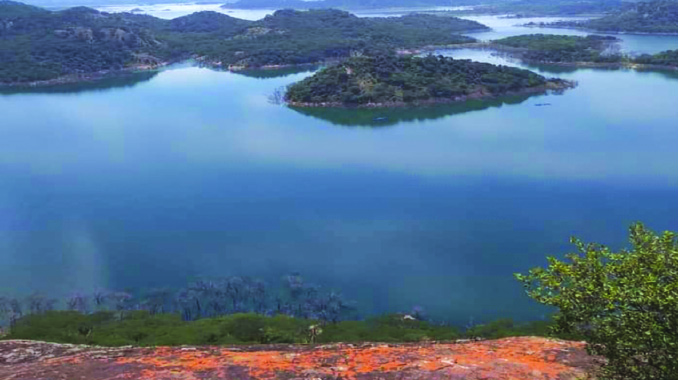
Lovemore Chikova Development Dialogue
Progress being registered in the devolution process through which central Government is financing development projects should inspire provinces to start thinking about how they can effectively harness their advantages.
Many districts have been publishing developmental projects they have embarked on using devolution funds distributed by Treasury, which is well and fine.
At least it shows they have been wisely using the devolution funds.
But reality should start dawning on officials in these areas that central Government cannot continue funding such projects forever.
Time will soon come when they will be asked to be accountable for their own development, and this means harnessing resources within their jurisdiction to fund local projects.
It is then important that these provinces and districts start looking at what they can do to start enhancing their Gross Domestic Products.
Devolution is provided for in Chapter 14 of the Constitution, with its main goal being the equitable allocation of national resources and the participation of local communities in the determination of development priorities within their areas.
What is not in dispute is that these provinces have enough endowments in terms of resources and other necessities to stir their own developmental programmes.
Masvingo Province
An analysis of Masvingo province will show that it has a potential to stand on its own in terms of pushing forward its developmental agenda because of the endowments that already exist.
In mining, Masvingo already has a number of minerals that can uplift the province if they are fully exploited.
There is chrome in the province, while diamonds were recently discovered at Sese in Chivi.
In addition, Murowa Mine is mining diamonds on the part of Chivi which falls under Masvingo province, while asbestos have been mined for years in the province.
On the other hand, Bikita Minerals in Bikita district has been running since 1950 and is one of the largest lithium mines in Zimbabwe.
There is also Renco Mine in Masvingo South which specialises in gold, while Steel Makers is mining coal in Chiredzi, with its plant in Masvingo City involved in the steel industry.
In the agricultural sector, Masvingo boasts of several water bodies with the potential of making the province a green belt, while assuring food security through irrigation.
There are big water bodies including Tugwi-Mukosi, Mutirikwi, Manyuchi, Siya and Muzwi dams, while other small dams are scattered throughout the province where people are already engaged in irrigation schemes.
Masvingo’s tourism is already assured, with the imposing Great Zimbabwe Monuments already attracting tourists from different countries.
The availability of water bodies, especially at such huge dams like Tugwi-Mukosi, can also be harnessed to enhance opportunities for tourism.
The revival of Cold Storage Commission plant in Masvingo will ensure the beef industry regains its top status in a province with the largest numbers in terms of the national herd.
Manicaland Province
This province is endowed with almost everything, including forestry, tourism and mining.
In fact, there are mineral deposits in almost every district in Manicaland and these include gold, diamonds and other minerals.
Alluvial gold mining is already taking place at Penhalonga, while Redwing Mine is one of the biggest gold mines in the province.
The presence of these minerals give room for setting up industries for beneficiation and value addition.
In terms of tourism, tourists are spoilt for choice in Manicaland with its breathtaking landscape.
They can choose to visit the mountains in Nyanga or the scenic Chimanimani and Vumba.
There are also a lot of water bodies in Manicaland, with Marovanyati Dam, that was officially opened by President Mnangagwa, being the biggest.
These water bodies can easily assure food security for the province.
There are also opportunities for horticulture in areas like Chipinge.
Citrus and tea can also be some of the biggest contributors to the province’s GDP and factories can be established to extract and package fruit juice.
The province is known for macadamia nuts, avocados, tea and coffee, all of which can be harnessed to enhance the province’s economic output.
Mashonaland East Province
The major economic activities in this province include agriculture, tourism, mining and manufacturing.
But it is clear that Mashonaland East is dominated by agriculture, with its vast arable swaths of land. In fact, the sprouting up of rural industries in this province like the fruit and vegetable processing plant in Mutoko is a result of this agricultural advantage.
There is potential to create an industrial hub that can easily feed on raw materials from agriculture.
This will mean value addition to farm produce like tomatoes, maize, tobacco and dairy.
There are also minerals like lithium in Goromonzi, iron in the Hwedza/Chivhu area, granite in Mutoko and gold in many other areas.
Mashonaland West Province
Like Mashonaland East, farming dominates economic activities in Mashonaland West, where it has been doing extremely well to contribute to national food security.
Many of the crops on demand like maize, tobacco and wheat are grown in this province.
The other economic sectors in Mashonaland West are mining and tourism.
The mineral rich Great Dyke passes through the province, while resorts like Kariba cry out for increased publicity to ensure more tourists know they exist.
Platinum mining giant Zimplats in Mhondoro-Ngezi district is the anchor project for mining in Mashonaland West.
Mashonaland Central Province
Agriculture also dominates in Mashonaland Central, with the province expected to concentrate on establishing rural industries to beneficiate the agricultural produce.
The abundant minerals in the province area also a key economic driver, with Metallon Gold, which runs Mazowe and Shamva mines, expected to be in full production.
Cotton farming in the Dande Valley is another important aspect that help drive devolution in the province.
Matabeleland North Province
For this province, the major economic activity is tourism, with the presence of the mighty Victoria Falls a huge advantage.
Areas along the Zambezi Valley also offer unforgettable experiences for tourists, with the vast Hwange National Park adding value to tourism.
Fishing is another economic activity that if done well can result in the setting up of industries to process fish products.
Lake Gwayi-Shangani, which is almost complete, is set to boost devolution in Matabeleland North, with work on setting up irrigation schemes already underway.
Some of the water from the dam will be used by people in Binga, Lupane and Hwange for domestic and irrigation, with about 10 000 hectares set aside for irrigation.
Existing irrigation schemes like Bulawayo Kraal Irrigation Scheme and Bubi-Lupane Irrigation Schemes that are managed by the Agricultural Rural Development Authority (ARDA) add impetus to food security.
The Midlands Province
The Midlands is endowed with a wide range of minerals that can be harnessed to enhance its economic output.
It is important to note that the mineral rich Great Dyke originates from this province, thereby enhancing its capacity to exploit different kinds of minerals.
Big industries like Zimasco are already operational in the province.
Add to this the massive US$1 billion investment into Zimbabwe’s new steel industry and all its associated mines, smelters and coking plants which is already on course at Manhize near Chivhu and Mvuma.
Manhize is in the south-west of Chikomba district, almost on the border with Chirumhanzu district and close to the eastern border of Kadoma district and all three areas are seeing the mines, the steelworks and the new town as an engine of local development and major source of decent jobs, both direct employees of Tsingshan Group Holdings, which is doing the direct investment.
Matabeleland South Province
Matabeleland South is known for cattle ranching and this industry can be fully utilised to set up meat processing industries within the province.
There other economic activities which include mining, farming and tourism, and proper mining, crop and livestock farming would address a lot of productivity issues for the province.



 Online Reporter