Liberty Dube
Post Correspondent
MANICALAND is harnessing the power of devolution to accelerate grassroots development, with local authorities and provincial structures implementing projects that directly address the needs and priorities of communities, Minister of State for Manicaland Provincial Affairs and Devolution, Advocate Misheck Mugadza, has said.
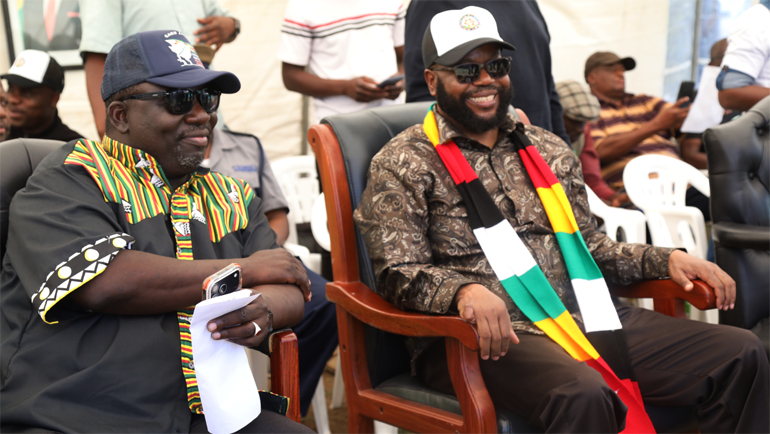
Speaking during Anti-Sanctions Day commemorations last Sunday, Minister Mugadza, said devolution has become a key vehicle for promoting equitable development by empowering provinces and local authorities to identify and implement projects tailored to local needs.
The commemorations were held under the theme: ‘Leveraging Regional Integration and Global Partnerships for Economic Transformation beyond Illegal Sanctions’.
The Southern African Development Community (SADC) declared October 25 a regional day of solidarity against sanctions imposed on Zimbabwe during its 39th Summit held in August 2019.
Minister Mugadza said devolution is ensuring development reaches every corner of the country through investments in critical infrastructure and public services.
“Through devolution, the country is taking development to where people live. Provinces and local authorities are now planning and delivering clinics, classrooms, roads, water systems and markets in line with local priorities. Devolution ensures that no place and no one is left behind,” he said.
The Minister, however, warned that the country’s development ambitions can be undermined by the growing challenge of drug and substance abuse, particularly among young people.
He said the fight against sanctions must go hand-in-hand with efforts to protect human capital and build a productive society.
“Let us recognise that the fight against illegal sanctions must go hand-in-hand with the fight against drug and substance abuse, which threatens our national development, destroys families and robs our young people of their future. A drug-free nation is a productive nation, a resilient nation and a nation capable of achieving Vision 2030,” said Minister Mugadza.
He also commended regional and international organisations that continue to advocate for the removal of sanctions, including SADC, the African Union, the Non-Aligned Movement and the Group of 77.
Looking ahead, Minister Mugadza said Zimbabwe should intensify efforts to deepen regional integration and strengthen global partnerships as part of its economic transformation agenda.
“We must continue deepening regional integration through SADC, COMESA and the African Continental Free Trade Area so that Zimbabwean products can access a market of more than a billion people. We must also build global partnerships based on mutual respect, trade and investment rather than conditionality,” he said.
Minister Mugadza said increased productivity, mineral beneficiation, value addition and domestic resource mobilisation would be crucial in driving sustainable growth.
“We must remain united, peaceful and disciplined because no nation develops in an environment of division,” he added.
Minister Mugadza said sanctions continue to have far-reaching effects on Zimbabwe’s economy by increasing borrowing costs, discouraging investment and constraining industrial and financial operations.
“They have affected the supply of medicines and equipment in our clinics, strained our education system and cost people jobs and livelihoods. The mother in a rural ward, the young graduate, the small-scale miner and the farmer all pay the price for a quarrel they did not start,” he said.
Despite these challenges, he said Zimbabwe remains committed to achieving upper-middle-income status by 2030 under President Emmerson Mnangagwa’s administration through the implementation of the National Development Strategy and investments in agriculture, mining, energy, infrastructure, mineral beneficiation and digital transformation.
ZANU PF Manicaland chairman, Cde Tawanda Mukodza, said Zimbabwe had made notable economic gains despite the challenges posed by sanctions.
“We no longer have fuel queues, and hunger is not as widespread as it used to be. Government has worked tremendously hard to improve the ease of doing business and ensure the smooth functioning of the economy. We are making progress despite the challenges we continue to face
“One can only imagine what we could achieve if we were free from sanctions. Our potential is enormous and our future could be even brighter,” he said.
Chief Senator Mutasa reiterated calls by traditional leaders for the removal of the remains of colonialist Cecil John Rhodes from Matobo Hills.
“Chiefs from Manicaland are united in calling for the removal of Rhodes’ remains. We agreed that his bones must be removed,” he said.
The Anti-Sanctions Day commemorations formed part of SADC’s annual regional campaign calling for the removal of sanctions while promoting economic cooperation, self-reliance and sustainable development across the region.
Devolution driving development closer to communities