Lovemore Kadzura
Post Reporter
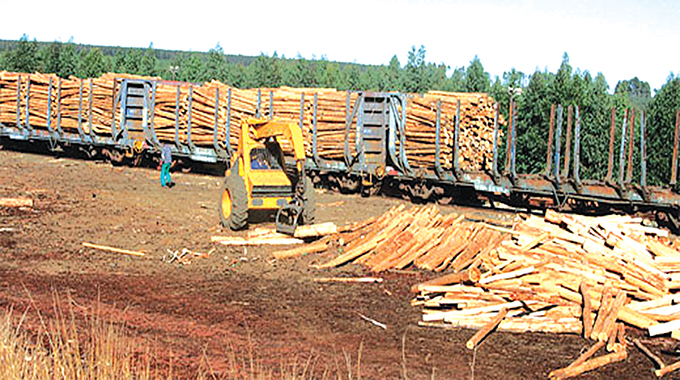
TIMBER allegedly being smuggled into Zimbabwe from Mozambique through illegal crossing points is flooding the local market, undercutting struggling local producers, depriving the Government of vital revenue and threatening thousands of jobs in the country’s forestry sector.
The growing illegal trade has prompted Government to establish a Timber Anti-Smuggling Taskforce tasked with investigating the practice, tightening border controls and bringing offenders to justice.
The move follows mounting concerns from industry players over large consignments of timber allegedly entering the country through undesignated entry points, bypassing customs procedures, import duties and regulatory requirements.
Sources within the sector allege that some timber enters through areas bordering timber estates in Imbeza, Sheba and Cashel Valley, where unscrupulous individuals are reportedly facilitating its illegal movement despite some crossing points being designated for human traffic only.
The Manica Post has also learnt that smugglers are increasingly exploiting illegal crossing points in Chipinge South, where limited security presence provides opportunities for illicit trade.
There are also allegations that some residents in border communities, including traditional leaders, are involved in the illegal harvesting of indigenous timber, which is transported into Mozambique and later reintroduced into Zimbabwe through informal channels.
Industry players say the practice gives smugglers an unfair competitive advantage because they avoid paying taxes, licencing fees and compliance costs that legitimate businesses are required to meet.
The result is cheaper timber entering the market, weakening demand for locally produced timber, reducing Government revenue and placing additional pressure on an industry already grappling with serious challenges.
The local forestry sector continues to face declining plantation stocks caused by years of limited replanting, recurring veld fires and over-harvesting.
The newly established taskforce is expected to intensify border inspections, verify import permits and customs documentation, track suspected timber consignments and prosecute offenders.
Timber Producers Federation chief executive officer, Mr Darlington Duwa, said timber smuggling has become a major threat to the industry’s survival.
“Timber smuggling is rampant. Timber is being moved from Mozambique into Zimbabwe through undesignated entry points along the border. This is affecting the industry significantly because such timber is not subjected to the costs associated with legal importation. They do not pay ZIMRA, and Government is losing substantial revenue as a result. The practice has also created unfair competition for legitimate operators,” he said.
Mr Duwa said some consignments are allegedly entering through border areas near timber estates in Imbeza and Sheba, as well as through Cashel Valley.
He warned that, beyond economic losses, the entry of uninspected timber poses biosecurity risks, including the spread of pests and diseases that could threaten commercial plantations and agricultural production.
“The pricing structure becomes distorted when timber enters the country without paying the required duties. Local producers must cover wages, production costs and compliance expenses. Inevitably, illegally imported timber becomes cheaper than domestically produced timber,” he said.
Mr Duwa attributed the surge in smuggling partly to timber shortages on the local market.
“The main driver is the shortage of timber. Limited planting over the years and frequent veld fires have reduced available stocks, creating opportunities for illegal traders to exploit the gap,” he said.
He warned that continued smuggling can have serious consequences for employment and investment in the sector.
“If this unfair competition continues, companies will struggle to generate enough revenue to meet operational costs. This can result in downsizing, retrenchments and reduced investment in reforestation,” said Mr Duwa.
Manicaland provincial director in the Ministry of Industry and Commerce, Mr Kupukani Masunungure, confirmed that the anti-smuggling taskforce is preparing to launch investigations targeting both formal and informal entry points.
“The taskforce is now in place, and we are finalising budgets for operations to begin. Timber is said to be entering through parts of Mutasa District, Burma Valley, Cashel Valley and other areas along the border. Even at official entry points, a lot can happen, hence the need for increased surveillance,” he said.
Mr Masunungure noted that timber remains one of Manicaland’s most important economic sectors, directly employing about 7 000 people, while supporting thousands more in downstream industries.
He estimated that at least 12 000 people in the province derive direct benefits from the sector.
The industry also supplies critical raw materials to small and medium enterprises involved in furniture manufacturing, construction, packaging and related businesses.
“We cannot talk about Manicaland without talking about timber. It is vital that we protect both the resource and the companies operating within the sector so that they continue creating jobs and contributing to economic development.
“The local timber industry pays taxes to Government. If companies are weakened by illegal competition, revenue to the fiscus will inevitably decline,” said Mr Masunungure.
He stressed that Government is not against timber imports, provided traders comply with all legal requirements.
“We are not discouraging imports. However, goods must enter the country through proper channels and the necessary duties must be paid. When products enter illegally, we end up supporting jobs in other countries at the expense of our own economy,” he said.
Mr Duwa said timber companies are intensifying efforts to protect plantations from veld fires through awareness campaigns, training programmes and investment in firefighting equipment.
“We are almost going in circles because fires continue to wipe out gains made through reforestation efforts. There is little net growth in planted areas because some plantations are destroyed before they mature,” he said.
Government recently convened a high-level meeting involving the Office of the President and Cabinet, the Zimbabwe Revenue Authority (ZIMRA), the Ministry of Industry and Commerce, the Timber Producers Federation, the Zimbabwe Prisons and Correctional Service and other stakeholders to map out strategies for the taskforce’s operations.
Timber smuggling threatens 7 000 jobs