Samuel Kadungure
News Editor
HARD drugs are finding their way into places where children should be learning, workers should be earning a living and families should be finding refuge from the pressures of everyday life.
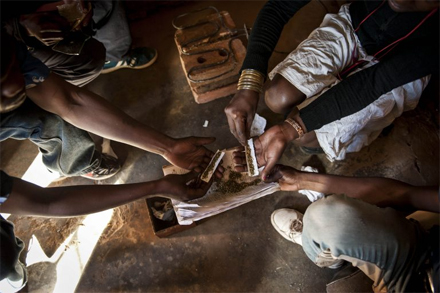
It is a commerce of ruin, not measured in quiet handshakes, but in small zip-lock bags of crystalline powder, smuggled codeine syrups and synthetic crystals locally known as mutoriro, dombo or guka.
For a few dollars, or up to US$80 for the potent imports that promise an artificial eternity, a generation’s potential is being bartered away.
In classrooms, quiet corners of workplaces and family homes across the eastern border, a silent genocide has taken root.
Manicaland has long worn the badge of a scenic eastern gateway, framed by the rugged peaks of Nyanga; sprawling valleys of Honde Valley, Chipinge and Chimanimani; and the porous mountain tracks spilling over from Mozambique.
But that geographic fortune has turned into a formidable administrative headache.
Today, the province serves as both a primary conduit and captive destination for illicit narcotics smuggled from South Africa, Latin America and Afghanistan, alongside home grown cannabis harvested in border highlands.
The influx has overwhelmed traditional safety nets, destroying lives as young as 11, and bleeding into the foundational pillars of the province’s schools, exposing communities to addiction, crime and deteriorating mental health.
That crisis now has a formal response.
The Government and Manicaland State University of Applied Sciences (MSUAS) have strengthened the response through a strategic partnership that brings together public authority, scientific research, psychological expertise and community-based interventions.
The partnership, formalised through a Memorandum Of Understanding (MOU) last Friday, seeks to confront the crisis beyond arrests and seizures, addressing the social and psychological conditions associated with substance abuse, while improving prevention, rehabilitation and support for affected families.
At stake is, not only the health of individuals struggling with addiction, but also the future of young people whose education and economic prospects are being undermined by drug dependency.
Minister of State for Manicaland Provincial Affairs and Devolution, Advocate Misheck Mugadza, described the agreement as an intentional and aggressive response to one of the most pressing social and public health challenges.
He was blunt about what is at stake.
“Drug and substance abuse has become a growing national challenge in Zimbabwe,” he said, warning that the problem has spread across institutions and social settings, threatening social stability and national development.
The concern is especially pronounced among young people, who should be acquiring skills, pursuing education and entering employment, but are increasingly exposed to experimentation with drugs.
“The most affected group in the drug and substance abuse crisis is the youth – the most productive stage of human life,” said Minister Mugadza, attributing experimentation to factors including peer pressure, curiosity, stress and exposure to negative influences.
The scale of exposure among schoolchildren is particularly troubling as statistics underlying the crisis paint a grim picture.
According to a research conducted by the Anti-Drug Abuse Forum from 2017 to 2022 – about 43 percent of high school learners have either used or come into contact with illegal drugs.
Law enforcement data reveals that the Mutare Drugs and Narcotics Unit arrests at least 30 peddlers monthly, with women making up the bulk of local smugglers.
However, penetrating the cartels remains exceptionally difficult.
Arrests alone have not dismantled the networks sustaining the trade.
Drug trafficking is frequently controlled by well-connected syndicates, and because drug offences rarely feature an aggrieved complainant willing to step forward, law enforcement often faces a frustrating wall of silence, making investigations difficult.
Drug trafficking persists within communities where individuals are reluctant to disclose what they know. Penetrating organised networks becomes harder without reliable information from inside them.
ADAF executive director, Mr Collin Mapfumo, said cannabis and codeine syrup remain common substances, while crystal methamphetamine and illicit alcohol, including spirits and brandy, are increasingly being abused.
“Some young people turn to consumption of or trading in illegal drugs to drown their sorrows or as a source of income,” he said.
The drugs circulating in local hotspots range from cannabis (mbanje) and cough syrups to cocaine, heroin, ecstasy, mandrax, hashish and crystal methamphetamine, locally known by names including mutoriro, dombo and guka.
To counter these entrenched networks, the new framework leverages the academic and clinical power of MSUAS under the guiding principles of Education 5.0, bridging the gap between ivory-tower research and ground-level realities.
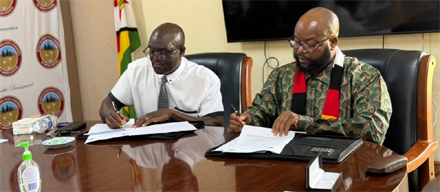
It brings Government’s coordinating and enforcement responsibilities together with the university’s capacity for research, psychological intervention and innovation.
“This MOU is strategic because it introduces an evidence-based and a multi-disciplinary approach to fighting drug abuse,” said Minister Mugadza, adding that reliable research will help authorities identify hotspots, track emerging trends, understand the drivers of substance abuse and assess whether interventions were working.
The agreement establishes four broad areas of cooperation — applied research and rehabilitation; prevention of gender-based violence and promotion of psychosocial health; community resilience and mental wellbeing; and the translation of research into policy and innovation.
Under the first pillar, MSUAS researchers and clinical staff will map drug trends, trafficking dynamics and psychological vulnerabilities in rural and urban communities across Manicaland.
The findings will inform public awareness campaigns, community-based prevention programmes, peer education and clinical outreach.
The second pillar recognises the relationship between substance abuse and gender-based violence.
MSUAS intends to support survivor-centred counselling, emotional intelligence workshops and conflict-resolution frameworks in schools, workplaces and communities, alongside rehabilitation approaches for perpetrators.
The third pillar widens the focus to include suicide, child neglect, youth gang involvement, family breakdowns and economic stress.
The university’s Mental Health Clinic is expected to serve as a referral hub and technical resource, extending professional counselling to vulnerable populations.
The fourth pillar seeks to turn research into practical interventions, including policy recommendations, therapeutic toolkits and mental health software applications designed to monitor and mitigate psychosocial risks.
From the university side, the language was equally stark.
MSUAS Vice-Chancellor, Professor Albert Chawanda, said the partnership also reflects the changing responsibilities of universities under Education 5.0.
The model places innovation and industrialisation alongside teaching, research and community service, requiring universities to develop practical responses to challenges facing society.
“A university under Education 5.0 cannot remain an isolated ivory tower, dissecting societal crises from afar, while pretending its sole obligation is the issuance of degrees. When our communities are battered by the scourge of drug abuse, youth delinquency, and mental health distress, higher education must step into the arena,” said Professor Chawanda.
He said the university entered the partnership with an established mental health clinic and a Department of Applied Psychology, positioning it to contribute clinical expertise and evidence-based support.
He said addiction and behavioural crises cannot be addressed through punitive measures alone.
“You cannot heal a fractured mind or break the cycle of addiction through punitive measures alone – true recovery requires evidence-based psychological intervention, clinical rehabilitation, cognitive restructuring, and trauma-informed psychosocial support,” he said.
The university will help identify the psychological and social factors behind drug dependency and GBV, provide specialised therapy and counselling, develop rehabilitation and reintegration protocols and train frontline personnel, including educators, traditional leaders, health workers and law enforcement officers.
The approach is intended to complement enforcement with prevention and recovery, recognising that a person battling addiction may require clinical care even as authorities pursue those responsible for supplying illicit substances.
The agreement also aligns with Zimbabwe’s Vision 2030 and the National Development Strategy 2 (NDS2), which emphasise human capital development, improved health systems, social protection and youth empowerment.
But the value of the agreement will ultimately depend on what happens beyond the signing ceremony.