Chronicle Editor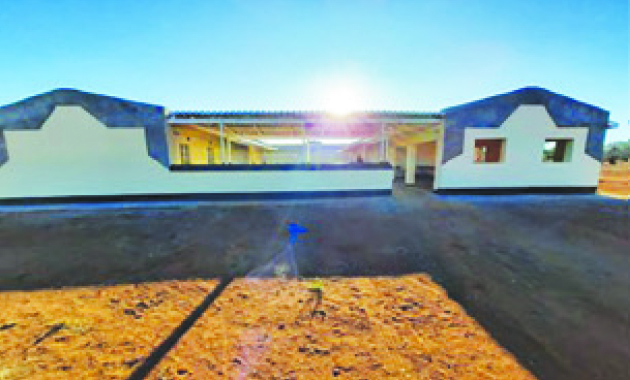
Sukulwenkosi Dube-Matutu, [email protected]
DEVOLUTION funds have transformed the health sector with new clinics emerging in several districts in Matabeleland as the Second Republic steps up the inclusive developmental philosophy of leaving no one and no place behind.
The programme has helped local authorities in Matabeleland and other parts of the country boost health service delivery, particularly in rural areas, where a majority of citizens quite often face long journeys when ill to obtain treatment.
In Mandihongola Village in Gwanda district, the devolution funds brought relief to locals following the construction of a clinic that is now operating as a satellite.
Villagers from the area had to walk 18km to access healthcare at the nearest clinic in Ntalale. The construction of the clinic which is set to be commissioned soon, started in 2020.
Gwanda Rural District Council has also used devolution funds to roll out several other projects to improve healthcare services and rehabilitate several clinics which include Tshanyaugwe Clinic, and waiting mothers’ shelters at Garanyemba and Mashaba clinics.
Mr Lungani Mpofu from Mandihongola area said the clinic has brought huge relief to the local community.
“We are glad that we can now access basic health care services from the clinic which is operating as a satellite. Once the clinic has been commissioned, it will bring relief to our community as we travelled long distances to access healthcare at Ntalale Clinic.,” he said.
Ms Prudence Nyathi from Mankonkoni Village said her community will significantly benefit from the Mashaba Clinic waiting mothers’ shelter. She said villagers had to travel 30km to Manama Mission Hospital to access antenatal services.
“This project comes as a relief to us women as we have been walking long distances to get to the nearest waiting mother’s shelter. We thank Government for building this waiting mothers shelter,” said Ms Nyathi.
In an interview, Gwanda Rural District Council Chief Executive Officer, Mr Ranganai Sibanda said the devolution funds have significantly helped the local authority to cover gaps that exist in the health sector.
“We used devolution funds to construct several projects and to rehabilitate some. The three that are complete are waiting for commissioning and these include Mandihongola Clinic, Mashaba and Garanyemba waiting mothers’ shelters,” he said.
Mr Sibanda said they are working on completing Tshanyaugwe Clinic. He said the main clinic block is almost complete.
Matabeleland South province has witnessed a massive improvement in the health sector with 12 clinics having been completed last year.
Four are in Bulilima, two in Matobo, and two in Mangwe. Gwanda has two clinics while Insiza and Umzingwane districts each have one new health facility.
Government last year disbursed over $3 billion in devolution funds to rural district councils in Matabeleland South.
The devolution funds have assisted local authorities in the province to fulfill their obligation of ensuring improved access to social amenities across the country through the development of key infrastructure such as clinics, classroom blocks, roads, bridges, and street lighting among other facilities.
Upgrading infrastructure is in line with the National Development Strategy 1 (NDS1).
Under NDS1, Government is focusing on building, expanding and restoring key enabler infrastructure such as roads and energy. Infrastructure development is expected to play a key role in ensuring the country attains the status of an upper middle income economy by 2030. From 2019 to 2022
Government led by President Mnangagwa saw it prudent to operationalise the devolution concept as enshrined in the Constitution, resulting in five percent of fiscal disbursement from Treasury being made to local authorities.
The devolution programme is one of the key pillars under the NDS1 which is the country’s first five year medium term plan aimed at realising the country’s Vision 2030 while simultaneously addressing the global aspirations of the Sustainable Development Goals (SDGs) and Africa Agenda 2063.
The overarching goal of the NDS1 is to ensure high, accelerated, inclusive and sustainable economic growth as well as socio-economic transformation and development as the country moves towards an upper middle-income society by 2030. — @DubeMatutu



 Online Reporter