Chronicle Editor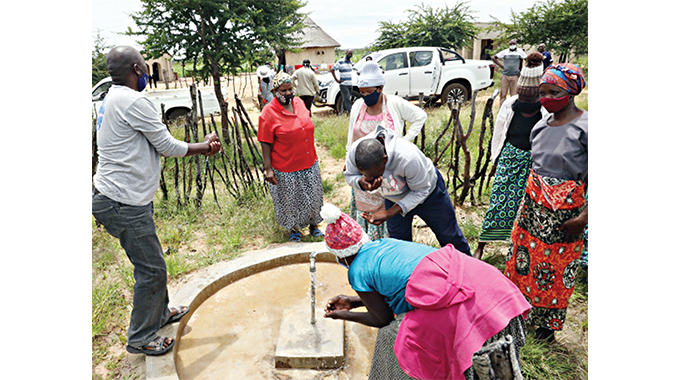
Kennedy Mavhumashava, Assistant Editor
Umguza Rural District Council is spending more than US$3,3 million, a combination of devolution funding and internal resources to invest in water, sewer management, health and road rehabilitation projects.
As part of the local authority’s contribution to the national effort to attain middle-income status by 2030, the projects are benefiting thousands of villagers and Government institutions through greater access to potable water, functional sewer management and easier transportation.
The projects include construction of six clinics in as many wards, a secondary school serving a new, growing suburb, rehabilitation of 39km of road and a piped water scheme through which villagers now fetch water at their doorsteps. Some of the projects have been completed while others is still in progress.
The Sojini Piped Water Scheme which is solarised and was jointly funded by council and Unicef to the tune of US$70 000 was initiated in 2019 and is benefiting a population of 4 798 in Ward Three, Mbembesi.
“The community is benefiting a lot from the project,” said Mazizini Village head, Mr Enock Masuku.
“In the past we had no reliable water source nearby but now we are getting it from taps right at our doorsteps, thanks to the project. Water is life so we are happy that we now have it piped to points near our homes.”
To ensure tighter security around the solar panels, borehole equipment and easier management of the project, council in consultation with the local leadership has resettled some villagers to areas close to the boreholes and solar stations.
Local councillor, Cde Vethi Tshuma said the community is grateful that council and Unicef executed the water project. Given its initial impact, he added, plans are already underway to replicate it in other villages in the ward.
“It is like our people here are living in paradise on earth,” he laughed.
“It is one of the best projects not only in the district, but the country as well. It is community-driven which means it will last. The people are pleased that their council came up with the project and because of that, they are ready to make sure that the infrastructure is preserved. They are seeking permission from council to establish community gardens and women to participate have already been identified. It is only in Umguza where you can get tap water in the bush.”
Cameroon Primary School, Sojini Secondary School, Mbembesi ZRP and the local business centre are also using water from the project.
“Just across the road we have our friends from Zimbili in Matabeleland South benefiting too,” he added.
Council social service officer, Ms Biatha Nxusani said:
“Our aim as council is to do away with use of boreholes in the district and reduce the distances that our people travel to their nearest water point. This project helps address those issues. In addition, this project has a gender dimension. Women tend to spend lots of time fetching water far away from their homes but with this project that challenge is addressed. We are hopeful that by 2030 most of our areas in the district will have piped water.”
The main superstructure of Mfanyana Clinic in Ward Five, Ntabazinduna whose construction started last year is complete and has been fenced off. Staff houses will also be built and the facility electrified, equipped and connected to a water source. Five more clinics — Bhekeni, Bhumani, Heany Junction, Kennebeck and Fingo — are being built using council resources and money allocated to council through the devolution fund. The budget for each clinic is US$300 000 which means that the whole project will cost US$1,8million. Work started in 2019 and there is a possibility that three of the facilities — Mfanyana, Bhekeni and Bhumani could be finished this year.
“We started this project (Mfanyana Clinic) last year. Covid-19 and the heavy rains that are falling have been disruptive but they have not stopped us,” said Cllr Bekithemba Qongo.
“For now we are getting health services at a clinic that is about five kilometres away in Ward 4 but if work here keeps the pace it has had since last year, we would be served here in the next few months. As in other projects in the ward and the district, the local community oversees the construction of the clinic through a committee in place for that purpose.”
About $3 million in devolution funding is being spent on the Ntabazinduna Sewer Rehabilitation Project. In addition to the main works to expand the capacity of the existing plant to treat more waste from Ntabazinduna Business Centre, two local schools and a Zimbabwe Prisons and Correctional Services camp, the project includes building of a house for the superintendent who would be in charge of the running of the facility.
Umguza Rural District Council Engineer, Queen Masocha commended the Government for supporting local projects through the devolution fund.
“We mooted the sewer rehabilitation project in view of Pillar Four of Vision 2030 which deals with infrastructure development, sanitation and waste management services,” she said.
“Through the project, we are bringing Vision 2030 to rural areas. We need three months to finish it. We are using council equipment but the funding is from Central Government through the devolution fund. After this, we will move to Nyamandlovu (business centre) for a similar project.”
The existing facility is old and expensive to run since it is powered by electricity but the rehabilitation work will see it running on nature, said Eng Masocha.
“What we are building is an activated sludge system that would be cheaper to run because biodegradable waste will be oxidised through light. That means we will drastically reduce the electricity bill and the budget for running it,” she said, adding that council will also drill a borehole to supply the facility.
Council will strive to make sure that the quality of the discharge from the new plant meets the Environmental Management Agency standards and be fit to be used for irrigation.
Across the district to the west, the local authority is gravelling two roads to gravel standards after they got extensively damaged as a result of the heavy rains falling in the area as elsewhere in the country. About 29km of the Nyamandlovu Township to Sawmills road is being worked on as well as 10km of the Epping Forest-Main road stretch. Council is using internal resources and equipment as well as an allocation of money from the Zimbabwe National Road Administration.

Signage designed to Sadc standards will be erected along both sections of the revamped roads, Eng Masocha said.
“Council plans to work on 160km of roads this year out of 600km that are under our jurisdiction,” she said.
“Gravelling a road to gravel standard costs US$30 000 per km which is costly but we are committed to delivering in terms of roads. The two roads we are doing now are of commercial value so they are important. The Epping Forest one is important even for Bulawayo City Council which gets some of its water from the forest. Again, like at the Ntabazinduna Sewer Rehabilitation Project, council is using its equipment on the road works. This helps in cutting the costs.”
Montgomery Secondary School enrolled its first classes last year after being built for an estimated US$320 000 through the council’s budget since 2013. It has four classroom blocks and two cottages.
A science laboratory is set to be built using devolution funds. The school serves pupils from surrounding agro-residential plots that residents are leasing from council on nine-year leases. Lessees are able to process title once they meet certain conditions in terms of development on the properties as spelt out in the lease agreements.
“We have challenges with some lessees missing development timelines as spelt out in lease agreements,” said treasurer, Mr Cosmas Nkomo.
“So during periodic inspections that we do, one can be seen to be behind in terms of prescribed development timelines, a process can be initiated to repossess the plots. When that happens there is noise sometimes, some lessees alleging corruption yet all conditions are set out in the lease agreement.”


 Online Reporter