Chronicle Editor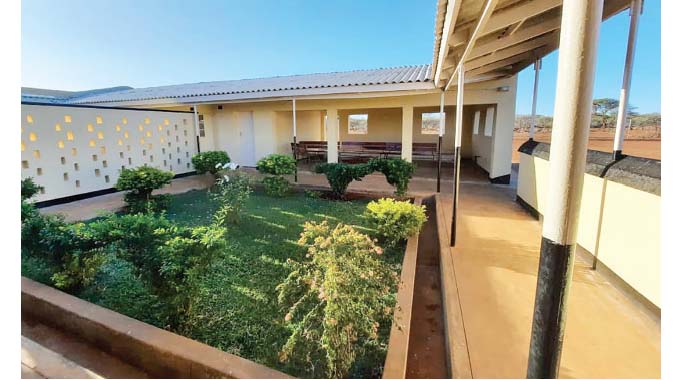
Sukulwenkosi Dube-Matutu, [email protected]
RURAL local authorities in Matabeleland South province have this year received $210 million as Government continues to capacitate councils with devolution funds for improved service delivery.
This year Government has allocated $10 billion to the province’s seven rural local authorities.
From 2019 to 2022 Government had disbursed $1,6 billion devolution funds to Matabeleland South province which has seen implementation of key service delivery projects.
The devolution funds have assisted local authorities in the province to fulfill their obligation of ensuring improved access to social amenities across the country through development of key infrastructure such as clinics, classroom blocks, roads, bridges, streetlighting among other facilities. Social amenities and infrastructure development are some of the major pillars of the National Development Strategy 1 (NDS1). Schools have been constructed in several communities across the province thereby reducing distances walked by learners and reducing cases of children dropping out of school because of distances.
Clinics have been built in areas where communities were struggling to access health care services.
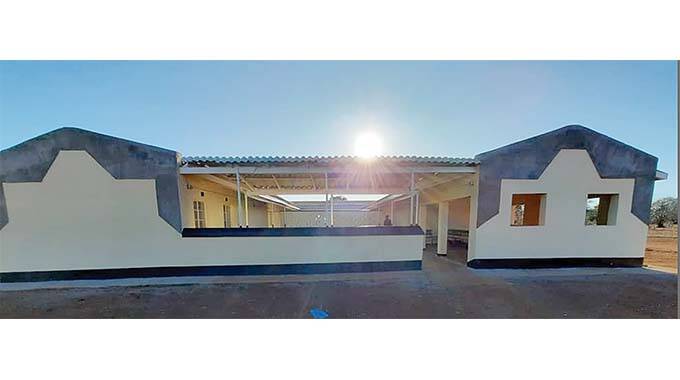
Councils have also managed to purchase service vehicles and capacitate their staff with equipment, which has helped to improve service delivery.
Speaking on behalf of rural councils during a Matabeleland South Provincial Development Committee meeting held recently, Gwanda Rural District Council Chief Executive Officer, Mr Ranganai Sibanda said councils have managed to resume projects which they had put on hold last year while awaiting release of devolution funds.
He said Gwanda Rural District Council has so far received $20,4 million, Beitbridge has received Umzingwane $16 million, Bulilima $30,2 million, Insiza $19 million, Matobo $29 million and Mangwe Rural District Council has received $67 million.
“As rural local authorities combined we have received $209, 9 million through devolution funds out of an expected budget of about $10 billion. The funds have helped councils to resume key developmental projects and to kick start new projects. For example in Gwanda we recently managed to complete Mandihongola Clinic which will be commissioned soon.
“We also managed to resume works at Tshanyaugwe Clinic where we are working on the main clinic structure. We hope to have completed the project by the end of the year,” Mr Sibanda said.
He said they also managed to complete Garanyemba Clinic waiting mothers’ shelter, Mashaba Clinic waiting mothers’ shelter, and also resumed construction of Mzimuni High School girls’ hostel.
Since the release of devolution funds in 2019, the money has been used to spearhead key infrastructural development programmes such as the construction of Tshanyaugwe Clinic in Gwanda.
The clinic will improve villagers’ access to health services as they have been walking more than 10kilometres to their nearest health facility. In Matobo devolution funds have been used to construct Mlugulu and Nhlupho Clinic which had stalled for many years.
In Mangwe District the devolution funds have helped in constructing Izimnyama Clinic which had remained a pipe dream for 70 years.
The project was mooted in 1953 but never took off. Efforts to resume the projected resurfaced in the 1980s but never materialised.
The funds have also helped in building two primary schools in the district in areas that had been recording high cases of school drop outs because of long distances children had to travel to and from school.
In Insiza District Bekezela Primary School which now has two classroom blocks was built to decongest Filabusi Primary School. Montrose Seven Clinic in Ward 19 was also constructed to help to reduce the distance travelled by villagers. The community of Montrose Seven which is a resettlement area used to walk 45 kilometres to reach the nearest clinic.
In Beitbridge District, devolution funds have been used to construct Dumba Clinic and Novhe Primary School. The funds have also been used to rehabilitate and repair schools and clinics in the province. A number of schools and clinics are under construction in the province using devolution funds.
The Government led by President Mnangagwa saw it prudent to operationalise the devolution concept as enshrined in the Constitution, resulting in five percent of fiscal disbursement from Treasury being made to local authorities. The funds have transformed several districts in the Matabeleland region and countrywide, as the Second Republic steps up the inclusive developmental philosophy of leaving no one and no place behind.
The devolution programme is one of the key pillars under the NDS1 which is the country’s first five year medium term plan aimed at realising the country’s Vision 2030 while simultaneously addressing the global aspirations of the Sustainable Development Goals (SDGs) and Africa Agenda 2063.
The overarching goal of the NSD1 is to ensure high, accelerated, inclusive and sustainable economic growth as well as socio-economic transformation and development as the country moves towards an upper middle-income society by 2030.–@DubeMatutu


 Online Reporter