admin
admin
Thupeyo Muleya
Beitbridge Bureau
Infrastructural development and offering people-centred services have been a headache for most local authorities countrywide, with most of them collecting revenue inadequate for them to offer the desired services.
In some instances, the councils have had to enter into twinning arrangements with their counterparts in the region or overseas to share notes on overcoming service delivery challenges.
Others have received donated equipment mostly used in emergencies, solid waste management, water and sanitation services.
Beitbridge is among the hardest hit districts in terms of revenue shortfalls and is perennially struggling to meet the needs of its ever-growing population.
The district’s population is estimated at 250 000 — 70 000 urban and 165 000 rural and a further 15 000 transiting the town daily.
As a result of its growing population, it is understood that the district needs an estimated 25 more primary schools with the creation of more Early Childhood Development classes, 15 secondary schools and 16 rural health centres to have total coverage.
However, the situation in the district is now changing for the better in terms of infrastructure development, social amenities and key services development as it is receiving funding from the Government under the devolution policy.
The initiative had been long on the cards and seeks to push economic development from village to national level.
In the last two years, the two councils under Beitbridge district — the municipality (urban area) and the rural district — have received $8,8 million and $5,6 million respectively under the devolution fund.
According to Beitbridge town clerk, Mr Loud Ramakgapola, they had used their allocation on upgrading water and sanitationfacilities, which had become a perennial headache for them.
“So far, we have acquired a backhoe loader, refuse compactor, Giga jetting machine, heavy-duty billing printer, a vehicle for the sewer section, and aircon for the server room.
“Payments for these have been made and we have taken delivery of the refuse compactor, aircon for the server room, the heavy-duty printer, VVOIP telephone system which has been installed. Delivery for the other items is pending,” he said.
Mr Ramakgapola said some of the funds will be spent on improving how the town handles its solid waste.
Outstanding projects under the devolution concept, he said, include the procurement of a water bowser, tipper truck and compressor, construction of a primary school and a clinic.
Beitbridge residents and businesses are reportedly producing an estimated 1 000 tonnes of solid waste monthly and the local authority is currently collecting between 700 and 800 tonnes.
This means that between 200 and 300 tonnes remains uncollected, thus the need for more investment in solid waste management.
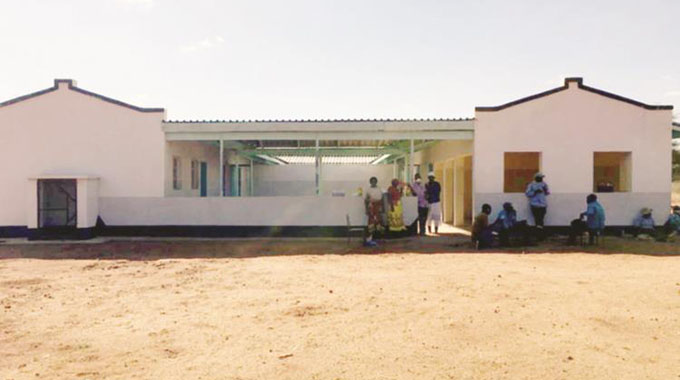
Beitbridge Rural District Council chief executive officer, Mr Peter Moyo said they had used their allocation to build one primary school and a teachers’ house at Novhe, Dumba and Tshabili Clinics and renovating Shashe Clinic, the primary and secondary schools which were destroyed by violent storms early this year.
“We have completed the construction of two classroom blocks and a teachers’ house, an ablution block at Novhe (Ward 10) which is located some 18km northwest of Zezani Growth Point and 12km north of Dendele,” he said.
“The project had been in the pipeline since independence and we decided to use the devolution funds to fill that gap in education facilities.
“In essence, we’re glad that with enough devolution funds from the Government, we’ll be able to improve on issues of service delivery as a local authority.”
Mr Moyo said they were looking forward to the opening of Tshabili Clinic in Ward 2 and Dumba Clinic in Ward 15 later this year.
He said Novhe Primary School would enroll classes from Early Childhood Development (ECD) up to Grade Three once the necessary registration processes were complete.
Mr Moyo added that efforts were underway to build more schools and clinics in resettlement areas.
Last year, Government disbursed $657 million out of the $703 million that had been budgeted under devolution.
This year, the Government has set aside $2,9 billion for local authorities, although disbursements have been affected by the Covid-19 pandemic.
Treasury had, by late August, released approximately $290 million to local authorities.
Finance and Economic Development Minister Professor Mthuli Ncube recently said the amount would be increased in the next cycles.



 Online Reporter