admin
admin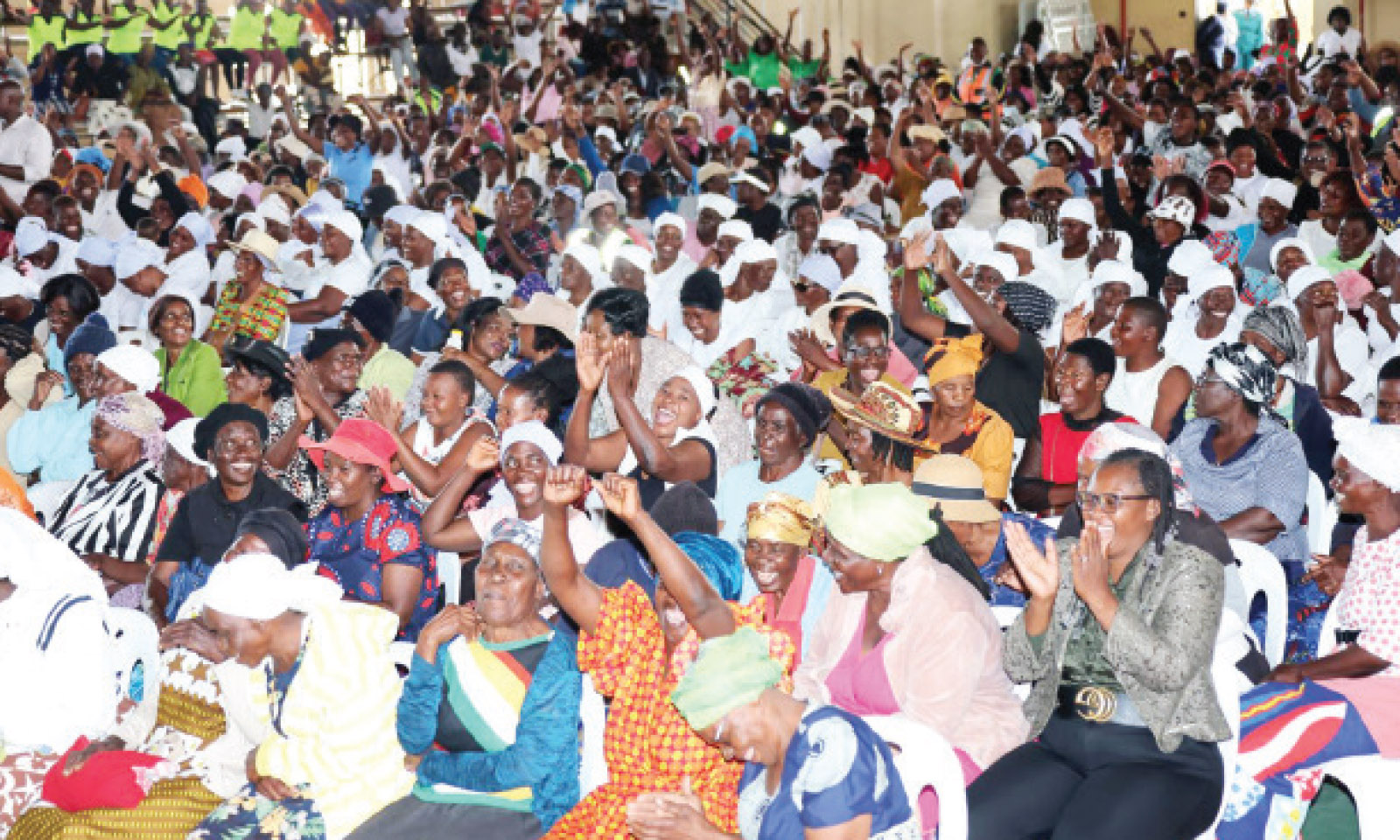
It was the Constitution Select Committee (Copac)’s second day after the process started in Bulawayo and Harare on Saturday. In Bulawayo, the outreach ends today, with two meetings scheduled for Stanley Hall and Jairos Jiri Centre in Ward 7 at 9am and 2pm.
Between 200 and 300 people attended the meetings at various venues visited by Chronicle, with youths also participating. The average attendance was, however, lower than Copac’s projections that more than 500 would attend the city outreach gatherings.
Some participants called for the creation of five provinces divided on the basis of people’s cultural backgrounds.
Chaos continued to reign during the consultations with a meeting in Nketa disrupted by residents questioning the use of literature written in IsiZulu instead of IsiNdebele. As the problems continued, the meeting that was scheduled for Nkulumane High School in the afternoon was cancelled.
Despite the delay in the start of meetings in all of the venues visited by Chronicle yesterday, the process generally went on well. There were some disturbances which Copac teams managed to contain.
The meetings, which were scheduled to start at 9am, started around 10am in most venues while at Nketa 8 Hall in Ward 24 the meeting only took off at 11am.
About 200 people attended the meeting, 70 of them being youths, but the number kept increasing in the afternoon after the team had cancelled its afternoon meeting at Nkulumane High School.
There was chaos at the hall when people questioned why the IsiNdebele version of the Copac booklets listing thematic areas was written in IsiZulu instead of IsiNdebele and they demanded to know who had written it. However, the meeting later went on well after Copac officials apologised and offered to simplify it to IsiNdebele.
This resulted in the team cancelling an afternoon meeting at Nkulumane High School as the meeting at Nketa Hall went on until after 3pm.
There was also commotion, which lasted for 10 minutes and briefly stopped proceedings at Sizinda Hall in the afternoon, when residents challenged a man who kept switching from one place to the other in the hall so as to get more chances to speak.
People booed him when he stood up for the seventh time and demanded that he sits down and give others a chance. He was only rescued by Copac officials as people wanted to throw him out of the meeting for disturbing proceedings.
Participants at the various venues suggested that individual provinces rule themselves through provincial governors elected by the people. They said the country should adopt devolution of power and be divided into five provinces, with areas with similar cultural backgrounds automatically falling under one province.
“I suggest that we have devolution of power so that provinces can rule themselves and be empowered. Let’s have five provinces like we used to have long back,” said one resident at Nketa Hall.
Another resident at Old Pumula Hall in Ward 19 where the hall was packed to capacity, suggested that the country be divided into Matabeleland, Midlands, Masvingo, Manicaland and Mashonaland.
“Since people want devolution of power, we should have five provinces where each province would have elected governors and councillors,” he said.
Some residents said devolution of power should be enshrined in the new constitution to empower each province to provide services, most of which are provided by the central Government in the current constitution.
Residents agreed that it should be adopted so that provinces benefit from natural resources in their areas and the environment they live in.
“We want devolution of power, we are tired of going to Harare to get passports and other important documents yet this can also be done locally by local people,” said a resident.
The majority of residents also raised concern over the language issue, saying the new constitution should empower indigenous languages according to their respective communities. They said there should be no national official language and suggested that primary schools should teach local languages in their respective communities.
“Our languages should be respected in the new constitution than to be regarded as minor languages. We want a constitution which will say these are Zimbabwean languages than to have one or two languages referred to as national languages. We want minority languages like Kalanga, Venda, Tonga and others to be learnt in primary schools after which pupils can choose the language of their choice when they go for secondary education,” said one resident at Mgoqo Primary School in Nkulumane 12, where 315 people attended.
Residents agreed that respecting local languages would help uphold the culture of communities and the country.
People were, however, divided on whether to have an executive president and a prime minister in the new constitution.
Some said there should be a president elected by the people while others said the president should be appointed from a party that would have garnered the most votes in an election.
At Pumula Hall, half the group said there should be an executive president while the other half said there should be both the president and prime minister.
However, some suggested that there should be one vice president appointed from the party with the second highest number of votes in an election.
People were also divided on the electoral systems with some calling for proportional representation while others advocated the current first-past-the-post system. “Power should be shared after any election. If one gets 100 votes and I get 99 can my votes be thrown away? Let’s have proportional representation so that all votes can be used,” said a resident.
On appointment of ministers, people called for ministers who are elected as MPs and appointed to different ministerial portfolios based on their qualifications and areas of specialisation.
They said the new constitution should empower people to pass a vote of no confidence on under-performing leaders.
Residents at Sizinda Hall said there should be a ministry for the disabled in the new constitution where the Government would afford them a living allowance. “The disabled should not work but they must be given some money by the Government every month. There should be a ministry for them so that their issues are looked into,” said a resident.
There were heated suggestions on the war veterans’ section at Sizinda where residents said families of former fighters should be respected and their families given living salaries. On the other hand, others said the ex-combatants should also respect residents and remember that they also fought in the war.
There was commonality in people’s views on the traditional leaders’ section where most people suggested that the new constitution should empower them to effect arrests as do police, in their areas of jurisdiction. People also expressed the same views on the media where they said the constitution should guarantee the existence of an independent media.
They said all languages should be included in the media.


 Online Reporter