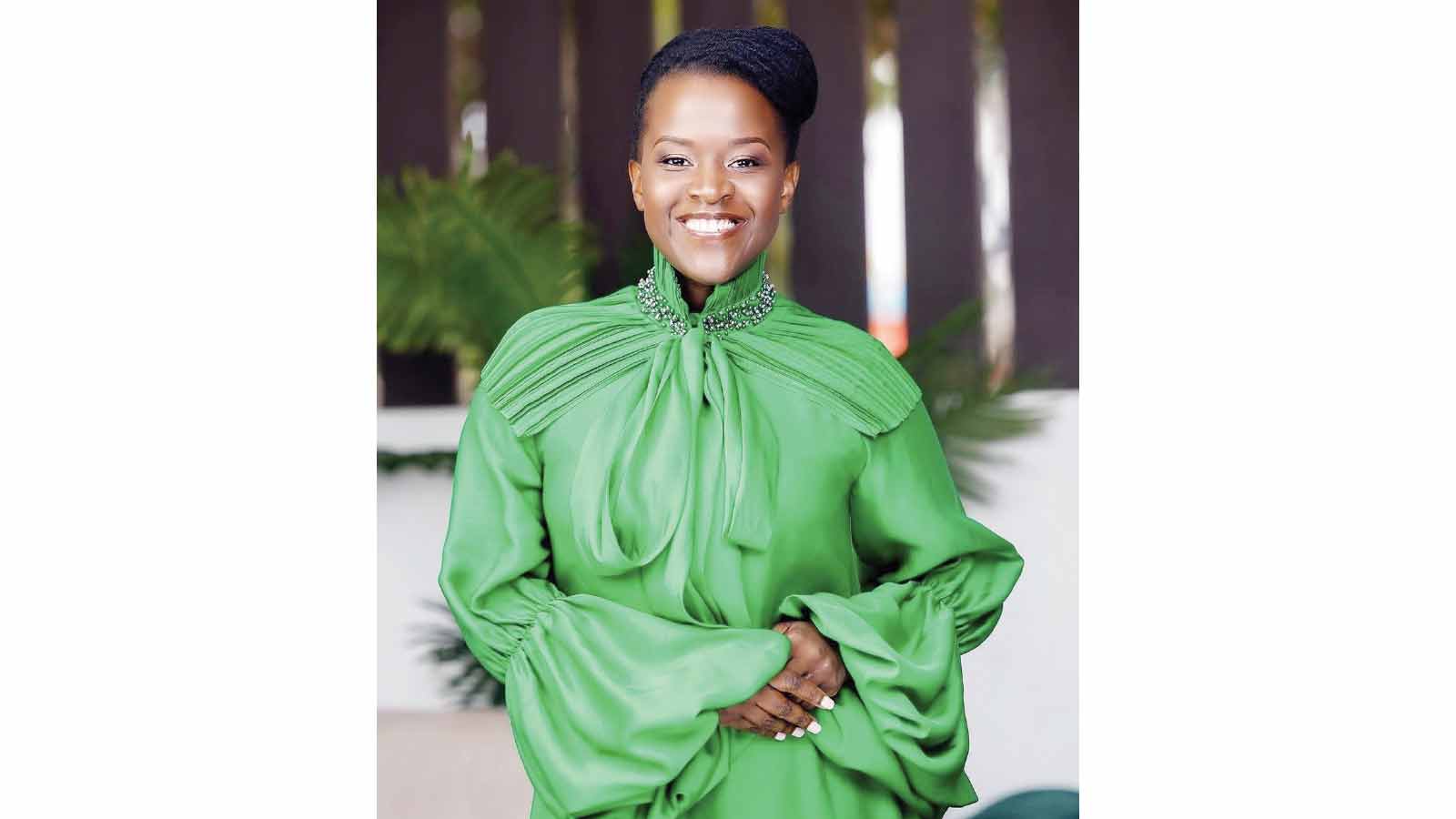
As I interviewed Mrs Nyaradzo Dhliwayo-Moyo, she looked stunning in her flamboyant green outfit, exuding a vibrant energy that radiated from within.
A remarkable woman entrepreneur, Mrs Moyo’s entrepreneurial journey is not simply about building a successful business; it is about purpose, impact and creating something that can outlive her.
A creative and marketing enthusiast, Mrs Moyo is the founder of Yanaya Lifestyle, a Zimbabwean brand built around a simple, but increasingly important idea: healthy living should be accessible, convenient and part of everyday life.
Her journey began in Masvingo, where she was raised in a staunch Seventh Day Adventist family.
Her upbringing instilled in her strong values around faith, healthy living, excellence and purpose. One scripture in particular continues to guide her: Ecclesiastes 9:10, which says, “Whatever your hand finds to do, do it with all your might.”
Her mother also played an important role in shaping her outlook, encouraging her children to understand their purpose, live intentionally and think about the legacy they would leave behind.
Those life lessons have remained with her as she has navigated the world of entrepreneurship.
“I think those values have greatly influenced the woman I am today,” she says.
“My creativity, entrepreneurial spirit and passion for building meaningful things are all rooted in that upbringing.”
A business born from purpose
Yanaya Lifestyle was born from both observation and personal experience.
Mrs Moyo noticed a growing problem among busy professionals and health-conscious consumers: many people wanted to eat better, but did not necessarily have the time to prepare healthy meals.
At the same time, she had experienced a deeply personal loss.
A close friend passed away from stomach cancer and, towards the end of his life, was encouraged to adopt a healthier, plant-based diet.
His experience stayed with her.
Rather than allowing the loss to remain simply a painful memory, she began thinking about how she could create something meaningful in his memory while helping others make healthier choices.
“I wanted to create something in his memory that could make healthy eating more accessible to other people,” she explains.
The idea also arrived at a time when Zimbabwe’s relationship with health and wellness was changing. Particularly in the period following Covid-19, more people began paying closer attention to their health, nutrition and lifestyle.
Running clubs, marathons, gyms and wellness communities became increasingly visible, reflecting a broader shift towards preventative health and conscious living.
For Mrs Moyo, this represented more than a social trend. It was an entrepreneurial opportunity.
Yanaya was created at the intersection of health, convenience and lifestyle — with the aim of making it easier for people to eat well even when life gets busy.
Beyond age and gender
Building a business, however, comes with challenges, and Mrs Moyo is candid about the realities of entrepreneurship.
Yet she has never wanted age or gender to become limitations.
Rather than focusing on the assumptions people may make about her, she concentrates on learning, delivering and allowing the quality of her work to speak for itself.
It is an approach that reflects her broader philosophy of entrepreneurship: action comes before perfection.
Her advice to aspiring entrepreneurs is simple.
“Start with what you have,” she says. “You don’t know what you don’t know until you start — so get your hands dirty, learn as you go and don’t be afraid to make mistakes.”
For Mrs Moyo, the biggest mistake would perhaps be waiting until everything is perfect before beginning.
The funding challenge
Like many entrepreneurs, one of the biggest obstacles she has encountered is funding.
For Mrs Moyo, the issue is not simply access to capital but access to patient and accessible funding that allows businesses enough breathing room to grow sustainably.
Her own experience with Yanaya has taught her the importance of working capital and cash-flow management.
“I’ve seen how difficult it can be to sustain a good business without enough working capital,” she says.
It is a challenge that extends beyond her own business.
For many Zimbabwean entrepreneurs, having a viable idea is only the beginning.
Turning that idea into a sustainable enterprise requires capital, infrastructure, skills and the ability to survive the inevitable fluctuations of business.
Perhaps one of Mrs Moyo’s proudest achievements has been setting up Yanaya’s factory.
The factory represents more than physical growth.
It reflects a significant shift in the way she thinks about the business. Yanaya began as a traditional food business, but Mrs Moyo eventually found the courage to pivot towards building a mass-market brand.
“That was a significant step for us because it shifted our thinking from simply serving customers to building a product that can reach thousands of people beyond our physical locations,” she explains.
The transition speaks to a bigger entrepreneurial ambition: moving from operating a business to building a brand with the potential to scale.
A healthier Zimbabwe
Mrs Moyo sees considerable opportunity in Zimbabwe’s growing health and wellness movement. More people are exercising and becoming increasingly conscious of what they put into their bodies.
For entrepreneurs, she believes this
creates space to develop products and experiences that are not only healthy but also convenient enough to fit into modern lifestyles.
The opportunity, therefore, is not simply to sell food. It is to participate in a broader cultural shift.
For Mrs Moyo, the ultimate measure of success will not be how quickly Yanaya grows but whether it grows sustainably and meaningfully. She admits that she does not have the next ten years completely mapped out.
Instead, she hopes to look back a decade from now and see a sustainable business with stable cash flow and a strong team whose lives have genuinely improved because they worked with Yanaya.
Most importantly, she hopes the company will have contributed, even in a small way, to creating a more health-conscious generation of Zimbabweans.
Her vision is ultimately bigger than a brand. It is about changing how people think about food, health and lifestyle — one choice, one product and one customer at a time.
For a woman whose entrepreneurial journey is rooted in faith, purpose and the desire to leave a meaningful legacy, perhaps that is the most important business she could build.