

 admin
admin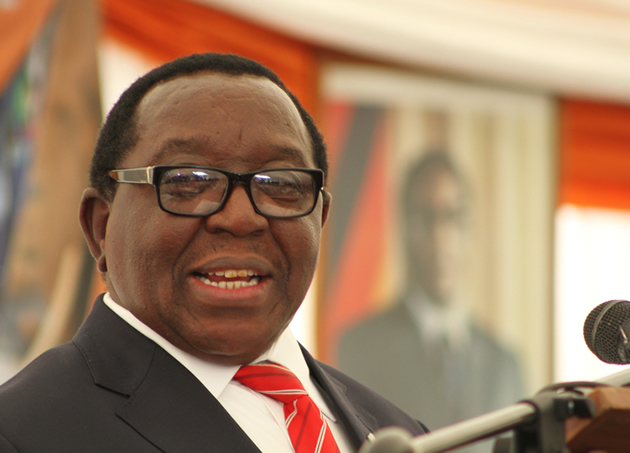
Business Reporter
ZIMBABWE’s Diaspora has the capacity to rescuscitate local industry through coordinated investment from remittances alone, Economic Planning and Investment Promotion Minister Simon Khaya Moyo has said. The country targets close to $2 billion remittances this year on the back of registered money transfer agencies compared to $874 million received last year.
With more than 2,2 million gainfully employed Zimbabweans working outside the country, the country stands to benefit immensely from Diaspora contribution to industry revival.
“We’ve got 2,2 million Zimbabweans employed outside the country. Those people are working and at times are wondering what to do with their money. We can convince them to invest in the country,” said the minister.
Khaya Moyo said Cuba, for instance, does not have vast resources like Zimbabwe but has a booming economy mainly due to Diaspora contribution.
“Cuba has got over 30,000 doctors all over the world and last year they remitted $9 billion through their salaries alone. Now what more with our 2,2 million people in the Diaspora against a national budget of $4 billion?
“Let’s get ourselves and the Diasporans organised so that we engage them to invest in different economic sectors in the country so that we resuscitate the economy. Let’s put our minds together and start something (businesses) which can eventually grow.”
Khaya Moyo said the government has crafted several measures aimed at luring investment in the country.
He said his ministry would soon come up with small handbooks on what Zimbabwe offers in terms of investment opportunities in key sectors such as mining, agriculture, tourism and manufacturing.
“We’re working flat out and I’ve told my staff we want these little handbooks done like yesterday so that we take them to potential investors all over the world to see what investment opportunities Zimbabwe offers,” said Khaya Moyo.
Given the vast investment opportunities in the country, he said, the government was also urging businesses to move into joint ventures, which was one of the strategies that could promote economic turnaround.
The minister said the government had also taken a progressive approach on the implementation of a One-Stop Shop investment centre in the country to improve the ease of doing business in the country.
He said Bulawayo, once the industrial hub, has over the years not been spared from the negative effects of sanctions that have seen companies closing down.
“When we talk of Bulawayo, we’re talking of the hub of industry but what we see today is dilapidated infrastructure, low capacity utilisation and company closures. All this has been attributed to the high cost of capital, lack of access to international finance and of course to a larger extent this was due to sanctions and the huge debt which the country has to honour,” he said.


 Londile Moyo
 Bongani Ndlovu