Chronicle Editor
Raymond Jaravaza, [email protected]
ZIMBABWE-born Lorraine Mapuranga has lived in the United Kingdom for over two decades. During that time, she had grown to trust her adopted country’s ability to protect her from any harm. However, that trust was shattered earlier this month when anti-immigrant riots erupted in Manchester, where she lives.
Violence shook the UK for several days as riots gripped multiple cities across the country in Islamophobia and anti-immigrant clashes. These were triggered by a knife attack that killed three young girls at a party on July 29 in the town of Southport.
According to authorities, the protests, which quickly turned violent, were fuelled by disinformation circulated online by right-wing commentators falsely claiming the suspect in the stabbing attack was a Muslim illegal immigrant.
The riots have affected most major northern cities, including Liverpool, Manchester, Leeds and Sunderland, as well as Bristol in southern England and Belfast in Northern Ireland. This is the worst outbreak of public disorder in more than a decade.
Mapuranga told the UK media that she no longer feels safe and wishes she could pack up her bags and leave. Her only problem is that she has not completed her home, which she is building in Bulawayo and dreads the thought of being labelled a failed diasporan who has no comfortable house to return to after years in a foreign land.
“So many Zimbabweans were shaken by the violence as we never imagined that foreigners could be the target of anti-immigrant violence in the UK. The protesters are not specifically targeting black people, but the fact that we are also foreigners makes us scared. Had I finished building my house, I would have left. The streets are no longer safe for us,” said Mapuranga.
Zimbabwe has seen a surge in development projects bankrolled by Zimbabweans living and working overseas, such as plush homes in the cities, immaculate homesteads and farming projects from poultry to cattle breeding.
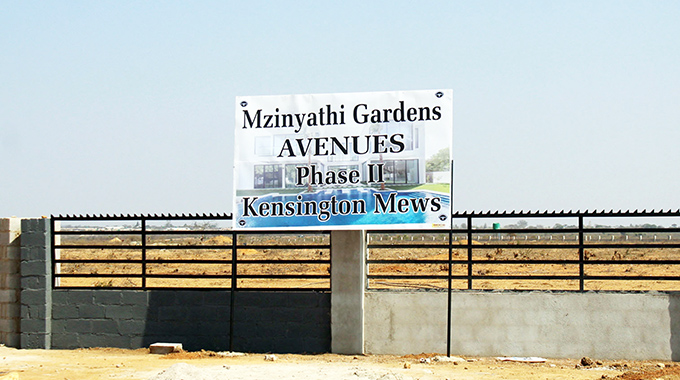
One such project is in Kensington, situated on the outskirts of Bulawayo, where what used to be barren land is slowly being transformed into a top-notch housing project.
The project is named Mzinyathi Gardens, an ambitious three-phased housing complex that aims to give people in the diaspora opportunities to build immaculate homes back at home.
“We started this project two years ago, but what’s so worrying is that we keep hitting a dead end when it comes to getting a development permit from the Umguza Rural District Council. We are so disappointed because we responded to the clarion calls from President Mnangagwa, who is always encouraging people working overseas to invest back at home.
“There was a time when the President was in Egypt and some of our members met him there and he urged them to invest back home. We are willing to do just that and that’s why we started Mzinyathi Gardens.
“Our biggest hurdle is the way we keep being frustrated by officials in offices back home, who make it nearly impossible for us to plough our money back into various projects in the country,” said Zazalizitha Khumalo.
Khumalo is one of the co-founders of Mzinyathi Gardens. “Where we are now, be it in the UK, US, South Africa, or Australia, it’s very difficult for us to embark on any projects like building homes because we are not citizens of these countries.
“The treatment we get from officials back home when we need assistance with vital documents like development permits is so disheartening. We literally have to beg to get assistance, yet we are the same people that are bringing development back to our own country,” he said.
When Chronicle visited the Mzinyathi Gardens project site, workers were busy building a perimeter wall at the third phase of the project, while builders were putting final touches on the third demo house.
The project is divided into three phases and will have 700 houses when complete.
The project is the brainchild of Khumalo and his friends, former schoolmates from Mzinyathi High School, who are all based outside the country.
They have seen and experienced the benefits of living in gated communities in countries such as South Africa, Australia and the United Kingdom, where they had settled and worked for many years.
They wanted to replicate that model in Zimbabwe, where gated communities are still rare and mostly reserved for the elite.
Mzinyathi Gardens will be one of the biggest gated community projects in Bulawayo.
The Member of Parliament for Umguza, Cde Richard Moyo, who is also the Matabeleland North Minister of State for Provincial Affairs and Devolution, welcomes development projects from all progressive Zimbabweans.
“The only way to grow our province and the country as a whole is to create a conducive environment for investment. Projects such as the Mzinyathi Gardens not only create employment for locals but drive economic growth in Umguza,” said Cde Moyo.
He pledged to get to the bottom of the reasons why the project has not been issued with a development permit.


 Online Reporter