Online Reporter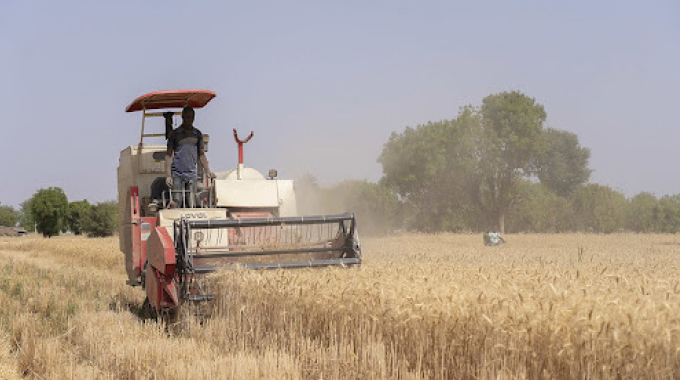
Edgar Vhera, [email protected]
THE Agricultural Marketing Authority (AMA) has attributed the 24 percent spike in wheat demand from 2022 to 2025 to a dietary shift that has seen consumers preferring rice, pasta and Irish potatoes to maize.
In response to the development, the Government increased domestic wheat production, with the country achieving wheat self-sufficiency in 2022 after producing 375,000 tonnes against an annual national requirement of 360,000 tonnes.
Zimbabwe produces soft wheat and imports about 30 percent of its hard wheat requirements for blending purposes.
Some bread producers are, however, using 100 percent locally produced wheat to produce high-quality bread.
One of the country’s largest millers, National Foods Limited, said the country’s wheat quality was very good, producing a whiter flour that consumers want.
National Foods commissioned their US$5 million pasta plant in February last year and is producing quality pasta in the Better Buy and Primo brands.
The Government’s current focus is on reducing input costs and adherence to good agronomic practices (Gaps), which will ensure that top quality soft wheat with high protein, wet gluten and dry gluten is produced.
Zimbabwe produced a record 662,500 tonnes of winter wheat this season, as it intensifies efforts to achieve food self-sufficiency and build effective strategic grain reserves (SGRs).
According to AMA’s market report dated March 16, 2026, total wheat consumption, determined by combining domestically marketed wheat and imports, has risen from 489,402 tonnes in the 2022/23 period to 605,183 tonnes in the 2024/25 season.
“Total wheat consumption rose by 23,66 percent over the three-year period. This growth is largely due to population increase and shifts in consumer preferences, including higher consumption of pasta and noodles,” said AMA.
Hard wheat imports also rose from 258,151 tonnes in the 2022/23 season to 380,151 tonnes in the 2024/25 period.
The wheat marketing season in Zimbabwe runs from October 1 to September 30.
AMA also revealed that due to increased wheat production, which saw yields reaching 640,195 tonnes last year, the current wheat intake from local production stands at 432,042 tonnes.
Thirteen contractors supported 16,362 growers in the 2025 growing season and as of January 28 this year, their intake was 409,001 tonnes. The Agricultural and Rural Development Authority (Arda) was the biggest contractor with a 48,25 percent market share.
An agriculture expert, Dr Mano, said to achieve self-sufficiency, Zimbabwe had to make enough soft wheat to produce most of its wheat products — bread, white bread flour, brown bread flour, cake flour, pizza dough flour, pasta and macaroni and only import a small percentage of durum flour for gristing.
This can only be possible if the quality of irrigated wheat produced is very high in terms of baking qualities.
The country’s new agriculture roadmap, the Agriculture Food Systems and Rural Transformation Strategy 2: 2026-30 (AFSRTS 2), has also noted the change in consumption patterns.
“Zimbabwe is currently witnessing a shift in consumption patterns from maize to rice, pasta and Irish potatoes.
“AFSRTS 2 seeks to increase local production of imported foods, to reduce the import bill. The increasing prominence of rice, pasta, traditional grains and potatoes signals a move from over-reliance on a single staple, which is likely to intensify as consumption patterns continue to morph, as consumer awareness of health, nutrition, environmental impact and sustainability continues to grow,” read the blueprint.
“In urban areas, consumption patterns are skewed towards non-traditional foods such as rice, bread, macaroni, potatoes and spaghetti, while consumption of maize has been decreasing.
“In rural areas, maize and traditional grains remain predominant,” continued the blueprint.
The five-year document disclosed that Zimbabwe’s urban population had increased from 33 percent in 2012 to 39 percent in 2022, causing an increase in growth in demand for food in urban areas while presenting both challenges and opportunities.
Meanwhile, statistics from the Zimbabwe National Statistics Agency (ZimStats) show that macaroni and pasta imports rose 500 percent to US$45,64 million last year from US$7,61 million in 2019.
In volume terms, macaroni imports rose by 411 percent from 11 kg in 2019 to 58 million kilogrammes in 2025.