Dr Tapiwa Mashakada
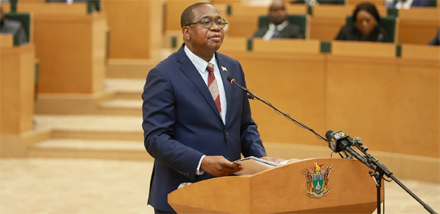
The 2027 National Budget presented by Finance Minister Mthuli Ncube on Thursday has maintained the Government’s macroeconomic policy thrust of economic stability, anchored in prudent fiscal management and tight monetary policies.
These policies have contributed to a significant moderation in inflation, with year-on-year ZiG inflation declining to 4 percent and month-on-month inflation falling to 0,4 percent.
This cautious and disciplined policy stance has been carried forward into 2027.
However, the economy faces significant downside risks arising from anticipated climatic shocks associated with the El Niño weather phenomenon.
These risks have implications for agricultural production, food security, rural livelihoods and overall economic performance.
It is against this background that the Government aptly coined the 2027 National Budget theme “Accelerating Economic Transformation and Building Resilience to Climate Change and External Shocks”.
The theme recognises that economic transformation cannot be achieved without strengthening the economy’s capacity to withstand both domestic and external shocks.
Climate resilience and drought mitigation
One of the major highlights of the 2027 National Budget is the substantial allocation towards drought mitigation and agricultural resilience.
Prof Ncube set aside US$400 million for drought mitigation, in addition to ZiG27,6 billion allocated to the Ministry of Agriculture and ZiG21 billion towards social protection.
This is important to address the anticipated El Niño effects for which agricultural interventions have been structured around six strategic pillars.
These interventions will strengthen agricultural productivity, protect rural livelihoods, enhance food security and build resilience against climate-related shocks.
It is also crucial to note that the Government has strengthened the Strategic Grain Reserve through the importation of 365 000 tonnes of maize as of October 2026.
This is an important intervention in safeguarding national food security.
The emphasis on climate resilience is particularly commendable, given Zimbabwe’s vulnerability to recurrent droughts and the significant contribution of agriculture to employment, livelihoods and economic growth.
The 2027 Budget also provides funding for independent commissions and constitutional institutions. These institutions are important pillars of constitutional democracy, accountability, governance and the rule of law.
The allocation of ZiG214,8 million to the Zimbabwe Media Commission is particularly important in the context of strengthening media regulation, professional standards, media freedom and access to information.
Similarly, adequate funding for constitutional commissions is essential if they are to discharge their mandates independently and effectively.
The good news: Tax relief and incentives for domestic production
The 2027 National Budget contains several positive policy measures aimed at stimulating domestic production, promoting investment, easing the cost of doing business and improving disposable incomes.
Notable measures include a mandate that, starting in 2027, all procurement entities source at least 15 percent of their requirements locally.
This is an important measure towards promoting domestic industry, supporting local businesses and strengthening value chains.
The tax-free income threshold has been increased from US$100 to US$150 per month, providing relief to low-income earners.
The Intermediated Money Transfer Tax on ZiG transactions has been reduced from 1,5 percent to 1,25 percent.
This should help reduce transaction costs and encourage the use of domestic currency.
Similarly, the IMTT on US dollar transactions has been reduced from 2 percent to 1,75 percent, further promoting the ease of doing business.
Customs duty on electric vehicles has been reduced from 25 percent to 10 percent. This is consistent with the global climate change agenda and the transition towards cleaner energy.
Customs duty on mobile phones has been reduced from 25 percent to zero, making digital devices potentially more affordable and supporting digital inclusion.
A rebate has been introduced for the fertiliser manufacturing industry to encourage domestic production and reduce reliance on imports.
Suspension of duty on completely knocked-down vehicle kits is intended to support local vehicle assembly and industrial development.
Perhaps one of the most notable features of the 2027 Budget is that no new taxes have been introduced and there are no general tax rate increases. This is a welcome development for households and businesses already operating under challenging economic conditions.
Macroeconomic performance and economic outlook
Zimbabwe’s macroeconomic indicators reflect a significant improvement in economic performance over recent years.
The country recorded an estimated gross domestic product (GDP) growth rate of 5 percent in 2026 and its nominal GDP is projected at approximately US$66 billion, placing the country at number 14 in Africa in terms of economic size. Zimbabwe’s Gross National Income (GNI) per capita is reported at US$4 100, placing it at number seven in Africa. This is a significant milestone in the country’s economic recovery and development trajectory.
The economy has also recorded substantial nominal expansion since 2019.
The figures presented indicate an increase in GDP from approximately US$21 billion in 2019 to US$66 billion in 2026. This represents considerable expansion in the country’s economic base.
The 2027 Budget projects economic growth of 3,5 percent next year, and this largely reflects the anticipated negative effects of El Niño on agricultural output and related economic activities.
Of importance is that Minister Ncube put in place mitigation measures to ensure food security and livestock development.
The country’s macroeconomic interventions are structured around four key pillars — inflation and price stability, financial sector stability, public debt sustainability and external sector performance — which have continued to demonstrate resilience.
Growth and human development
The country is increasingly positioning itself among Africa’s faster-growing and relatively stable economies.
The economic boom is palpable.
No person and no geographical area must be left behind. This is the fundamental philosophy underpinning Vision 2030: achieving an empowered upper middle-income society by 2030.
However, several development priorities require urgent attention.
More resources and policy attention must be directed towards improving the healthcare delivery system, human settlements, water supply, sanitation and hygiene.
The state of urban road infrastructure requires urgent attention. Urban roads have suffered years of deterioration and the situation has previously been declared a State of Disaster.
Road infrastructure is not merely a transport issue; it is an important determinant of productivity, investment, mobility and urban economic development.
Zimbabwe has invested substantial public resources in dam construction. These investments must now begin to generate tangible economic and social returns.
Our dams must support irrigation development, commercial agriculture, rural livelihoods, fisheries, tourism and broader rural industrialisation.
The substantial allocation to the Public Service Commission must be viewed in the context of improving public sector efficiency and conditions of service of civil servants.
The Government deserves commendation for introducing incentives to promote domestic fertiliser manufacturing and local motor vehicle assembly.
These measures are consistent with the broader objective of import substitution, industrialisation and value addition.
The 10 percent customs duty on electric vehicles is also commendable.
It supports climate action through the promotion of cleaner transport technologies and the reduction of carbon emissions.
However, these incentives must be accompanied by investments in electricity generation, charging infrastructure, technology transfer and local skills development.
On the international scene, despite the global economic slowdown, geopolitical tensions in the Gulf and Eurasia, and broader uncertainties in the international economic system, Zimbabwe has continued to strengthen its international standing. The country’s election to a non-permanent seat on the United Nations Security Council for the 2027-2028 term is a significant diplomatic achievement.
Zimbabwe’s chairmanship of COMESA and its membership of the BRICS New Development Bank further demonstrate the country’s growing engagement with regional and emerging global economic institutions.
These positions present opportunities to advance Zimbabwe’s national interests, strengthen regional economic integration, attract investment and deepen South-South cooperation.
Zimbabwe is on the rise
The 2027 National Budget demonstrates the Government’s determination to sustain macroeconomic stability while building resilience against climate change and external economic shocks.
The emphasis on drought mitigation, domestic production, local procurement, tax relief and fiscal discipline is commendable.
Zimbabwe’s economic performance over recent years provides grounds for optimism. The country has recorded significant growth in economic activity and improved inflation outcomes. It has also strengthened its regional and international standing.
Zimbabwe is on the rise.
Let its citizens enjoy the benefits of this economic boom and broaden their opportunities for prosperity. All this must be sustained through the peace, stability and national cohesion that the country continues to enjoy.
The challenge before us is to transform macroeconomic stability into shared prosperity and inclusive human development.
No one and no place must be left behind.
Dr Tapiwa Mashakada is the executive director of Maji-Marefu Institute, an independent Zimbabwe-based Pan-African research think tank and a commissioner of the Zimbabwe Media Commission.