Persistence Gwanyanya
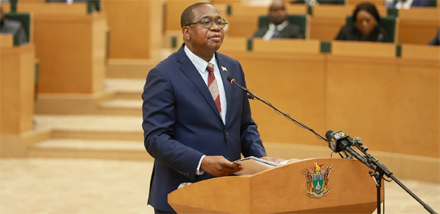
Buoyed by strong economic progress in 2026, Finance Minister Professor Mthuli Ncube struck a tone of cautious optimism when presenting the 2027 National Budget Statement on Thursday.
HE projected continued resilience even as a looming El Niño-induced drought and conflict in the Middle East threaten the macroeconomic outlook.
Despite mounting external headwinds, Treasury is commended for its foresight in buffering the economy against climate and global economic shocks.
To mitigate the looming drought, the Government has operationalised a comprehensive six-pillar response mechanism anchored in enhanced Strategic Grain Reserves, climate-smart agriculture, a new financing architecture, livestock response, enhanced imports, coordinated capacity building and an early warning system.
Complementing this macro-level strategy is the insightful, multi-year expansion of irrigation infrastructure.
By increasing the area under irrigation from approximately 175 000 hectares (ha) in 2018 to 308 000ha today, the Government has laid a permanent foundation for agricultural stability.
Consequently, the Government has already procured 365 000 tonnes of grain, working towards a 600 000-tonne strategic reserve by August 2027, while the Pfumvudza/Intwasa programme continues to receive dedicated support to safeguard household-level supplies.
The reindustrialisation imperative
While the 2027 blueprint maintains fiscal prudence — projecting a narrow deficit of 0,5 percent of gross domestic product (GDP) against revenues of US$12,5 billion — its true test lies in economic restructuring.
The manufacturing sector is emerging as a key growth driver, yet its 17 percent share of GDP remains stubbornly below the 25 percent National Development Strategy (NDS) target.
To contextualise this gap, South Africa’s maturing manufacturing sector accounts for roughly 30 percent of its GDP, while China’s peaked at 50 percent to drive double-digit growth prior to the global financial crisis.
Bridging this divide is an absolute imperative.
Deep industrialisation is the only sustainable pathway to global competitiveness and the creation of quality, formal jobs, which are essential for structurally reducing our 76,1 percent informality rate. Crucially, a robust manufacturing base permanently resolves balance of payments (BOP) deficits and budget imbalances by shifting the economy from import-dependence to value-addition and export-oriented growth.
The Budget’s reduction of the Intermediated Money Transfer Tax (IMTT) and suspension of duties on semi-knocked-down (SKD) kits serve as vital catalysts for this transition.
Furthermore, the proposed duty rebate on raw materials, specialised intermediate inputs and capital equipment used in the fertiliser manufacturing value chain, effective November 1, 2026, is expected to boost local production.
Deepening local currency demand
While external and fiscal accounts are stabilising — evidenced by ZiG inflation averaging 4 percent and gross reserves reaching US$2 billion — the domestic monetary economy presents an ongoing opportunity to deepen local currency usage. The Government has commendably begun driving ZiG demand by mandating that 50 percent of corporate taxes be paid in the local currency. To further mitigate any lingering risks of structural dollarisation and solidify the ZiG’s store-of-value function, there is scope to calibrate this demand further.
Expanding tax obligations payable in ZiG and increasing public sector payments in the local currency will organically anchor its velocity and utility, reinforcing the confidence-building imperative that is critical at this stage of our economic recovery.
Importantly, the Budget demonstrates a deliberate pivot towards production, increasing capital allocation to 3,8 percent of GDP in 2027 (up from 2,3 percent in 2026).
In absolute terms, capital expenditure now commands a substantial US$2,6 billion, representing 20,5 percent of the total Budget.
Financing this transition requires resolving the US$22,2 billion national debt.
Zimbabwe currently faces US$3 billion in arrears to international financial institutions (World Bank: US$1,7 billion; African Development Bank: US$835 million; European Investment Bank (EIB): US$433 million).
Fortunately, the successful implementation of the International Monetary Fund (IMF) Staff-Monitored Programme (SMP), backed by the United Kingdom and France co-chairing the Debt Consultative Group alongside the Ministry of Finance and the Reserve Bank of Zimbabwe (RBZ), significantly improves prospects for securing bridging finance in 2027 to clear these arrears and restore the country’s borrowing status.
Concurrently, the operationalisation of the Infrastructure Development Fund (IDF) is yielding tangible results across various critical sectors.
A US$400 million facility has been arranged to finance a broad spectrum of national infrastructure needs, with a primary and highly visible focus on fast-tracking key highway projects — specifically the Beitbridge-Harare, Harare-Chirundu, and Bulawayo-Victoria Falls corridors.This ensures that vital infrastructure development does not rely solely on the domestic tax base.
To further reinforce the capital support Treasury can provide to rebuild our infrastructure and the broader economy, the Budget also places a strong focus on the green economy.
By reducing the commercial duty on electric vehicles and ancillary infrastructure from 25 percent to 10 percent, the Government is strategically unlocking access to the expanding global pool of climate and green finance.
Broadening the revenue base and social protection
With 95 percent of the Budget funded by direct taxation, the burden on the formal sector remains unsustainable.
While the Mutapa Investment Fund (MIF) has made significant traction in transforming State-owned enterprises, the task ahead remains immense.
Accelerating this momentum is crucial so that these entities can meaningfully and sustainably contribute to the fiscus.
To widen the tax net and drive formality, the Budget scraps the 25 percent duty on mobile phones, leveraging technology for financial inclusion and formalisation of the economy.
Recognising the need for inclusive prosperity, Treasury allocated ZiG21,5 billion (US$827 million) to the Ministry of Public Service and Social Welfare, which is primarily responsible for social protection.
The commitment to clear outstanding Basic Education Assistance Module (BEAM) arrears comes as a huge relief to the primary education fraternity. Additionally, the tax-free threshold is raised from US$100 to US$150, providing direct relief to the working class.
However, to truly alleviate economic hardship, Treasury is encouraged to continue reviewing the salaries of civil servants.
Macroeconomic stability
To preserve price stability and prevent deficit monetisation, fiscal and monetary policies remain tightly aligned.
Treasury is amending the Reserve Bank Act to reduce the statutory Government borrowing limit from the RBZ from 20 percent to 5 percent of the previous year’s revenue.
Notably, even under the current limit, the Government has not borrowed a single cent from the central bank, reflecting strict fiscal discipline.
Supported by a reserve accumulation strategy that has seen gross reserves grow to approximately US$2 billion, single-digit inflation and currency stability are highly achievable in 2027.
Overall, the 2027 National Budget provides a robust framework for navigating external shocks.
However, realising its ambitions requires us to aggressively pursue reindustrialisation, intentionally drive demand for the local currency and rigorously execute our debt clearance strategies.
Persistence Gwanyanya is an economist, chartered banker and a member of the RBZ Monetary Policy Committee. He is also the founder and CEO of Bullion Group International. For feedback, email: [email protected]