Online Reporter
Ryan Sibanda [email protected]
DIGITAL inclusion is increasingly becoming a critical requirement for people with disabilities, as access to technology determines who can participate in governance, access information, secure economic opportunities and make their voices heard in an increasingly digital world.
For people with visual impairment, the growth of digital platforms can either create opportunities for greater independence and participation or deepen exclusion when websites, applications and online systems are not designed to accommodate their needs.
A local organisation, Gateway to Elation, is seeking to address these barriers through its ‘Accessible Digital Civic Participation for Blind Communities’ project, which aims to ensure that blind people are not left behind as Zimbabwe increasingly embraces digital technologies.
Speaking at the launch of the project at Mimosa Building, Gateway to Elation founder Mr Robert Malunda said the organisation, which is marking 10 years of changing lives, was beginning a new chapter centred on digital inclusion.
“This is the beginning of a new chapter for Gateway to Elation is marked by our simple but yet powerful motto — Access. Participate. Be Heard,” he said.
Mr Malunda said the project was founded on the belief that blind people should not merely have access to technology, but should also be able to use it to participate meaningfully in issues that affect their lives.
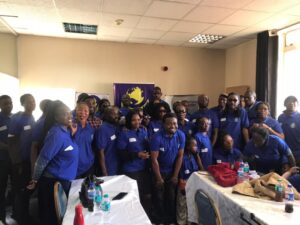
“This project comes from a simple belief: that blind people should not only have access to digital technology, but should have the opportunity to use that technology to participate, engage, express themselves and influence the issues that affect their lives,” he said.
For people living with visual impairment, accessibility is a determining factor in whether they can participate in the digital world. A website may be available to the public, but if it is incompatible with screen readers and other assistive technologies, blind people can be effectively excluded from the information and services it provides.
The challenge goes beyond access to technology itself. Inaccessible digital platforms can prevent people with disabilities from accessing important documents, engaging in public discussions, participating in local governance and civic matters, pursuing education and taking advantage of economic opportunities.
In a society where more services, information and opportunities are moving online, exclusion from digital platforms can result in people with disabilities being further marginalised.
Mr Malunda said simply making technology available did not necessarily make it accessible.
“Availability does not automatically mean accessibility. A technology can be available to everyone and still be inaccessible to many,” said Mr Malunda.
He said true digital inclusion required developers and institutions to consider different users from the beginning.
“True digital inclusion means designing technology from the beginning with different users in mind,” he said.
Creating accessible technology can provide a platform for people with disabilities to participate more fully in society and ensure that groups previously excluded from digital spaces can make their voices heard.
Digital inclusion also has the potential to create economic independence by enabling people living with disabilities to acquire new skills, access markets and use technology to support their livelihoods.
Gateway to Elation has demonstrated the transformative potential of such inclusion through people like Rameck Manyepo, a 55-year-old man who learnt to sew and use a smartphone through the organisation.
Mr Manyepo has since managed to supply lodges in Bulawayo and Victoria Falls with pillows, creating a source of income that enables him to support his family.
Mr Malunda highlighted funding and exposure as some of the challenges facing the organisation, saying greater support would enable more blind people to benefit from the programme, find their voices and gain opportunities to earn a living.
He urged Government and local companies to be more considerate and inclusive of people with disabilities when developing digital platforms and websites.
“Digital access does not simply connect people to technology. It connects people to opportunity and when people have access to opportunity, they can participate. When they participate, they can contribute. And when their contributions are heard, society becomes stronger, fairer and more inclusive for everyone,” he said.
As Zimbabwe’s economy, public services and civic spaces increasingly embrace digital platforms, the accessibility of technology will become central to ensuring that people living with disabilities are not left behind.
For people who have historically faced physical and social barriers to full participation, digital inclusion is not simply about access to a smartphone or a website. It is about access to information, opportunities, independence, participation and a voice in the society in which they live.