
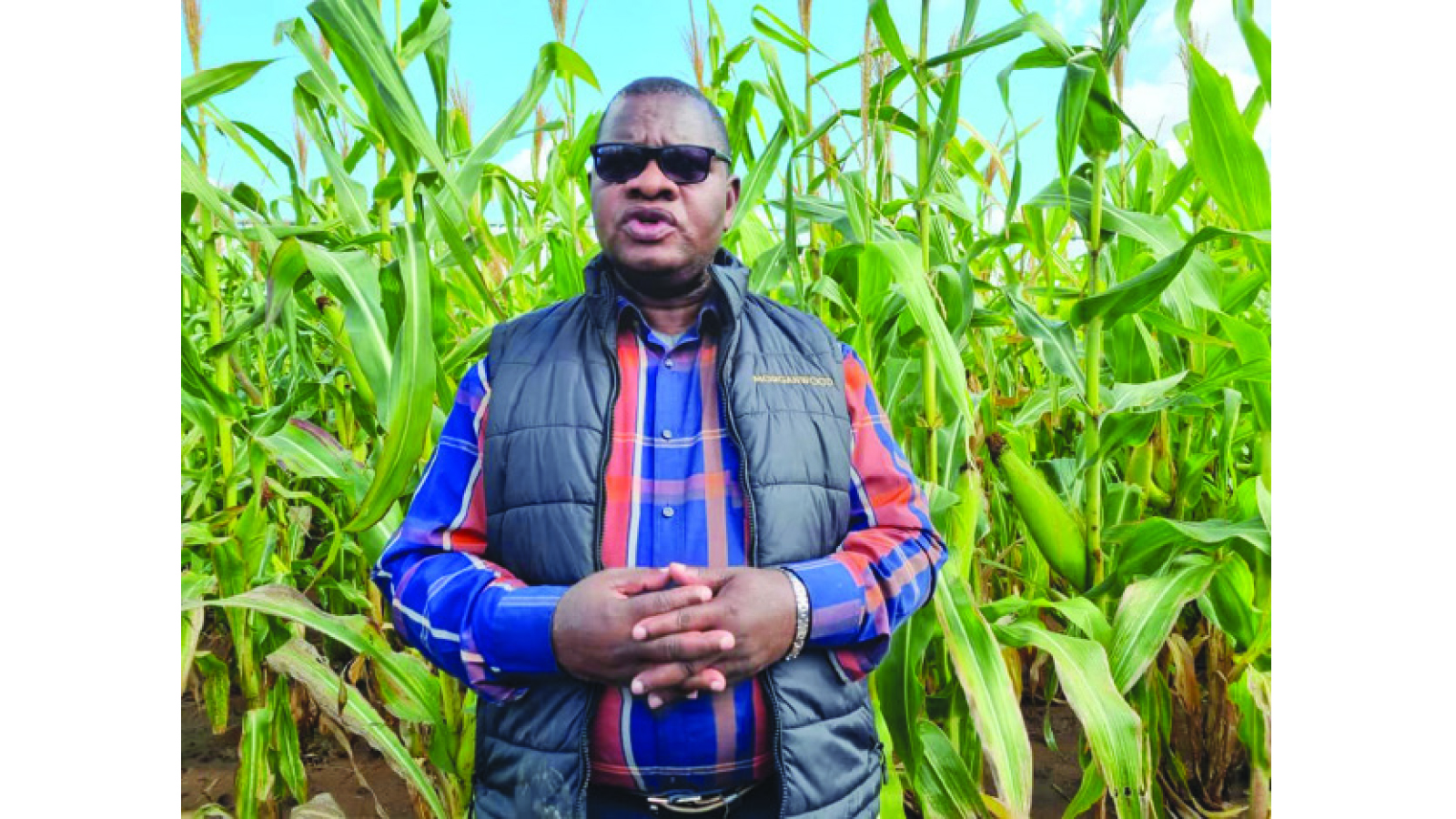
Theseus Shambare-Herald Reporter
PREPARATIONS for the 2025/26 summer cropping are now in full swing, with the Government tightening systems to curb inputs abuse and ensuring that every household is prepared to farm and has the right tools to plant.
This season, more than 3.5 million households are set to benefit from the Pfumvudza/Intwasa Programme, covering 400 000 hectares of land.
The programme’s distribution is now fully digitised through the newly-introduced electronic inputs distribution system (e-inputs) — a platform designed to enhance transparency, accountability and efficiency from depots to farmers at the ward level.
Each participating household will receive a complete input package sufficient for a quarter hectare.
In high rainfall regions, farmers will receive 10 kilogrammes of maize seed, 50 kilogrammes of Compound D, 50 kilogrammes of top dressing fertiliser, 5 kilogrammes of lime and a vegetable seed pack to promote dietary diversity.
In drier areas, the package will comprise 10 kilogrammes of small grains such as sorghum or millet, with fertilisers and legume seed suited for arid conditions.
The full rollout of the summer preparedness was epitomised by the official launch of the Pfumvudza/Intwasa inputs distribution in Murehwa, where hundreds of farmers gathered to receive their allocations and by the tour of Langford Fertiliser Manufacturing Company in Harare, which confirmed the country’s readiness to meet the demand for basal and top-dressing fertilisers.
Lands, Agriculture, Fisheries, Water and Rural Development Permanent Secretary Professor Obert Jiri said the new digital platform represents a paradigm shift in input management and accountability.
“The e-inputs distribution platform is key to this season’s success,” said Prof Jiri.
“All farmers must be registered in our database to obtain an e-signature, which grants them access to inputs. This ensures traceability from the depot to the farmer and prevents abuse by unscrupulous individuals.”
Prof Jiri said the database captures information at national, provincial, district and ward levels, ensuring that only bona fide farmers benefit.
“This season, every input is accounted for, every farmer is registered and every hectare counts. There is no room for input abuse — only room for productivity.”
For years, some rogue elements abused the inputs programme through diversion and resale, depriving genuine farmers of critical support.
These malpractices led to the arrests of several individuals, including community leaders and middlemen.
The e-inputs system now closes those loopholes by ensuring accountability at every stage.
He added that the Government’s broader agricultural plan goes beyond Pfumvudza, with several complementary programmes working together to ensure food sufficiency.
Under the National Enhanced Agricultural Productivity Scheme (NEAPS) — implemented through CBZ, AFC, NMB and other banks — commercial and medium-scale farmers will plant over 250 000 hectares of maize, soya beans and wheat.
The Agricultural and Rural Development Authority (ARDA) joint venture programme will contribute another 100 000 hectares of summer grains and 60 000 hectares of winter crops, targeting a combined 800 000 tonnes of maize and wheat.
Meanwhile, the Accelerated Irrigation Rehabilitation and Development Plan (AIRDP) will put 223 000 hectares of land under irrigation for summer crops, drawing water from the country’s 10 700 dams.
“Zimbabwe is the most dammed country in Sub-Saharan Africa, with over 10 000 dams,” said Prof Jiri.
“Our focus now is to ensure every dam supports irrigation. This year, irrigation development will cushion us from erratic rainfall and secure food production.”
In line with agro-ecological zoning, Regions I and II will prioritise maize and soyabeans, while Regions IV and V will focus on sorghum, millet and cowpeas for drought resilience.
On mechanisation, the chief director of Agricultural Engineering, Mechanisation, Farm Infrastructure Development and Soil Conservation, Engineer Edwin Zimunga, said the Ministry is strengthening the national tillage programme.
“We are rolling out more tractors and tillage equipment through public-private partnerships,” he said.
“Our target is that every Pfumvudza plot and every commercial field is planted on time. Mechanisation reduces drudgery and enhances efficiency in land preparation.”
He said over 15 000 tractors, 3 100 planters and 300 combine harvesters have been mobilised through Government and the private sector to accelerate land preparation and harvesting.
The Fisheries and Aquaculture Resources Department (FARD) has also stepped up efforts to integrate aquaculture into national food systems.
FARD director Mr Milton Makumbe said fish farming will complement irrigation schemes and boost nutrition and income in rural areas.
“We are integrating aquaculture into our dams and irrigation schemes,” he said.
“This year alone, over 1 000 community fishponds will be established and three million fingerlings distributed nationwide. Fisheries are becoming a vital part of our rural food systems.”
Mrs Chelesani Moyo-Tsarwe, the Tobacco Industry and Marketing Board spokesperson, added that tobacco preparations are also advancing well.
“For the 2025/26 season, the flue-cured tobacco seed sales and estimated hectarage show a promising outlook, with a 13 percent increase in both TRB seed sales and equivalent hectares compared to the 2024/25 season,” she said.
“We have seen 1 441 200 grams of seed sold, projecting an estimated 288 240 hectares to be planted this season.”
Mrs Moyo-Tsarwe also provided an update on planting progress and grower registration.
“As of October 17, 2025, the total area planted for tobacco stands at 22 338 hectares, representing a substantial 32 percent increase nationally from the 16,873 hectares planted by the same time last year,” she said.
“Notably, provinces like Mashonaland East and Manicaland have registered massive increases in planted area, at 68 percent and 33 percent, respectively.”