Precious Manomano
Herald Reporter
ZIMBABWE could widen the reach of its agricultural extension services through digital technologies that enable farmers to access practical farming information beyond conventional face-to-face visits by extension officers.
The approach, demonstrated through a regional initiative in Lesotho, uses animated videos in local languages to simplify agricultural technologies and help farmers understand and apply improved farming practices.
The initiative comes as Zimbabwe continues to strengthen agricultural productivity, climate resilience and farmer preparedness, with access to timely technical advice remaining important in helping farmers make informed decisions throughout the cropping season.
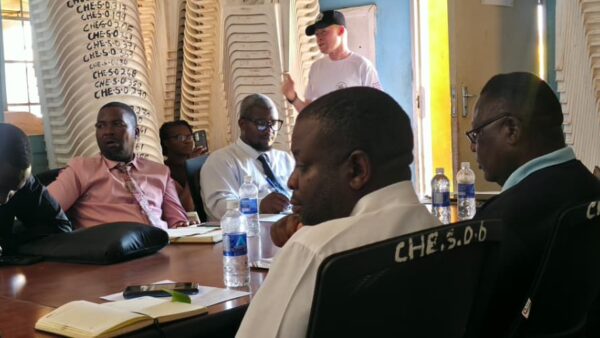
Under the programme, the Centre for Coordination of Agricultural Research and Development for Southern Africa (CCARDESA), working with Lesotho’s Department of Agricultural Research and Scientific Animations Without Borders (SAWBO), conducted a five-day training of trainers in Maseru from October 19 to 23, 2026.
The training, supported by the World Bank-funded Food Systems Resilience Programme (FSRP), brought together agricultural researchers, extension officers and technical specialists from Lesotho’s Ministry of Agriculture and Food Security, including representatives from all 10 districts.
Participants learnt how to convert scientific agricultural information into animated videos, translate scripts into Sesotho, record voice-overs and distribute the finished materials through digital and offline channels.
The approach offers lessons for Zimbabwe, where effective agricultural extension is essential in supporting farmers with information on crop production, livestock management, soil conservation, water harvesting and climate-smart agriculture.
Digital videos can allow farmers to revisit demonstrations when necessary and share information within their communities, while extension officers can use the materials to reinforce advice during field visits, farmer training sessions and other outreach activities.
In Lesotho, where one agricultural extension officer serves approximately 700 farmers, the shortage of personnel makes it difficult to provide every farming household with regular technical support, particularly in remote communities.
Officially opening the training, Lesotho Director of Agricultural Research Dr Lefulesele Lebesa said developing agricultural technologies was not enough unless the innovations reached the farmers who needed them.
He welcomed the use of animated videos to simplify agricultural information and extend its reach, expressing hope that participants would continue producing and disseminating locally relevant content after the training.
CCARDESA’s Food Systems Resilience Programme Regional Coordinator, Dr Majola Mabuza, reaffirmed the organisation’s commitment to supporting Lesotho beyond the training, emphasising the need to adapt agricultural knowledge products to local farming conditions.
SAWBO representative Dr John William Medendorp said digital extension could expand the reach of agricultural information at relatively low cost.
Drawing on the organisation’s experience in Ghana, Kenya and Nigeria, he reported that animated agricultural videos had reached approximately 12 million people, with about 2,5 million reporting adoption of the practices demonstrated.
He stressed that digital tools should complement rather than replace agricultural extension officers, enabling them to reach more farmers, including those in geographically isolated areas.
For Zimbabwe, the approach could provide an additional channel for communicating research findings and recommended farming practices in languages that farmers understand.
The videos could also support the dissemination of information on seasonal forecasts, planting dates, recommended agronomic practices and drought mitigation, provided the content is adapted to local conditions and validated by relevant agricultural specialists.
However, the effectiveness of digital extension would depend on the availability of locally relevant content, access to suitable devices and communication networks, and the capacity of extension officers to integrate the materials into their existing work.
The Lesotho initiative was conducted under a regional programme promoting the use of digital technologies in agricultural extension, highlighting opportunities for countries in Southern Africa to explore practical ways of connecting agricultural research with farming communities.
For Zimbabwe, the key lesson is that agricultural innovations must not remain confined to research institutions but should be translated into accessible information that farmers can use to improve production, manage climate risks and strengthen their livelihoods.