Chronicle Editor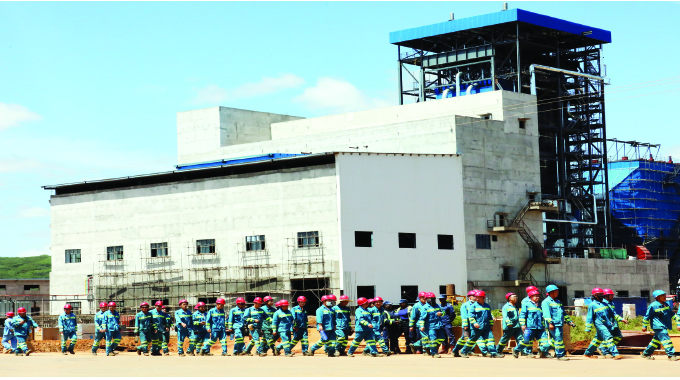
Patrick Chitumba, [email protected]
A SIGNIFICANT transformation is underway in the Manhize area near Mvuma in the Midlands province, following the emergence of the US$1,5 billion Dinson Iron and Steel Company (Disco) steel plant at the Manhize-Chikapakapa mountain range.
Once a dense forest, the area has turned into a thriving industrial hub with buildings emerging from the wilderness.
Staff houses, warehouses and other essential infrastructure have been constructed, paving the way for the steel giant to start producing carbon steel.
The project is poised to make a significant impact on the region’s economy and cement Zimbabwe’s position as a major player in the steel industry.
The laying of the 100km power line from the Sherwood block in Kwekwe to the steel plant has also been completed with Zesa and Disco electricians working on the synchronisation of power.
The two families displaced to pave the way for the power line projects have since been relocated. So far 17 families have been relocated.
The giant steel plant is touted to be among Africa’s biggest integrated steelworks. Disco is one of the three local subsidiaries of China’s global stainless steel producer, Tsingshan Holdings Group Limited.
The group also owns Dinson Colliery in Hwange in Matabeleland North and a ferrochrome plant, Afrochine Smelting Limited, in Selous.
The iron and steel investment positions Zimbabwe among the ranks of global steel manufacturing hubs, with projections indicating the country’s potential to emerge as a future powerhouse in the iron and steel industry.
Disco is projected to produce 600 000 metric tonnes of products in the first phase rising to 1,2 million tonnes in the second phase then 3,2 million tonnes in the third phase and ultimately five million tonnes per year in the final phase, earning the country millions of dollars in foreign currency. Currently, the company employs 1 500 people mostly youths.

About 600 metres from the steel plant is a US$3,5 million Munyati River Bridge that has replaced a low-level crossing bridge that had existed for years and was becoming a nightmare for villagers, especially this rainy season due to flooding.
In an interview, Disco’s public relations manager, Mr Joseph Shoko said the construction of the main components of the plant is complete.
“The sintering plant, the blast furnace, the power plant, the oxygen plant and the workshop are all 100 percent complete,” he said.
Mr Shoko said the relocation of two families affected by the construction of the power line was done successfully.
“The power line is now 100 percent and what is outstanding are issues of synchronisation and due diligence along the line to make sure that there is no harm in switching it on. So they are tightening where it is necessary. The target is to power the plant this week and teams have been deployed to finalise the process,” he said.
Mr Shoko said by the end of the first quarter, they will start the first production of pig iron before moving to the production of steel billets in the second quarter.
The mega-investment project encompasses the establishment of a Smart City to be called Manhize Town including a science university.
The project paves the way for the beneficiation and value addition of steel production, which will accelerate and drive the province’s economy including massive spin-offs for the entire country and the region.
Other products that the company will eventually produce include pipes, bolts and nuts, smaller slags, rolled tubes, fences, shafts, wires, and bars, among others.
Preliminary estimates suggest that net revenues are expected to hit US$10 million during the first phase and will rise to US$4,25 billion under phase four of production.
In terms of employment, Disco expects to directly employ 3 000 workers in the first phase with the figure expected to rise to over 10 000 in the fourth phase of production.
Disco has also signed a memorandum of understanding with the Government to refurbish and construct a 1 000km long railway line to provide a dedicated, reliable, uninterrupted and efficient railway line for the transportation of the company’s products for local and export- imports routes through Mozambique.
Since the closure of the Zimbabwe Iron and Steel Company (Zisco) in 2008, Zimbabwe has been spending nearly US$1 billion annually on importing iron and steel-related products from abroad.
The establishment of the steelworks will see the launch of several infrastructural projects such as road and rail networks, and a dam to provide water for domestic use, irrigation and industrial operations at the plant.
An irrigation project is also on the cards in line with the Second Republic’s thrust of stimulating production across all sectors of the economy in line with Vision 2030.



 Online Reporter