

 Online Reporter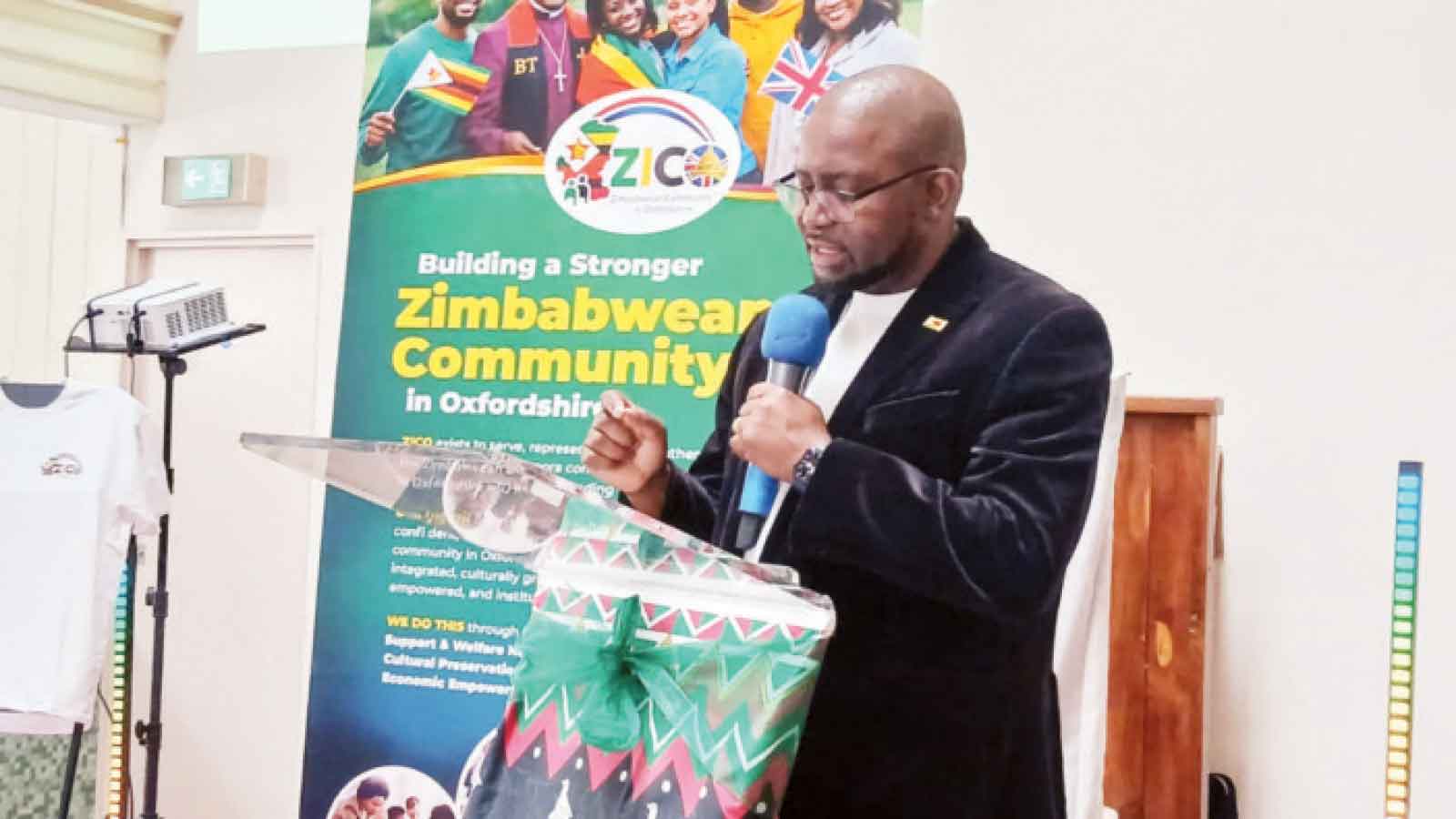
Gibson Mhaka-Zimpapers Politics Hub
ZIMBABWE’S foreign policy under the Second Republic is steadily emerging as one of the key pillars underpinning the country’s re-engagement with the international community, with President Mnangagwa’s diplomatic offensive yielding measurable gains both regionally and globally.
Since assuming office in November 2017, President Mnangagwa has pursued an engagement and re-engagement agenda anchored on the principle that Zimbabwe is “a friend to all and an enemy to none”.
The policy has seen the country rebuild strategic partnerships, strengthen regional cooperation and re-establish its voice within influential international institutions.
Recent developments, including the official launch of the Zimbabwean Community in Oxfordshire (ZICO) in the United Kingdom and the successful State visit by Equatorial Guinea President Teodoro Obiang Nguema Mbasogo, provide fresh evidence of a foreign policy increasingly translating diplomatic goodwill into tangible political, economic and developmental outcomes.
The two events, although taking place in different geopolitical settings, are linked by a common thread — Zimbabwe’s determination to deepen bilateral relations, expand economic cooperation and broaden its international partnerships in pursuit of Vision 2030.
Their significance is further amplified by Zimbabwe’s recent election to the United Nations Security Council (UNSC) as a non-permanent member for the 2027-2028 term, a diplomatic milestone that reflects growing international confidence in the country’s constructive role in regional and global affairs.
Perhaps one of the clearest indicators of Zimbabwe’s changing diplomatic fortunes is the gradual thawing of relations with the United Kingdom.
For nearly two decades, relations between Harare and London were characterised by political tensions, mutual distrust and limited engagement.
However, the advent of the Second Republic marked the beginning of a deliberate effort to rebuild diplomatic bridges and pursue constructive engagement.
The launch of ZICO represented more than the establishment of a diaspora organisation.
It symbolised growing cooperation between Zimbabwe and Britain and highlighted the increasing importance of diaspora diplomacy in strengthening bilateral relations.
The event brought together senior British civic leaders, diplomats, business executives and representatives of the Zimbabwean community, reflecting a level of engagement that would have been difficult to imagine during the years of strained relations.
Deputy Ambassador Levi Upenyu Mukono, who represented Zimbabwe’s Ambassador to the United Kingdom, Retired Colonel Christian Katsande, said the establishment of ZICO complemented Government efforts to strengthen engagement with Zimbabweans abroad while fostering stronger bilateral relations between Zimbabwe and the UK.
“I am encouraged by ZICO’s stated objectives to strengthen community cohesion, support families, promote cultural identity and advance the welfare of Zimbabweans in both Zimbabwe and the United Kingdom.
“These goals align closely with the broader aspiration of building strong, inclusive and empowered diaspora communities that remain connected to their heritage while contributing meaningfully to their host societies,” he said.
His remarks underscored an important shift in Zimbabwe’s diplomatic thinking, where the diaspora is increasingly viewed not merely as a source of remittances but as a strategic partner in national development and international engagement.
Deputy Ambassador Mukono further highlighted the importance of diaspora participation in national development.
“The Government of Zimbabwe values the contributions of its citizens living abroad and recognises the diaspora’s crucial role in national development.
“ZICO has the potential to build bridges between Zimbabweans in the diaspora and institutions in Zimbabwe and the UK, fostering educational initiatives, business linkages, cultural exchanges and community development programmes that benefit both nations.”
Diaspora organisations increasingly serve as informal ambassadors, promoting people-to-people relations that complement formal diplomatic engagement.
The growing recognition of the diaspora as Zimbabwe’s “11th Province” has become one of the defining features of the Second Republic’s foreign policy.
For decades, millions of Zimbabweans living abroad remained largely disconnected from national development programmes despite making substantial contributions through remittances and investments.
Under the engagement and re-engagement policy, the Government has sought to transform this relationship by integrating the diaspora into the country’s broader development agenda.
ZICO chairman Mr Memory Tapfumaneyi directly linked the organisation’s formation to President Mnangagwa’s vision.
“This is one of our President’s visions and priorities when he recognised the diaspora as the 11th Province of Zimbabwe.
“We, as the Zimbabwean community, are ready to contribute, collaborate, celebrate our identity and build bridges with the wider society in which we live,” he said.
The establishment of ZICO therefore represents not only a milestone for Zimbabweans living in Britain, but also another example of how the Second Republic is leveraging soft-power diplomacy to strengthen international relations.
While engagement with former Western adversaries remains important, Zimbabwe’s diplomacy under the Second Republic has equally focused on strengthening relations with fellow African countries.
A central pillar of President Mnangagwa’s foreign policy has been the promotion of African solidarity, regional integration and South-South cooperation.
This approach was clearly demonstrated during the recent State visit by Equatorial Guinea President Teodoro Obiang Nguema Mbasogo, which marked another significant chapter in the growing partnership between Harare and Malabo.
Relations between the two countries have continued to grow since President Mnangagwa’s State visit to Equatorial Guinea in February 2023, during which six Memoranda of Understanding were signed.
Last week’s State visit by President Mbasogo saw the relationship deepen further with the signing of four additional Memoranda of Understanding covering education, economic and trade cooperation, training of interpreters and translators, and rules governing the Joint Commission for Cooperation (JCC).
Taken together, these agreements reflect a deliberate effort by both countries to institutionalise cooperation and create mechanisms for monitoring implementation.
Foreign Affairs and International Trade Minister Professor Amon Murwira described the visit as a major success.
“You know, this was the first JCC, which is the Joint Commission of Cooperation.
“This was the first between Zimbabwe and Equatorial Guinea, so that’s an important point to note.
“It was a great success; they said it was a success; we say it is a success; therefore, success plus success is equal to success.”
Beyond the minister’s colourful expression, the significance of the visit lies in the establishment of institutional frameworks capable of transforming political goodwill into practical cooperation.
Another defining feature of President Mnangagwa’s diplomacy is its strong economic orientation.
Unlike traditional diplomacy, which often focused primarily on political relations, the engagement and re-engagement policy seeks to leverage international relations to unlock trade, investment, technology transfer and industrial development.
Professor Murwira has repeatedly emphasised that political and diplomatic relations provide the foundation upon which economic cooperation can flourish.
This philosophy is increasingly evident in Zimbabwe’s engagement with countries across Africa, Europe and Eastern Europe.
President Mnangagwa highlighted this economic dimension during the signing ceremony with President Mbasogo.
“There is great potential to enhance bilateral trade and economic cooperation, unlocking trade, tourism and mutual investment opportunities that are abundant in our two countries.”
The President also called for practical collaboration between the public and private sectors.
“I urge our officials to pursue initiatives that will increase collaboration between our small to medium enterprises, particularly the youth and women-owned businesses.”
This marks a significant evolution in Zimbabwe’s foreign policy, where diplomacy is increasingly viewed as an instrument for economic transformation rather than merely a tool for managing political relations.
At the heart of Zimbabwe’s engagement and re-engagement policy remains the principle that the country should be “a friend to all and an enemy to none”.
The doctrine reflects a pragmatic approach to international relations, allowing Zimbabwe to pursue mutually beneficial partnerships regardless of ideological differences.
This approach has enabled the country to broaden its diplomatic horizons and strengthen relations with a diverse range of partners, including Mozambique, Botswana, Kenya, Belarus and Equatorial Guinea.
Each partnership serves different strategic objectives, ranging from agriculture and mining to education, infrastructure development, technology transfer and trade.
The diversification of partnerships demonstrates Zimbabwe’s determination to create multiple avenues for economic growth and national development while enhancing its strategic flexibility in an increasingly competitive global environment.
Zimbabwe’s election to the United Nations Security Council for the 2027-2028 term represents perhaps the clearest indication yet of the country’s improving international standing.
Membership of the Security Council is among the most influential positions within the United Nations system and reflects significant support from the international community.
For a country that once faced diplomatic isolation in certain international forums, the achievement marks a notable diplomatic breakthrough and highlights the effectiveness of the engagement and re-engagement policy.
Nearly nine years after its launch, the policy appears to be yielding tangible results.
The growing warmth in relations with the United Kingdom, the strengthening of partnerships across Africa, the mobilisation of the diaspora and Zimbabwe’s election to the United Nations Security Council all point to a country steadily rebuilding its international profile.
The launch of ZICO in Oxfordshire and the successful State visit by President Mbasogo may appear unrelated events, yet together they illustrate the broader trajectory of Zimbabwe’s diplomacy under the Second Republic.
One reflects the rebuilding of relations with a former Western adversary and the growing importance of diaspora diplomacy.
The other demonstrates the strengthening of African solidarity through structured bilateral cooperation.
Both developments are rooted in the same foreign policy philosophy — engagement rather than isolation, cooperation rather than confrontation and mutually beneficial partnerships rather than division.
As Zimbabwe advances towards Vision 2030, the country’s growing diplomatic footprint suggests that engagement, dialogue and strategic partnerships will remain central to its quest for economic transformation, regional influence and international relevance.



