Online Reporter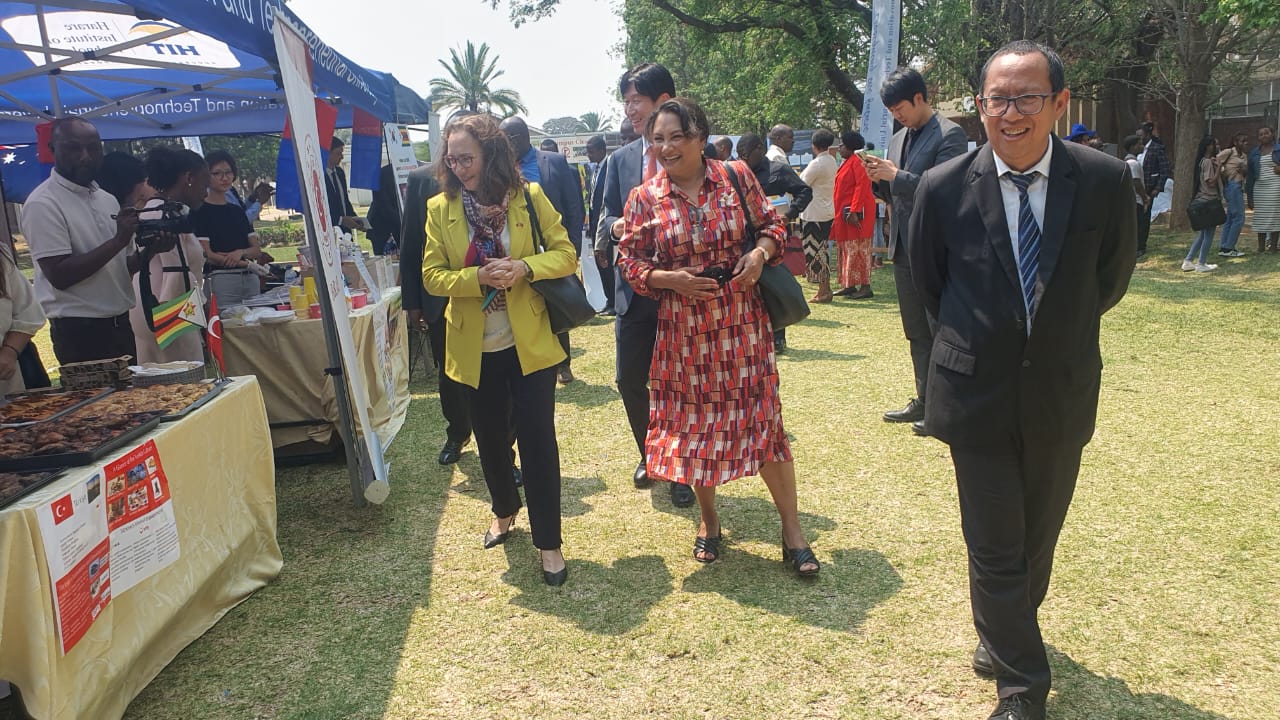
Ivan Zhakata
Herald Correspondent
DIPLOMATS from the MIKTA group of nations – Mexico, Indonesia, Korea, Türkiye and Australia – have pledged to strengthen co-operation with Zimbabwe in areas of youth empowerment, climate action, education and sustainable development as part of efforts to support the country’s Vision 2030 aspirations.
Speaking during a MIKTA seminar 2025 at the Harare Institute of Technology (HIT), the Ambassador of the Republic of Korea to Zimbabwe, Park Jaekyung, whose country currently chairs MIKTA, said it was important to invest in human capital, particularly young people.
“Strategic investment in youth empowerment is essential for sustainable development,” he said
“This includes education and vocational training, protecting the youth from harmful environments such as substance abuse and early marriages, encouraging international networks like studying abroad and prioritising climate action and gender equality.”
Ambassador Park said Korea had ongoing initiatives in Zimbabwe, including the establishment of a new ICT laboratory at the Zimbabwe Open University, digital economy consultations with the Government, annual full scholarships for 15 Zimbabwean students to study in Korea, and cultural diplomacy through sports such as Taekwondo.
Australia’s Ambassador to Zimbabwe, Minoli Perera, said her government has expanded its development assistance to over US$5 billion globally, with significant support to Zimbabwe channelled through grassroots projects under the Direct Aid Programme (DAP).
“Zimbabwe’s youth are fundamental to global stability and prosperity. Our projects support education, women’s empowerment, STEM learning, climate resilience and food security,” she said.
Ambassador Perera said they have established Australian-funded innovation hubs in Harare and Victoria Falls to provide digital skills to marginalised youth, as well as climate initiatives such as the Chigubu Lantern Project, which teaches students to make solar lanterns from recycled waste materials.
Indonesia’s Ambassador-designate, Arief Hidayat, pledged to scale up educational and agricultural cooperation, announcing 174 scholarships for Zimbabwean students last year and support for cattle breeding programmes to boost the livestock sector.
Turkey’s Ambassador, Berna Kasnaklı Versteden, said her country has prioritised education and agricultural cooperation with Zimbabwe under its Africa Partnership Policy.
She said Turkish scholarships were available to Zimbabwean students and local agricultural projects, including sustainable sesame seed production and the provision of maize and peanut shelling machines to vocational training centres.
HIT vice chancellor, Professor Quinton Kanhukamwe, said the institution was embracing digital transformation, with artificial intelligence and data analytics now compulsory for all students.
“Today is the future, and hence we made artificial intelligence and data analytics mandated regardless of what you do,” he said.
“This has given our graduates a competitive edge across all sectors.”
Executive Director of the Southern African Research and Documentation Centre (SARDC), Mr Munetsi Madakufamba said MIKTA’s plays a key role as a bridge between developed and developing countries and its collective economic weight makes it a significant global actor.
“With Zimbabwe’s large youth population, MIKTA’s expertise in development cooperation and capacity building can support the country’s aspirations to attain middle-income status by 2030,” he said.
The seminar, themed “Empowering Growth: The Role of MIKTA in Zimbabwe’s Development and Collaborative Approaches to Achieving Vision 2030”, sought to provide HIT students with exposure to international development cooperation, innovation partnerships and academic exchanges.