Lloyd Makonya
Correspondent
FOR travellers exploring Zimbabwe’s Eastern Highlands, the journey does not have to end with the mist-covered mountains of Nyanga, the forests of Vumba or the dramatic landscapes of Chimanimani.
In the City of Mutare is Mutare Museum, another destination where visitors can discover the region’s remarkable natural history, cultural traditions and technological past.
Administered by the National Museums and Monuments of Zimbabwe (NMMZ), Mutare Museum is one of the country’s distinctive heritage attractions, bringing together transport history, wildlife, traditional knowledge and historical collections under one roof.
For tourists seeking experiences that go beyond scenic views, the museum offers an opportunity to understand the people, environments and events that have shaped Zimbabwe’s eastern region.
The museum’s story began long before its permanent facilities opened.
The idea emerged on October 22, 1953, during a meeting of the Southern Rhodesia Hunters and Game Preservation Association.
A sub-committee was established, with Captain Frank Boultbee appointed Honorary Curator. Through collecting exhibits, public support and temporary exhibitions, the vision gradually took shape.
By 1957, the then Municipality of Umtali provided space at the old Silver Oaks Hostel.
On September 13, 1964, the museum was officially established at its permanent home, marking the beginning of an institution that will preserve and interpret the region’s heritage for generations.
Today, visitors can explore five galleries, each presenting a different aspect of the natural and human history of Zimbabwe and the wider world.
The Eastern Districts Gallery provides a fitting introduction to the landscapes that make Manicaland a major attraction for nature lovers.
From the Nyanga mountains to the forests of Vumba and the rugged Chimanimani ranges, the displays reflect the region’s varied environments and biodiversity.
Collections of seashells from the Caribbean and Indo-Pacific also demonstrate how natural history can connect Zimbabwe to ecosystems far beyond its borders.
One of gallery’s notable features is a replica of Diana’s Vow, a celebrated sixteenth-century rock painting found near Rusape. The replica provides an opportunity to appreciate the artistic expression of earlier societies and the importance of preserving archaeological and cultural heritage.
The Beit Gallery offers a different experience, focusing on the traditional life of the eastern Shona people. Its exhibits explore spiritual practices, healing traditions, music, agriculture and reverence for ancestors, presenting aspects of cultural life that remain important to understanding the region’s identity.
For tourists, such displays offer more than an introduction to cultural artefacts. They provide an opportunity to reflect on how communities have understood their environment, maintained social relationships and transmitted knowledge between generations.
The gallery is particularly relevant at a time when heritage tourism can help communities appreciate and share their cultural traditions while encouraging their preservation.
A live beehive display adds another dimension to the experience, highlighting the relationship between people and nature. Bees are important to ecosystems and agricultural production, making the display an interesting point of connection between traditional knowledge, biodiversity and contemporary environmental concerns.
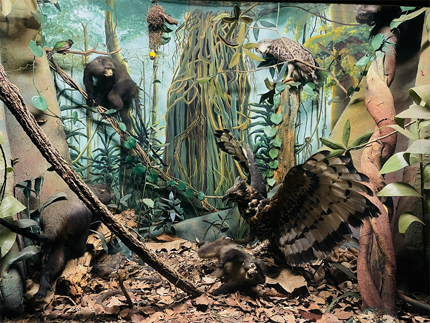
Visitors interested in zoology will find plenty to explore in the Mezzanine Gallery. Its collections cover reptiles, invertebrates and vertebrate animals, offering an educational experience for families, school groups and nature enthusiasts.
Among the displays are African rock pythons, green mambas and a large elephant skull from Hwange, with tusks weighing more than 33 kilogrammes. Bird enthusiasts can appreciate the flamingo displays, while younger visitors can learn about butterflies, mimicry and the relationships between predators and prey.
The gallery offers an opportunity to encounter aspects of Zimbabwe’s wildlife without having to travel into a national park. It can also complement visits to the country’s protected areas by helping visitors appreciate the diversity and behaviour of the animals they may encounter in the wild.
For families, the collection combines curiosity with learning, making the museum a useful stop for children to engage with nature beyond the classroom.
History takes a more sombre turn in the Boultbee Gallery, named after the museum’s founding curator, Captain Frank Boultbee. The gallery contains a collection of firearms, swords and bayonets, alongside memorabilia from the First and Second World Wars, including items associated with Germany and Italy.
Displays relating to Zimbabwe’s First and Second Chimurenga offer visitors an opportunity to explore aspects of the country’s liberation history.
A model of a Nyanga gun factory is among the exhibits that connect the region to the wider history of the struggle for independence. For tourists interested in historical interpretation, the gallery broadens the museum experience beyond natural history and traditional culture. It invites reflection on conflict, resistance and the sacrifices associated with the pursuit of freedom. It also demonstrates how museums can preserve objects that help future generations engage with difficult periods of history and understand their continuing significance.
Perhaps the museum’s most distinctive attraction is the Transport Gallery, which chronicles the evolution of mobility through an impressive collection of vintage vehicles and machinery. Among its exhibits is a 1928 Model A Ford, representing an era when motor vehicles were transforming travel and commerce. The collection also includes a 1903 Ivel tractor, identified by the museum as Zimbabwe’s oldest farming tractor, illustrating the development of agricultural mechanisation.
The Winston Churchill Train, a 1946 Bristol bus and vintage fire engines add to the gallery’s appeal. Each vehicle tells a story about how people travelled, how goods were moved and how technology influenced everyday life.
For motoring enthusiasts, the collection provides an opportunity to appreciate the design and engineering of earlier generations of vehicles.
For other visitors, it offers a broader perspective on the relationship between transport, economic development and social change.
The gallery is also an important reminder that machines are part of a country’s heritage. They reflect not only technological progress but also the changing needs, ambitions and lifestyles of the people who used them.
Mutare Museum offers tourists an experience that complements the outdoor attractions for which Manicaland is widely known.
A visitor exploring Nyanga, Vumba or Chimanimani can add the museum to an itinerary to gain a deeper understanding of the region’s landscapes, cultures and history.
Discovering Mutare Museum’s treasures