Online Reporter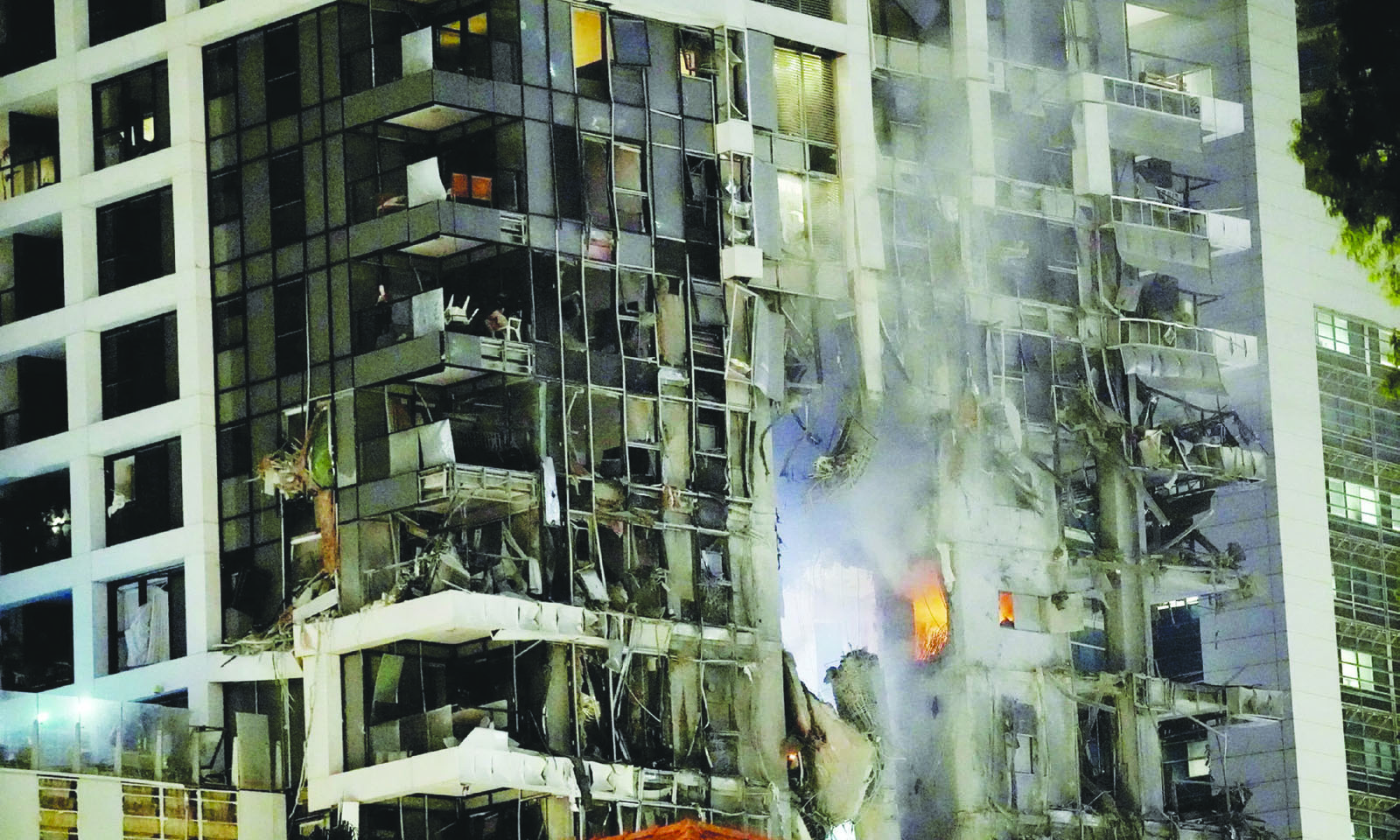
Gibson Nyikadzino
Zimpapers Politics Hub
IT is difficult to accurately predict what the world is likely to become in the next decade or two because the environment is becoming fluid and changing daily.
When Russia launched its special military operation in Ukraine in February 2022, some were quick to speculate that the world was now facing an Armageddon between Russia and the West.
This has not materialised.
Some even predicted that a war would occur in 2020 between the United States as a global power against China as a rising power, yet this has not come to pass.
It is difficult to predict what might happen in war because of how it changes strategically and logistically due to various factors.
Nevertheless, what is evident from what has become known as the “12-Day War” between Israel and Iran has nothing to do with stopping the latter from acquiring nuclear weapons, but had all the hallmarks of a regime change agenda.
In the end, hoping that the Iranian government has collapsed, the ultimate perception is that Israel becomes the top dog in the Middle East with growing influence even in Iran, where the West hopes to install a puppet regime.
Even so, Israeli leaders during this war were hyping their informational operations that they had started the aggression to bring freedom to Iranians, even making adverts in Iran’s Farsi language.
This, among many factors, is what makes the Middle East a volatile region because of its history and association with the economic, military and political strategic interests of major global powers, in particular the collective West.
However, it is also a region that has a magnificent political and military history. For example, there is no known nuclear power that has won a war in that region.
Firstly, the Soviets were defeated by Afghanistan following the 1979 invasion of its borders.
Secondly, the same Afghans, after two decades of fighting the Americans, took over the capital Kabul in August 2021 when the US forces left chaotically after failing to defeat the Taliban.
In one country, two major nuclear powers had military adventures that ended unhappily.
Moreover, the US army has not been so successful in Iraq following the 2003 invasion of that country. Even when it aided the deposition of Syria’s Bashar al-Assad government last December and installed a puppet regime, the interests of the US and the West remain vulnerable.
When one, therefore, looks at the strategic goals of the West in the Middle East by analysing events in Syria, Afghanistan, Iraq and now Iran, the intention is to overthrow the legitimate governments in these countries.
The Iran situation provides key perspectives and insights on future intentions of the US and the West in the region.
For the West to win and overcome Iran, there are at least three elements that constitute the strategic goals that have to be implemented by an imperial power when it wants to effect a regime change agenda and disrupt the sovereign rule of a country.
This includes the decapitation of political, military and intellectual leadership, the financing of opposition groups or promotion of sectarianism and lastly, the deployment of boots on the ground.
The first two have been witnessed in Iran, while the third one has been difficult to achieve because of geographical, economic, value, and belief factors.
It is also key to unlock what the three key players in this region want, that is, Iran, the US and Israel.
What does Iran want?
In 2014, the US administration under Barack Obama released a document that was specific to Iran’s military doctrine.
It revealed that Iran’s military doctrine is defensive, designed to deter any attack, survive an initial strike, retaliate against an aggressor and force a diplomatic solution to hostilities, while avoiding any concessions that challenge its core interests.
As what happened, Iran responded to aggression by Israel and the US, as that was part of its military doctrine.
Besides, it is also possible to assume that the Iranian government will at one point in the future respond to outside aggression and lure the US to deploy forces on the ground.
Ultimately, the US forces in Iran will never taste victory, as there is a precedent that they have never won a military confrontation in the Middle East.
In upholding its military doctrine in protecting its sovereignty, Iran wants to ensure that it defeats any invader, aggressor and elements that want to tear its political, social, economic, and cultural fabric.
Objectives of the West & Israel
The collective West wants to effect a regime change in Iran. Countries that make up this collective bloc want to export their values of “freedom, democracy, and respect for human rights”.
These rights have not been embraced as successful anywhere if one considers the cases of Libya, Yemen, Iraq, Syria and Afghanistan, where these values were meant to be either adopted or imposed.
If the US deploys forces that will be defeated by Iran, the only trump that will be of use to the US is the threat of nuclear weapon to save face from the embarrassment that will happen in an attempt to topple the Iranian government. This will pave the way for a key card for Israel.
The goals of Israel in the Middle East are multifaceted.
They include expanding its influence, isolating Iran by making allies with Muslim countries in the region and becoming the region’s top dog. Once Israel becomes the top dog, it will be easy for it to challenge, militarily, Saudi Arabia.
However, what hinders this is the resilience, determination and deterrence mechanisms of Iran, which it implements through escalation domination.
By escalation domination, Iran is ready to prove to Israel and the collective West that it is capable to match and inflict damage to their interests and is an equally strong and formidable military opponent.
As it stands, time will tell whose strategic goals will be achieved. What is certain is that there exists a rivalry among these players that can either threaten a full-scale war or one that is limited in nature and scope.