Online Reporter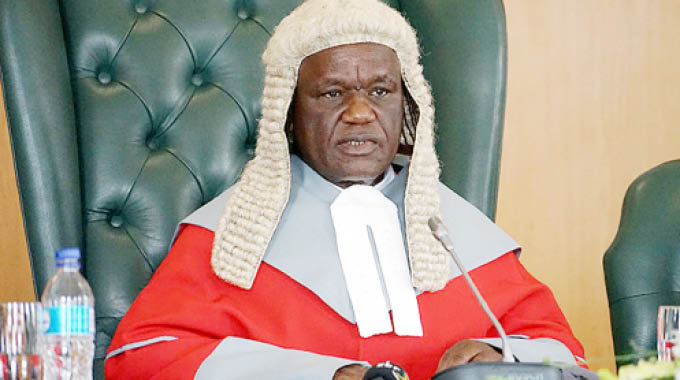
THE fast-track system being introduced into Zimbabwean courts will remove unnecessary delays and ensure swift justice for accused persons.
This is a straight-forward system designed to accomplish a range of goals that should all improve the delivery of justice and public confidence in the courts. But it will require everyone in the “justice chain” to work together.
Chief Justice Luke Malaba, in opening the initial training workshop in Harare on Wednesday, was quite clear that there was growing public concern over delays in justice delivery.
This, he said, in turn affects the safety of citizens as it takes forever to reach a stage where a guilty criminal, who often might have been on bail for a long time, is finally sentenced.
There has also been concern on the other side, that those facing trial have a right to a speedy and fair trial and should not be left hanging for months and years.
If they are innocent and wrongly charged, they obviously have a right to resume their normal life as quickly as possible. But even if guilty there is a strong argument that they should also be able, after serving their punishment, to reform and start rebuilding their life without years in limbo.
While the Chief Justice wants a target of 72 hours after a criminal case is filed in court, which is basically when an arrested person is brought before a magistrate, to the final result, there will be some trials that are more complex and will last longer.
But these trials are rarer than most people realise. The bulk of criminal trials are neither very complex nor involve large groups of witnesses.
Evidence still has to be collected and laid out in court, the accused still has the right to challenge evidence and the prosecution witnesses and to tell their story.
But in many cases all this can be done quite fairly and properly without long and protracted proceedings.
And these are the cases that affect most of the public: someone snatches their bag or wallet; someone breaks into their home and steals; someone assaults them; someone threatens them; someone who works for them steals.
These cases form so much of what is reported at the front desk of every police station and eventually form the bulk of cases in the criminal courts.
It should be possible to speed up the delivery of justice considerably if every step is done efficiently and properly. We have argued before that there often needs to be far better coordination between the police and prosecutors so that all the formalities in laying out a prosecution case are done quickly and properly without a file going backwards and forwards.
We cannot see why the investigating officer and assigned prosecutor cannot meet as early as possible to make sure everything is covered and the case can move forward without delay.
Some jurisdictions, including many in the United States, have the police and district attorney’s office, the prosecutors, working together from the beginning.
In many countries there are legal staff in the police stations overseeing the legalities of an investigation and making sure loopholes are closed. All these ensure that a prosecutor can have a reasonable case ready very quickly.
The accused person also has their rights to preparing a defence and needs to know what they are accused of and what sort of evidence is going to be called.
Often they will plead guilty when it is fairly obvious that they have been caught red-handed, but they are entitled to give a fuller defence and to hire a lawyer if they wish.
We have seen delays generated by defence lawyers that could not have been seriously presented if the prosecution and police had done their part properly.
A defence lawyer will pick up slipshod work and justifiably so. But when the defence is just trying something on, there are enough legal precedents to help guide a magistrate into a quick decision over whether an objection has any merit. Even in the most complicated criminal cases much can be done to stop endless delays and adjournments. The major effort last year to clear the list of pending murder cases in the Midlands shows what can be done when everyone in the criminal justice chain makes a serious effort and cooperates.
These cases could not, obviously, be cleared within 72 hours but what was something special should become something routine.
There are others involved besides police, prosecutors and the judiciary, which includes judges and magistrates. And they were brought into the training this week.
The Zimbabwe Prisons and Correction Service is usually holding the accused and needs to bring them to the right court on the right day, as well as making sure they were able to brief their lawyer if they wished.
The Zimbabwe Anti-Corruption Commission, which assembles quite a lot of the evidence needed in some criminal trials, needs to be working closely with the police and the prosecutors so that this evidence is tied in with the rest and presented fully and fairly.
When we look at what is required, we see the Chief Justice’s point that what is really needed is high levels of efficiency, good communication and cooperation between those in the several stages of a criminal case, and a general wish to have everything moving both fast and fairly.