Chronicle Editor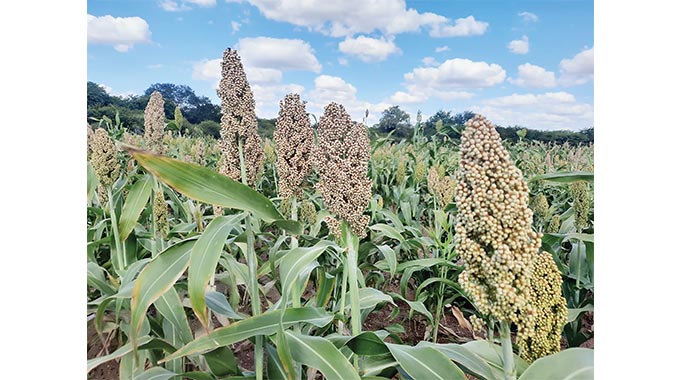
Yoliswa Dube-Moyo, Matabeleland South Bureau Chief
A smallholder farmer from Gwanda District, Matabeleland South province has proven that diversification in horticulture production increases income streams as his tomato and cabbage crops are now on the market.
Mr Novice Ncube has flourishing crops on three hectares of land which he has begun selling to local markets and surrounding communities.
He has also recently harvested his sorghum crop which he says sustains his family and provides good nutrition.
“My tomatoes and cabbages have done very well and I’m happy that I’m able to supply a good crop. I had also grown sorghum, which has been sustaining us. I have a peas crop that I recently planted and hope that it will also do well so that I can send it to the market in Gwanda town,” said Mr Ncube.
He said because horticulture production is costly, he preferred to sell his produce in rand in order to make a profit.
“Horticulture is a high input exercise and we feel short changed when paid in local currency. Horticultural farming requires a lot of capital and we invest in forex, therefore late local currency payments do not make business sense.
If you notice, there is a general low supply of vegetables in big shops in Gwanda town, it’s because of unfavourable payment conditions. We have the produce but we would rather supply outlets that make it viable for us,” said Mr Ncube.
He however said the outlets he has been dealing with had been offering him good deals.
“Big supermarkets are difficult to deal with but there are other outlets which offer friendly terms. Apart from selling to shops, people can access the vegetables directly from my farm,” said Mr Ncube.
Matabeleland South provincial agricultural officer Mr Mkhunjulelwa Ndlovu said the winter season provides an opportunity for farmers in the province to grow wheat and vegetables.
“All types of vegetables can be cultivated in this part of the country. Tomatoes do well and manage frost well. During this time of the year, wheat and vegetables grow well. Farmers can also attempt to grow barley but we haven’t come across anyone interested in growing barley at the moment,” said Mr Ndlovu.
He said land preparation for wheat was ongoing while some farmers had already started selling their vegetables.
“Vegetables are grown throughout the whole year. Horticulture is a high income earner for smallholder farmers.
They can grow all sorts of vegetables including peas,” said Mr Ndlovu.
He said the production of horticulture addresses the aspect of nutrition for all age groups as well as the issue of income which improves livelihoods and increases disposable income.
“Horticulture production also improves on food security because if the farmer has increased disposable income, he/she can access other foodstuffs as well.
Those who want to grow tomatoes can also grow them under a greenhouse. We encourage farmers to use drip irrigation because it seems to be doing very well for farmers who are thriving, especially for cabbage and tomatoes. Overhead irrigation is not good for those crops as it subjects them to various diseases,” said Mr Ndlovu.
He said drip irrigation is also useful in maintaining crop fertility which is key in horticulture production.
“Farmers shouldn’t grow one type of crop but diversify in order to create more markets and expand their income,” said Mr Ndlovu.
Horticulture is Zimbabwe’s fifth-largest agricultural export earner, contributing 6,5 percent to the agricultural gross domestic product.
Production of horticultural crops is mainly conducted close to major urban centres, and along roads connected to urban settlements both at large and small scale.
The horticulture industry is pertinent with respect to forex earnings, employment creation, poverty alleviation and healthy diets. – @Yolisswa



 Online Reporter