Vusumuzi Dube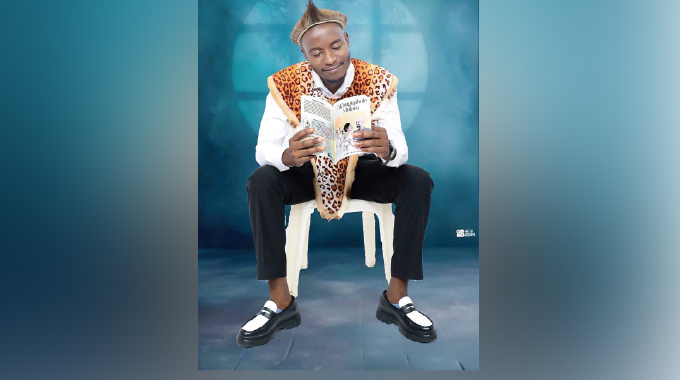
Mbulelo Mpofu, [email protected]
AUTHOR and poet Zwelithini “Mjabulisi” Dlamini is preparing to launch his third book titled Akungiqabule Mbijana — a narrative work that delves into sibling dynamics, life choices and the potential for redemption within families and communities.
The forthcoming publication, set for release in April, marks a significant shift in Dlamini’s literary journey, moving from poetry to a more narrative-driven storytelling approach, while preserving the cultural depth and reflective tone that have long characterised his work.
Set within the Zimbabwean social and cultural context, the book presents a poignant exploration of family values, personal growth and social cohesion.
Through the story of siblings Khulubuse and Ntombizanele, the book examines how individuals raised under the same roof can make vastly different life decisions.
It highlights the influence of family expectations, cultural traditions and the complex dynamics that shape identity — particularly among young people navigating modern pressures while remaining rooted in heritage.
Speaking about the inspiration behind the story, Dlamini said the narrative was influenced by real-life experiences and observations about how family members often respond differently to similar circumstances.
“We go through different circumstances in life. Based on my personal experience, I wanted to prove that it is possible that even if we come from the same family, our choices might be too different. People expect proper solutions from both boys and girls despite what they went through,” he said.
The book also addresses themes of accountability and resilience, encouraging readers to reflect on the consequences of their choices.
Through the characters’ journeys, Dlamini illustrates how decisions — whether related to education, relationships or personal behaviour — can alter the course of one’s life.
Some characters fall into destructive paths, including addiction, demonstrating how poor choices can disrupt families and derail aspirations.
Yet the story equally emphasises the possibility of recovery and redemption through support, counselling and community solidarity.
For Dlamini, the core message of the book is not simply about mistakes, but about how individuals respond after recognising them.
“Mistakes are common. Yes, some mistakes can harm or rather ruin your future. But, what raises people’s eyebrows is what you do after realising your mistake, how you act after discovery.
“No matter what comes our way or how much we fall, we need to dust ourselves off and keep climbing the ladders of success,” said Dlamini.
Underlying this philosophy is what the author describes as the “five Ps” principle, which states that proper preparation prevents poor performance.
According to Dlamini, this idea encourages people to pause before acting and to seek understanding before judging others.
“Let’s think before we talk, pause before we act and get the full story before we judge. This will help us to solve life problems,” he said.
The narrative further explores how inherited legacies and family expectations can shape — and at times pressure — younger generations’ life paths.
By depicting siblings who choose different roads, the book reflects on how success and struggle can emerge from the decisions individuals make. However, it also underscores that setbacks do not have to define a person’s future.
Instead, the book encourages readers to “rewrite their story,” highlighting that healing and reconciliation within families remain possible even after painful experiences.
Dlamini’s transition from poetry to a full narrative work came with its own creative challenges.
Known for his expressive spoken-word performances and poetic storytelling, the author said he had to deepen his research and broaden his writing approach to construct a sustained storyline.
Before venturing into narrative prose, Dlamini had already established himself within Zimbabwe’s spoken-word and poetry circles.
He previously collaborated with poet Portia “Posh MaGolide” Tshuma on two poetry anthologies titled Ithendele Elihle Ngelikhala Ligijima and Survival of the Fittest.
In 2021, he also released an audio poetry project titled Sisempini, further showcasing his versatility as a performer and writer.
Beyond publishing, Dlamini has built a reputation as a spoken-word artiste and cultural practitioner, performing poetry at more than a dozen weddings while also working as a master of ceremonies.
His creative journey has been enriched by experience in broadcasting and community work, including a stint with Lyeja FM in Hwange.
He is employed at the Council for the Blind, where he continues to learn about eye health while remaining active in creative and cultural spaces.
These experiences, he said, have significantly influenced the themes present in his new book.
“Through spoken word, I’ve explored the power of storytelling and cultural identity. Community work has allowed me to tap into the collective narrative, shaping my understanding of tradition and its role in shaping us.
“The book is a reflection of these experiences, woven together with themes of self-discovery, cultural pride and the importance of community,” he said.
Dlamini’s contributions to literature and performance have also earned him recognition.
He received an award from the Havilla School of Language competition in Harare and was honoured as an “Outstanding Poet” at the Matabeleland Cultural Awards.


 Online Reporter