admin
admin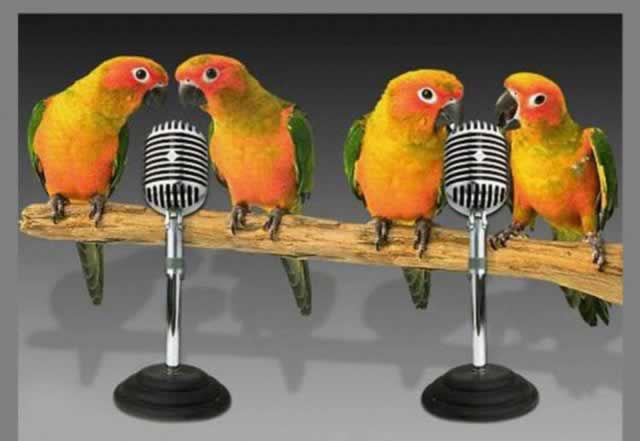
Fred Zindi Music
For the past five years, artistes have been crying out for the need to have the arts industry separated from the Ministry of Education.
The recent announcement of a new Cabinet has now revealed that these cries have now been addressed as there is a new ministry to oversee Sports, Arts and Culture. Let us now hope that this new ministry will now address the needs of the arts industry in Zimbabwe.
Artistes should, on the other hand, be proactive and make their requests known to the ministry. This creation is a move in the right direction.
That aside, did you know that human beings are the only species that is privileged to enjoy the universal phenomenon of being able to read books, do calculations or write? No other species other than the human being can do these things.
My question is does this unique ability also apply to music?
I used to wonder about a Jamaican song entitled: “Birds Sing A Melody” and often asked myself whether birds do really sing or it is just an imagination of the human mind. Friends I asked thought that birds really do sing and each morning they are telling us in song what a joyful and beautiful day it is going to be.
Music students would be interested to find out the answer to this question which is partly addressed by two scientists, Hoy and Atema.
These scientists, who are often referred to as biomusicologists, have come up with research which shows that some animals are musical, among them whales, elephants, birds and monkeys.
Listen closely the next time you hear a bird singing, and you may hear rhythms and patterns strikingly similar to those found in human music. Scientists studying these patterns argue that the nature of music may be deeper than previously thought — and may suggest an inherent knowledge of music that is shared by many animals.
When I was a young boy, my nursery schoolteacher taught us the following song:
Early one morning
Just as the sun was rising
I heard the robin singing
Down the valley below,
Oh don’t deceive me
Oh, never leave me
How could you sing such a poor maiden’s song? etc.
The song kept me wondering whether the red-breasted bird can sing but today’s scientists seem to have solved my puzzle.
Biomusicologists argue that not only are the sounds of some animals pleasing, but they are also composed with the same musical language that humans use.
Whales, for example, use many of the musical concepts found in human music, including similar rhythms, phrase lengths, and song structure. These similarities, the Science writers maintain, “prove that these marine mammals are inveterate composers”.
The writers also point to birds as musicians, noting that bird songs follow rhythmic patterns and pitches that are in tune with human music. Birds not only create vocal sound, they point out, some also add a percussion instrument to their songs.
In the last half-century, Judy Collins has sung with humpback whales and CDs with titles like “Sounds of the Rainforest” have flown off store shelves. The business of “natural music” is booming. But are these soothing sounds truly music? Or are they simply biological functions of the animals that create them?
A recent Science article suggests that not only are natural sounds such as whale and bird songs music, but that their songs may be part of a “universal music” that provides an intuitive musical concept to many animals — including humans. It is suggested that many yesteryear composers such as Beethoven Mozart and Bach got their inspiration from animal sounds. There seems to be little question that nature can create aesthetically pleasing sounds. Mozart, for example, rewrote a passage from the last movement of his “Piano Concerto in G Major” to match the song of his starling.
The bird’s song, biomusicologists argue, was music before being “composed” by Mozart. How many of us have often been woken by music from singing birds early in the morning? Plenty I would say.
But how many of us think that the sounds coming from such birds are music, similar to that which comes from human beings? Jelle Atema, a biology professor at Boston University who has studied prehistoric flutes, says: “We can look at the evidence and we can give more credit to animals, and we can look at humans and be less impressed with humans.” The flutes, made of bone and created up to 57 000 years ago, indicate the importance of music to our cave-dwelling ancestors, explained Atema.
“The musical instruments were more complex than the hunting tools.” The similarities between human and animal sounds and the innate desire to create music that the similarities suggest is a topic now being explored by the evolving field of biomusicology.
However, the definition of “music” should be examined thoroughly before being used to describe particular sounds. One often wonders whether to call any sweet sound they hear “music” Although the term “music” has been liberally applied — to composer John Cage’s “4’33’’ that is 4 minutes, 33 seconds of silence, for example — all concepts of music return to the human view of what is or is not “musical” “Music” is strictly an anthropological concept.
Humans find beauty in certain sounds and dub them music. According to research conducted by Hoy (2005), a whole generation of the 1960s hippies altered their minds listening to whale songs. To human ears, the whale songs are gorgeous. But do animals purposefully create these aesthetically pleasing sounds?
Atema argues that this possibility should be given serious consideration. Just as our ancestors laboured over their musical instruments, animals work at their own musical creations, he said. “Humpback whales spend a huge amount of energy and time making music,” said Atema.
Hoy noted, however, that some scientists argue that so-called musical sounds created by animals serve only a biological function. “I think it’s completely open as to whether animals experience music the way that we do,” said Hoy.
Because animals’ cognitive abilities have not been fully understood, their creations can only be filtered through human ears and emotions. One thing we know for sure is that animals do have certain amounts of intelligence. This is why the buck, the antelope or the rabbit runs away when it sees a predator like a lion or leopard.
Citing these similarities, Hoy and Atema tend to suggest that there may be a “universal music”: one that unites all composers — human and animal.
The “impenetrable vagueness” of music seems to signal that the roots of music lie closer to our ancient lizard brain . . . that music has a more ancient origin even than human language. It is therefore not only humans who possess the language of music.
Feedback: [email protected]



 Online Reporter