admin
admin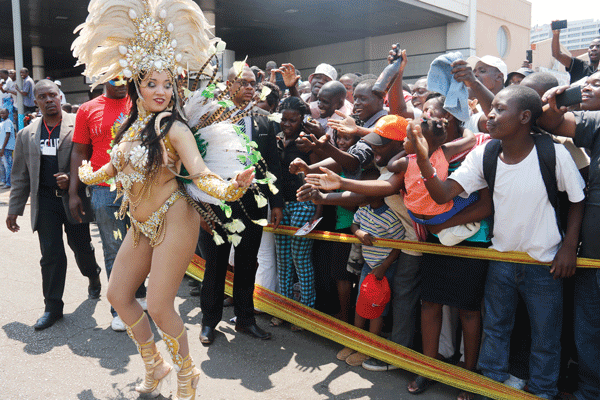
Bornwise Mtonzi Lifestyle Reporter
The Harare International Carnival came in quietly and for the first three weeks or so, except for those directly involved, almost no one else knew that it was happening.
Then came the arrival of the Brazilians for the Samba night last Thursday and the Street Party on Saturday and suddenly the excitement ratcheted. The turnout on the streets was simply astounding whether or not people had planned to watch the parades or just stumbled upon them.
Fast forward to the end of the party and the excitement remains high as some people seem to have rather strong feelings about the carnival. Sadly it is not matters like planning, execution, innovativeness, quality of acts or cost versus achievements of the carnival that have become talking points, but rather the scantiness of bodily coverings for some of the female participants of the carnival.
Speaking in Parliament, Bulawayo East legislator Thabitha Khumalo asked whether it was Government’s policy to have women walk around naked in the streets. The MP, who has herself made it into the media for walking around in her bra after being attacked by thugs from her party, seemed to find it highly offensive that other women could dare show their bodies in public.
Gweru Urban legislator Cecil Zvidzai said people walking around naked at this time was in direct violation of our traditions since we are in the rain-making ceremonies period.
“Ndofunga munoziva kuti tirimunguva yemukwevera (rain-making ceremonial) and then we have buttock-less tourism during such crucial time in the country when we are frantically praying for the rain,” he said
Vice President Emmerson Mnangagwa in response to the legislators’ concerns noted that while Zimbabweans have no culture of nakedness yet we have no business interrogating other countries’ cultures.
This controversy comes after people from different cultures had the opportunity to exhibit their cultures through dancing and dressing, among these people were different groups from different countries such as South Africa, Swaziland, Malawi, India, Brazil, Zambia and Namibia. There were 26 countries in all.
Besides the Brazilian female Samba dancers, the Swazi maidens with their bare chests were another talking point. In their country they go for important ceremonies like the annual reed dance with their chests bared.
On the streets of Harare there were mixed feelings about barely covered up women.
“I don’t know what the fuss is all about. All these people saying our culture, our culture should not mix up tradition with culture. Culture is dynamic and changes all the time. When it comes to nakedness, people should remember that our ancestors went about almost naked with little pieces of animal skins just covering the essentials. This practice of covering up everything in cloth came with the whites, so do not tell us about culture if you are ignorant,” said Timothy Mukwesha who said he is a student of African traditions and customs.
A few years back the Miss Rural beauty pageant came under fire for abusing young women when a teen girl appeared live on national dance with her chest uncovered. The girl was showcasing a traditional fertility dance.
Moses Mungoshi of Glen Norah A said people should be open to new experiences.
“Saka tichigara takasara wangu. Kusada kudzidza chero pane rino gore redzidzo. (That is why we are always behind my friend. It is because we do not want to learn even in this year which has been declared a year of education in street lingo). It is only by experiencing different things that we open our minds. These were just people dancing and for a short while we got rid of our stress and had fun,” he said.
But not everyone is so liberal in their outlook with most women saying that they were not pleased with the parading of almost naked female bodies.
“I was shocked when I came across these people along Nelson Mandela Avenue. I went to take a look as I noticed people gathering hoping to see something interesting only to be met with naked people. I was disgusted. What are these people trying to do?” said a lady identified as Mai Fadzi.
Another woman concurred.
“I think such acts should be held in a closed venue say a stadium, not on the open streets. This is not Brazil, but Zimbabwe. At least in a closed place people who like that kind of thing will go there, not to just force it one everyone like that.”
She went on question what the law on indecent exposure says about the carnival parade.
“If you were to walk around dressed as those women were dressed like, I am sure you would need a good lawyer to avoid paying a fine or getting jailed or whatever. So was there a special dispensation to allow almost naked people on the streets where we were walking with our children and in-laws?”
There is a social debate concerning Zimbabwe’s cultural identity when it comes to dressing. Unlike some countries like Nigeria, Ghana and Scotland with distinctive national costumes that their citizens can be identified with, there is no homogeneous look that one can point out to as purely Zimbabwean.
Dress codes in the country are mostly based on Western ideals. Even so-called African attires are mostly made from Chinese produced materials and an eclectic mixture of designs from all over the world.
“There is no problem in countries exhibiting their cultures, as long it’s not us we have no problem with it, let them move around in their skimpy dresses it’s ok as long it is not one of us,” said one man who identified himself as a parent.
A women’s empowerment activist who refused to be identified said it is sad that women allow themselves to be used as sexual objects thereby derailing the war for equality that she and fellow feminists are fighting for.
“I have become very disillusioned. I have been part of the #mydressmychoice campaign. I think women have the right to dress as they like. But where do we draw the line between women choosing and being directed into a choice?
“In as much as the almost naked women at the carnival may declare that they made choices to appear in public like that, I also wonder if they are not just pawns being used by the men behind the carnival. And mind you, this is not just about the carnival. Even the young girl in a miniskirt, what choice has she made? Is she not just following trends and wearing what she can find in the shops?
“At the end of the day, I guess if a person feels comfortable with how they look, then no one should judge them.”
In some places like the US there are nude communes where people who do not believe in clothes spend their lives in nakedness. There are also countries where nudist bars and live sex shows are legal.



 Online Reporter