admin
admin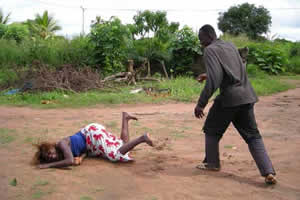
Councillor Ndlovu said there are many reasons why people take for granted the fact that men can be victims and why women often do not take into account the possibility.
“Domestic abuse and violence against men has been curtailed, justified and ignored for a very long time because the idea that men could be victims of domestic abuse and violence is so unthinkable that many men will not even attempt to report the situation,” said Clr Ndlovu.
Surprisingly, according to a baseline survey conducted by Fatherhood Peace Project in Chitungwiza entitled “The Impact of Food Insecurity on Children: The Study of Girls in Mutasa”, men are the major perpetrators of GBV and tend to pay little attention to issues to do with protection of the rights of the girl child and women.
The survey, conducted in Mutasa communal area in Manicaland Province, also found that men are frustrated by their failure to provide for their families and they express their frustration through abusing women and girls.
In addition, the survey noted that the war against GBV can only be won if men who are traditional abusers join in the campaign against all forms of abuse.
Musasa director Netty Musanhi admitted that women are abusing men although more women are abused than men.
“I agree with that fact because women are not angels. Men are afraid to come out and speak and it is equally difficult for women to speak out or report violence and I
always challenge people to visit women organisations for education on GBV,” said Musanhi.
Musanhi, however, added that society always prevents women from revealing “family secrets”.
She added that it is doing injustice to conclude that men are equally abused as women because the statistics “we have show that women are abused more than men”.
“We are not denying the fact that men are being abused but we cannot compare the numbers,” she said.
Very little is known about the actual number of men who are in an abusive domestic relationship or who are treated violently by women.
Musanhi, however, bemoaned the soaring statistics on domestic violence against women and said it is everyone’s responsibility to eliminate GBV.
“With only two years before the Sadc Protocol on Gender and Development 2015 deadline for all member states to have attained gender equality, we all have to work hard so as to reduce all forms of gender-based violence.
“There is need to break the culture of silence that is affecting people as justice will not take place. Some people are reluctant to report cases of GBV but there is need to come out and seek assistance,” said Musanhi.
She said there is also power in using real life accounts of victims of GBV as others will be encouraged to come out too.
“The ‘I’ stories that we have are a powerful tool for advocacy as other victims can be inspired to come out and report their cases too. I urge all those that are victims to tell their stories as it makes a difference.
“There is a challenge of women who accept occasional beatings from their spouses and partners in the name of strengthening relationships, which is not acceptable.
“Women and girls who accept this become open to further abuse that can lead to various forms of maltreatment.”
However, media has been cited as the major culprit in fuelling cases of gender-based violence on women.
Speaking during the Zimbabwe Sadc Gender Protocol Summit and Awards held at
Pandhari Hotel in Harare, director of human resources in the Ministry of Local Government, Rural and Urban Development Dr Erica Jones said media practitioners should desist from sensationalising stories on gender violence as this aggravates the problem.
“I am disappointed in the way our media uses GBV cases to entertain or sell their products. Many a time victims of GBV go through trauma because reporters use their experiences to entertain readers.
“Our tabloids are awash with dramatised GBV articles,” said Dr Jones.
She called on journalists to be more sensitive when reporting issues of gender-based violence.
“Reporters need to start looking at GBV as a national problem which needs addressing.
“They should invest in raising awareness on the Domestic Violence Act and how communities can unite to fight against GBV,” she said.
Speaking at the same occasion, the director for gender in the Ministry of Women’s Affairs, Gender and Community Development, Caroline Matizha, said Mashonaland Central had the most reported cases of gender-based violence with 56 percent of married women experiencing physical and sexual violence from their male counterparts.
“Our study showed that Manicaland
was second with 49 percent, Mashonaland West 47 percent and Mashonaland East 42 percent.
“Masvingo and Harare both had 40 percent, Matabeleland South 36 percent, Matabeleland North 36 percent, Bulawayo 29 percent while Matabeleland had 17 percent,” said Matizha.
Revealing the shocking statistics Matizha said 42 percent of married women have experienced sexual or physical abuse perpetrated by their male counterparts in Zimbabwe.
“The development occurs barely two years before the 2015 deadline set by the Sadc
Protocol on Gender and Development, to reduce gender-based violence cases by 50 percent.
“I must say, the Government has let us down by failing to provide shelter for victims undergoing trauma counselling,” said Matizha.
She said although laws have been enacted to curb the scourge, a number of people still treated abuse as a private issue.
“The Domestic Violence Act (2007) provides a legal remedy for abuse victims.
“Despite numerous efforts by Government, CSOs and development partners, GBV still remains a major challenge in our country.
“A number of people continue to suffer in silence. The ministry has stepped up public campaigns to raise awareness about the issue.
“We are engaging communities, traditional leaders, and the media to spread the message and end GBV.
“We are involving men in our campaigns as they are perpetrators.
“We believe that if they are sensitised on the issue and come on board as partners against GBV, we will win the war sooner,” she said.
While too much has been said on domestic violence against women, a lot is yet to be told on domestic abuse and violence on men.
Women are being viewed as the only victims of domestic violence which somehow reduces the impact of the fight against the problem.



 Online Reporter