Online Reporter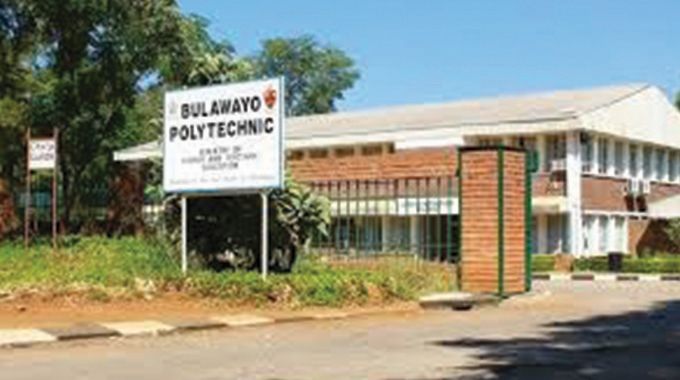
AS students and parents’ chart educational paths for the future, it is important to consider local Polytechnic Colleges, institutions that are often undervalued but offer some of the most practical, empowered and career-ready training available today.
In a world increasingly driven by technology, hands-on skills and entrepreneurship, Polytechnic education bridges the gap between theory and application. These colleges equip young people with job-ready capabilities, empowering them to step directly into industry, start businesses or advance to higher learning.
What polytechnic colleges offer:
Polytechnic institutions focus on technical, vocational and applied sciences programmes that respond to the needs of modern economies. Training emphasises practical application, industry standards and workplace readiness, as opposed to purely academic theory.
This means graduates leave with the confidence to solve real problems, innovate solutions and contribute directly to economic growth.
These colleges offer a range of certificates, diplomas and advanced diplomas that can lead to employment, entrepreneurial ventures or further study. Courses are typically shorter than traditional university degrees, more affordable and closely aligned with market needs.
Examples of Polytechnic Colleges in Zimbabwe
Here are some recognised institutions and a snapshot of what they offer:
1. Harare Polytechnic
One of Zimbabwe’s oldest and largest technical institutions, Harare Polytechnic provides a wide range of practical programmes from National Certificates (NC) to National Diplomas (ND) and Higher National Diplomas (HND) in fields such as automotive, civil engineering, business studies, electrical engineering, information technology, library science, hospitality and tourism, printing and graphic arts and more.
2. Bulawayo Polytechnic
Located in Bulawayo, this institution offers technical training in areas like civil, electrical and mechanical engineering, applied arts and design and specialised technical certificates and diplomas that meet industrial standards in construction, electronics and production technologies.
3. Gweru Polytechnic Institute
This Midlands-based polytechnic offers over 60 courses in commerce, engineering, education, applied sciences and business administration, awarding both certificates and diplomas. It also uniquely trains lecturers in technical and vocational education.
4. Zimbabwe College of Forestry (ZCF)
Specialising in forestry and wood industries, ZCF provides Diplomas in Forestry and Wood Technology along with Certificates in Saw Doctoring, Forestry and Wood Technology and short courses tailored to forestry, fire management and supervisory skills.
5. Kwekwe Polytechnic
Located in the Midlands, Kwekwe Polytechnic delivers an extensive portfolio of programmes across engineering, applied sciences, commerce and adult education. Students can enrol in National Certificate and National Diploma programmes in areas such as Motor Vehicle Mechanics, Automobile Electrics & Electronics, Building Technology, Plumbing and Drain Laying, Electrical Power, Computer Systems, Metallurgical Assaying, Office Management, Human Resources Management and many more. They also offer Higher National Diplomas and a Bachelor of Technology in specific engineering disciplines.
Why polytechnic skills matter today
Polytechnic education delivers real advantages in the 21st century:
n Job-ready skills: Targeted training in technical and business fields prepares graduates to hit the ground running in workplaces.
n Entrepreneurial pathways: Many programmes teach practical skills that support self-employment and small business growth.
n Affordable and accessible: Compared to traditional university degrees, polytechnic training is often more cost-effective and accessible for many families.
n Flexible progression: Students can progress from certificates to diplomas and higher diplomas — with opportunities to further study or specialise.
n Contribution to national development: Skilled technicians, engineers, business administrators and technologists are essential to Zimbabwe’s economic sectors from construction to ICT, manufacturing to forestry.
In an era where skills are currency and adaptability is key, Polytechnic Colleges offer dynamic, relevant and empowering education pathways that should be embraced by students and supported by parents.
Don’t overlook them, they build futures that work.
Dr Manners Msongelwa is an educator, author and youth coach. He can be contacted on +263 771 019 392