Online Reporter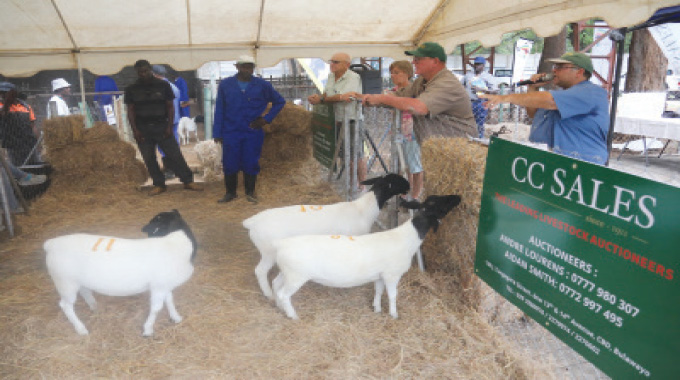
Judith Phiri, Zimpapers Business Hub
THE Zimbabwe Dorper Sheep Breeders Association last Friday hosted the first Dorper sale in Matabeleland after 13 years of absence, with the Ministry of Lands, Agriculture, Fisheries, Water and Rural Development commending its revival.
A Dorper is a fast-growing, meat-producing sheep breed developed in South Africa from the Dorset Horn and Blackhead Persian breeds in the 1930s. It is known for being hardy, adaptable to various climates and having high fertility, excellent growth rates and good maternal instincts.
With its characteristic black head, the Dorper is more than just visually distinctive — it brings a unique combination of hardiness, growth efficiency and premium meat quality that makes it an invaluable asset on farms of all sizes.
In an interview, on the sidelines of the sale at the ZITF Showgrounds in Bulawayo on Friday, Chief Director of Agricultural and Rural Development Advisory Services (Ardas), Mrs Medlinah Magwenzi, commended the resumption of such an auction sale.
“This is actually a commendable event because if you clearly note, its coming back after 13 years. What it means is that we used to do well in sheep production at one time and it just declined or just went low. This resuscitation, what it means is that the enterprise that we used to have here, we are now bringing it back,” she said.
“Again, if you note, you realise that one sheep costs even more than one cow or costs more than one steer. The younger ones at this auction sale, which were ranging between eight and eleven months were actually going for US$400, US$460 or US$480, which is very rare in terms of livestock production.”
She said the rams were going for US$1 600 or US$1 800 and even beyond.
Mrs Magwenzi said sheep production was not very expensive as the animals were grazers.
“So, you can have your cattle graze everything and leave that lower part of the grass. That’s what is for the sheep. Sheep are also not very expensive in terms of their feed and nutrition because they are ruminants like cattle and goats so you can actually use even the beef meal but they have specific feed for themselves,” she said.
“We are happy with the programme here and we are saying it should be replicated across the country. I hear people talk about rural, urban, commercial, we do not need to disaggregate when rolling out such programmes.”
She called for the need to improve Dorper breeds in the country and target export markets.
Zimbabwe Dorper Sheep Breeders Association chairman, Mr William Hundermark said it was truly inspiring to see so many breeders, buyers and supporters at the 2025 Bulawayo Dorper Sale.
“First, to our sellers, thank you. The effort you have put into breeding, preparing, and presenting your animals is the backbone of this sale. Your commitment to quality genetics is what drives this industry forward.
“To our buyers, we appreciate you being here. Whether you have travelled far or are joining us from just down the road, your presence and interest help shape the direction of the Dorper breed in Zimbabwe. Your support gives meaning to all the work that goes into events like this,” he said.
He said the vision behind the sale was to ignite the Dorper industry in Matabeleland.
Mr Hundermark said the region has the land, the people and the potential to become a powerhouse in Dorper production.
“If we strengthen our genetics, raise our standards and work together as breeders, farmers and industry partners, Zimbabwe can position itself for live export markets into the Middle East and into northern Africa. The opportunities are real and they are big,” he said.
“Our goal is for this Bulawayo sale to become an annual event, driven by Matabeleland breeders, for the benefit of farmers across the province and across the country. This is not just a sale — it is the laying of a foundation for a stronger, more competitive national flock.”
He said Zimbabwe was so uniquely positioned in Africa to provide genetics to northern neighbours, while there was a big opportunity, which was not being utilised except for a few breeders.
Mr Hundermark encouraged sheep breeders in the country to seize the opportunity and drive the Dorper breed in Zimbabwe to new heights.